On-resin aggregation is one of the major causes of synthesis failure for sequences longer than 20–25 residues, especially when hydrophobic or β-sheet-prone segments are present. The growing peptide chain spontaneously forms intermolecular β-sheet structures within the resin matrix. These cooperative hydrogen-bonding networks collapse the swollen resin volume, restrict reagent diffusion, and block both Fmoc deprotection and amino acid coupling. The result is a population of deletion sequences that co-elute with the target peptide in LC-MS and are almost impossible to separate by HPLC.
Backbone modifications are temporary, reversible chemical alterations of the peptide amide bond introduced during chain assembly to disrupt this self-association. They change the physical structure of the amide bond itself — preventing the secondary structure formation that causes the problem — rather than modifying the coupling reagent or solvent. All classes discussed here are removed during standard TFA treatment or undergo spontaneous rearrangement under mild aqueous conditions, regenerating the native, unmodified peptide.
This article covers the four main backbone modification classes used in Fmoc-SPPS — pseudoprolines (ψPro), N-benzyl auxiliaries (Dmb, Hmb, Hmnb/Hmsb), O-acyl isopeptides, and tetrahydropyranyl (Thp) groups — and provides a sequence-based decision framework for selecting, positioning, and spacing them. It also addresses which modifications to choose when residue type or sequence context limits options.
Plan ψPro Placement with Peptalyzer™
Use Peptalyzer™ to map β-sheet hotspots and aggregation risk across your sequence before starting synthesis — so you can place pseudoproline dipeptides where they matter most.
📘 What will you learn here?
Core Definition of Backbone Modifications
Backbone modifications alter the peptide amide bond chemically — by N-alkylation (Dmb, Hmb, Thp), side-chain-to-backbone cyclization (pseudoprolines), or ester substitution (O-acyl isopeptides). In every case, the hydrogen-bond donor at that amide nitrogen is eliminated, or the local backbone geometry is distorted enough to prevent β-sheet registry. The modification is removed during final deprotection, regenerating the native sequence with no structural trace in the product.
Aggregation propensity tools — including the SPPS Difficulty Profile and β-sheet hotspot outputs in Peptalyzer™ — are statistical estimates derived from residue hydrophobicity and secondary structure propensity scales. They identify likely nucleation zones and inform modification placement, but they do not model resin swelling dynamics, solvent composition effects, or loading density. Use them as synthesis planning guides. Experimental validation of modification placement remains necessary for sequences with no synthetic precedent.
The Physical Basis of On-Resin Aggregation
Why β-Sheet Formation Collapses the Synthesis
β-Sheet formation in resin-bound peptide chains is driven by the same cooperative hydrogen-bonding forces that govern protein folding. The backbone carbonyl oxygen of residue i on one chain forms a hydrogen bond with the backbone amide proton of residue i on an adjacent chain. When these bonds form across multiple adjacent residue pairs simultaneously, the free energy of stabilization accumulates rapidly — this is cooperative nucleation, not incremental association.
The practical consequence is diffusional, not structural. A collapsed β-sheet aggregate in a cross-linked polystyrene or PEG-based resin restricts swelling, reduces pore volume, and limits the access of piperidine and activated amino acids to the resin-bound chain termini. Incomplete Fmoc deprotection is often the first observable symptom: the UV absorbance of the dibenzofulvene-piperidine adduct at 301 nm drops below the expected threshold, signaling that a fraction of N-termini are physically blocked by aggregated material.
Unlike racemization or aspartimide formation — which are chemical side reactions triggered at specific sequence motifs — on-resin aggregation is a physical phenomenon. Double coupling the same amino acid does not resolve it. The problem is access, not reactivity.
Sequence Factors That Promote β-Sheet Nucleation
Aggregation risk is not uniform across a sequence. Hydrophobic stretches of four or more consecutive residues — enriched in Val, Ile, Leu, Phe, and Tyr — provide the enthalpic driving force for aggregation through van der Waals contacts and hydrophobic collapse. Gln-rich segments can also be difficult, but the mechanism depends on the protecting-group state. In protected Fmoc-SPPS, Gln is commonly used as Gln(Trt), so free side-chain hydrogen bonding may be reduced. In these cases, difficulty is more likely driven by backbone association, poor solvation, steric effects, and local sequence context. The absence of native Pro residues removes natural structure-breaking elements; Pro cannot donate an amide hydrogen and forces a backbone kink incompatible with extended β-strand geometry.
Sequence length compounds risk: each additional residue increases the time the existing chain spends on resin and provides more hydrogen-bond donors and acceptors available for aggregation.
How Aggregation Manifests in the Lab
Visible signs of on-resin aggregation: a visible reduction in resin bead volume during the coupling step, gel formation or clumping of the resin mass, unusually slow drain times, and elevated back-pressure in automated synthesizers. In LC-MS of crude cleavage products, aggregation manifests as a cluster of closely eluting peaks flanking or underlying the target peptide peak. These are deletion sequences. Apparent purity often falls below 50% despite apparently complete couplings on standard monitoring.
The Three Physical Mechanisms of Backbone Disruption
All backbone modifications act through one or more of three mechanistic pathways. Understanding which mechanism each class uses determines when and why to choose it.
Hydrogen-Bond Donor Deletion — Mechanism 1
The most direct disruption removes the amide proton entirely. In N-alkyl amino acids — where the backbone nitrogen bears a substituent (Dmb, Hmb, Thp, or any N-alkyl group) — the nitrogen can no longer donate a hydrogen bond. This eliminates its contribution to β-sheet hydrogen bonding at that position without requiring conformational change in the rest of the chain. The cooperative network is interrupted at that residue regardless of what flanking residues are doing. This is an experimentally proven mechanism, supported by NMR and IR data from Narita and coworkers on backbone-protected peptides in solution and on solid phase.
Steric Shielding of the Backbone Face — Mechanism 2
N-alkyl substituents also project physical bulk into the lateral space between adjacent peptide strands. The Dmb group occupies roughly the spatial volume of a bulky amino acid side chain at the backbone nitrogen position. This steric projection prevents the close approach of adjacent chains required for stable β-sheet contact. This mechanism is consistent with the structural argument and with synthesis outcome data across multiple laboratories, but direct on-resin crystallographic evidence for the precise geometry is not available.
Conformational Kinking via Proline Mimicry — Mechanism 3
Pseudoproline residues (ψPro) act through a distinct and more potent mechanism. Pseudoprolines are cyclic N,O- or N,S-acetals formed from the α-amino group and the side-chain hydroxyl or thiol of Ser, Thr, or Cys. In the peptide chain, this converts the Ser/Thr/Cys amide nitrogen into a proline-like, N-substituted ring system. This ring rigidly constrains the backbone dihedral angles φ and ψ to proline-like values, forcing a sharp turn in the backbone. Pro is well established as a β-sheet breaker: it cannot donate an amide hydrogen and its ring imposes φ near −60°. The ψPro ring produces the same geometric consequence — the backbone cannot adopt the extended conformation required for β-strand registry.
The conformational disruption is long-range and can influence nearby residues, but its practical range is sequence- and resin-dependent. In difficult-sequence studies, spacing backbone-disrupting units roughly every six residues has emerged as a useful empirical rule — a planning guideline, not a fixed structural radius. The six-residue window is the empirical basis for the spacing rules discussed in the Sequence-Based Selection section below. On-resin, the mechanism is supported by solution-phase and solid-phase synthesis outcomes, with the geometric φ/ψ constraint independently established from structural chemistry.
Pseudoprolines (ψPro): Conformational Kink Inducers
Chemistry and Building Block Variants
Pseudoprolines are introduced as pre-formed, Fmoc-protected dipeptide building blocks: Fmoc-Xaa-Ser/Thr(ψMe,Mepro)-OH, where Xaa is the amino acid immediately preceding the Ser or Thr in the sequence. The dipeptide format is not merely a commercial convenience — it is chemically necessary. The oxazolidine or thiazolidine nitrogen in ψPro is a secondary amine, and acylating a secondary amine on resin under standard coupling conditions is substantially slower and frequently incomplete. Using the pre-formed dipeptide bypasses this problem: the hindered secondary amine is acylated in solution during dipeptide synthesis, and the building block couples to resin-bound primary amines under standard Fmoc amino acid conditions.
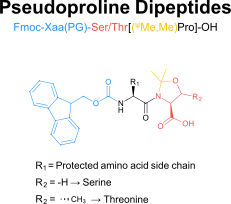
For Ser and Thr, the oxazolidine ring is formed with acetone (isopropylidene derivative), giving the 2,2-dimethyloxazolidine. Wöhr and Mutter established in 1996 that the isopropylidene oxazolidine is the optimal variant for Fmoc-SPPS: fully stable to piperidine-based Fmoc removal and cleanly hydrolyzed by TFA during final deprotection to regenerate the native Ser or Thr. Thr-derived ψPro carries an additional methyl substituent at the 4-position relative to the Ser variant.
For Cys, both isopropylidene-thiazolidine and benzylidene-thiazolidine (using 2,4-dimethoxybenzaldehyde as the ketone/aldehyde component) derivatives are used. Both are TFA-labile, but the benzylidene Cys-ψPro may require extended TFA exposure relative to oxazolidine-based ψPro. Confirm cleavage completion by LC-MS when using Cys-ψPro in difficult sequences.
The Six-Residue Disruption Window and Its Directionality
A spacing of roughly one backbone-disrupting unit every six residues is an empirical planning rule from difficult-sequence studies. It should be treated as a practical guideline, not as a fixed structural protection radius. Resin type, resin loading, solvent, sequence hydrophobicity, and local Pro/Gly content can shift the effective spacing. In Fmoc-SPPS, synthesis proceeds from C-terminus to N-terminus: the already-assembled chain lies C-terminal to the current coupling position. The ψPro modification therefore disrupts the aggregation-prone residues that were assembled immediately before the ψPro building block was added.
This directionality is critical for placement strategy: the modification must be installed before, not after, the aggregation-prone residue window is built. The six-residue window does not protect residues that are added subsequently (i.e., further N-terminal in the growing chain). That is why spacing requires multiple modifications for long or multi-domain sequences.
Narita and coworkers independently identified optimal backbone protection spacing at every six residues through systematic studies on Dmb-protected model peptides — confirming the empirical basis for this rule using a distinct modification class.
Dual Function: Aggregation Suppression and Aspartimide Prevention
A practically important secondary benefit of ψPro: placement at the Ser or Thr residue located two positions C-terminal to an Asp residue (the n+2 position relative to Asp) disrupts the backbone geometry around the Asp residue. This reduces the probability of base-catalyzed intramolecular cyclization that causes aspartimide. Danishefsky and coworkers demonstrated this principle in the context of Asp-containing difficult-sequence synthesis. The mechanism is the same conformational kink that disrupts aggregation — it also prevents the specific backbone geometry required for Asp side-chain cyclization.
This dual function means ψPro placements near Asp-X motifs serve two purposes simultaneously. When both aggregation risk and aspartimide risk are present in the same sequence region, a strategically placed ψPro addresses both — a meaningful advantage over modifications that address aggregation alone.
Note: ψPro at the n+2 position reduces aspartimide risk but does not completely suppress it for highly prone motifs like Asp-Gly under standard piperidine conditions. For Asp-Gly specifically, direct Dmb backbone protection at the Gly nitrogen, such as Fmoc-Asp(OtBu)-(Dmb)Gly-OH, remains one of the most effective practical strategies for suppressing aspartimide formation under standard Fmoc-SPPS conditions.
Coupling Pseudoproline Dipeptides on Resin
ψPro dipeptides couple to resin-bound primary amines using standard activation reagents: HATU, PyBOP, HBTU, or DIC/OxymaPure. No special conditions are required for this coupling step — the building block presents a primary amine N-terminus (from the Xaa component) to the resin-bound chain. For standard pre-formed Fmoc-Xaa-Ser/Thr(ψPro)-OH dipeptides, the difficult acylation of the ψPro secondary nitrogen has already been solved during building-block synthesis. After Fmoc removal, the next coupling usually occurs at the N-terminal residue of the dipeptide, which is normally a primary amine unless that residue itself is Pro or another N-substituted residue. See sections below for the coupling trap that follows ψPro installation.
N-Benzyl Backbone Protecting Groups
Dmb (2,4-Dimethoxybenzyl): Gly-Preferred N-Alkylation
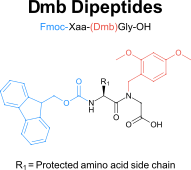
The 2,4-dimethoxybenzyl (Dmb) group was the first backbone protecting group systematically applied to aggregation suppression. Narita and coworkers established its aggregation-disrupting properties in detailed studies on model difficult sequences; subsequent work developed practical Fmoc dipeptide building blocks (Fmoc-Xaa-(Dmb)Gly-OH) for routine use in Fmoc-SPPS.
Dmb acts through Mechanisms 1 and 2 — hydrogen-bond donor deletion and steric shielding. It lacks intramolecular acyl transfer capability (unlike Hmb), which means coupling onto the resulting secondary amine is directly hindered by the Dmb group. This is why Dmb is routinely applied at Gly positions: Gly’s absence of a β-carbon partially offsets the steric burden at the nitrogen, permitting acceptable coupling efficiency under double-coupling protocols. Applying Dmb to β-branched residues (Val, Ile, Thr) creates a coupling trap where the subsequent amino acid cannot acylate the secondary amine at practical rates with standard reagents.
Dmb Group in Aspartimide Suppression
Fmoc-Asp(OtBu)-(Dmb)Gly-OH is one of the most effective practical building blocks for suppressing Asp-Gly aspartimide formation under standard Fmoc-SPPS conditions. The Dmb group on the Gly nitrogen strongly suppresses the intramolecular attack geometry that leads to aspartimide formation. This is a Level A mechanism: direct steric prevention of the attack geometry. For sequences with both aggregation risk and Asp-Gly motifs, this building block serves both purposes simultaneously.
TFA Cleavage Considerations when DMB Group is Present
Dmb is removed under standard TFA/scavenger conditions. The released electrophilic Dmb cation alkylates the indole side chain of unprotected Trp. Use Fmoc-Trp(Boc)-OH in all syntheses containing Dmb backbone protection, and include approximately 2% TIS in the cleavage cocktail to scavenge the cation. Refer to the dedicated Cleavage Cocktail article for full scavenger optimization.
Hmb (2-Hydroxy-4-Methoxybenzyl): The O→N Acyl Transfer Strategy
The 2-hydroxy-4-methoxybenzyl (Hmb) group was designed by Sheppard and coworkers to solve the central problem of N-alkyl backbone protection: sluggish or incomplete acylation of secondary amines. The solution is an intramolecular O→N acyl transfer mechanism. When an activated amino acid approaches an Hmb-protected secondary amine, the acyl component is captured first by the phenolic 2-hydroxyl group of Hmb, forming a phenyl ester intermediate. This ester then undergoes a thermodynamically favorable intramolecular acyl migration through a six-membered ring transition state to the backbone nitrogen, forming the desired tertiary amide.
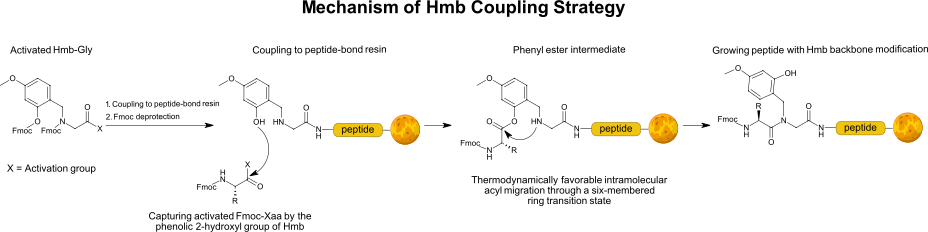
This mechanism makes coupling onto Hmb-bearing secondary amines substantially more reliable than for Dmb, because the effective acylation step proceeds through a pre-organized reactive intermediate. In principle, Hmb can be applied to any amino acid position — unlike Dmb, which is practically limited to Gly.
Practical Limitations of Hmb Group
The O→N acyl transfer rate is variable between residue pairs and was historically slow with the original symmetric anhydride/DCM protocol (1–48 hours). Under standard HATU/DMF conditions used in modern automated synthesis, transfer is faster but may still require extended coupling times. For automated synthesis, Hmnb and Hmsb were developed specifically to accelerate this rate — see sections below.
Lactonization risk of of Hmb Group
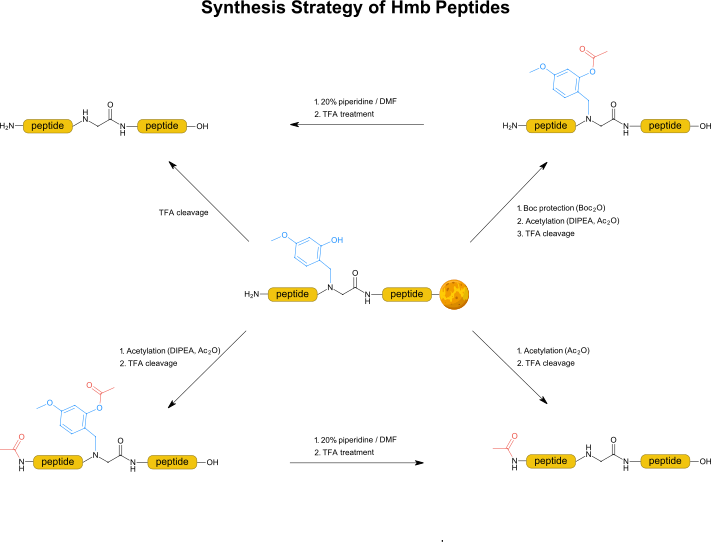
The 2-hydroxyl of Hmb is a nucleophile. Under activation conditions with excess base or prolonged acylant contact, it can attack the adjacent activated carbonyl intramolecularly, forming a benzoxazepinone lactone byproduct. This lactone is acid-stable and does not cleave under TFA conditions. It appears in LC-MS as a byproduct shifted approximately −18 Da relative to the sequence bearing an intact Hmb substituent.
To prevent this side reaction, avoid excess DIPEA beyond neutralization needs during Hmb coupling steps; do not use acetic anhydride capping after Hmb installation; minimize acylant contact time after completion of O→N transfer. Dmb eliminates this risk by lacking the hydroxyl group.
TFA Cleavage Considerations when Hmb Group is Present
Same as Dmb — the released Hmb cation is structurally similar and equally capable of alkylating unprotected Trp. Use Fmoc-Trp(Boc)-OH and include ~2% TIS.
Hmnb and Hmsb: On-Resin Automated Introduction
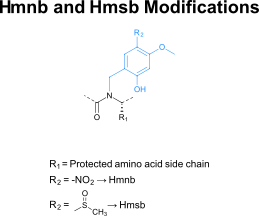
The Dmb and Hmb approaches require pre-formed dipeptide building blocks, which constrains backbone protection to positions where the preceding residue-ψPro or residue-Dmb dipeptide exists commercially or can be prepared. Hmnb (2-hydroxy-4-methoxy-5-nitrobenzyl) and Hmsb (2-hydroxy-4-methoxy-5-methylsulfinylbenzyl) were developed by Abdel-Aal, Papageorgiou, Quibell, and Offer to enable automated on-resin introduction at any position.
Protocol for Hmnb and Hmsb: On-Resin Automated Introduction (NaBH₄ Reduction)
- After standard Fmoc deprotection of the target position, the salicylaldehyde derivative (4-methoxy-5-(methylsulfinyl)salicylaldehyde for Hmsb; 4-methoxy-5-nitrosalicylaldehyde for Hmnb) is added to the resin in DMF. The aldehyde condenses with the primary amine to form a stable Schiff base (imine) — stable to washing because the benzaldehyde forms an unusually stable benzaldimine in this system.
- The imine is reduced quantitatively by NaBH₄ in DMF to give the secondary amine bearing the Hmsb or Hmnb group.
- The next amino acid is coupled using HCTU/DIPEA or HATU/DIPEA under standard conditions; acylation proceeds via the O→N acyl transfer mechanism, as for Hmb.
- Synthesis continues normally. Removal uses standard TFA cleavage after mild pre-reduction of the sulfoxide (Hmsb) or nitro group (Hmnb).
Hmnb vs. Hmsb
The nitro group of Hmnb accelerates O→N transfer kinetics substantially, making it highly effective at hindered positions. However, removal requires reduction of the nitro group to an aniline before acid-promoted deprotection can proceed. This reduction step has been associated with incomplete deprotection and potential metal contamination concerns. Hmsb addresses this: the sulfoxide group is mildly reduced to the thioether (acid-labile) using a simple reduction step compatible with automated conditions, and final TFA removal then proceeds cleanly. Hmsb is the currently preferred reagent for automated on-resin backbone protection. Hmnb remains an option when Hmsb is not available and when sequence complexity justifies the additional deprotection step.
Key advantage: On-resin Hmsb introduction is not restricted to Gly, Ser, Thr, or Cys positions. This makes it the only current strategy capable of placing backbone protection at any sequence position regardless of residue identity.
When to Use Dmb vs. Hmb vs. Hmsb
Dmb – use when the target position is Gly; when aspartimide prevention at Asp-Gly is the primary objective; or when lactonization risk is a concern and the dipeptide building block is available.
Hmb – use when the target position is non-Gly and a pre-formed dipeptide building block exists or can be prepared; when the synthesis is manual or semi-automated and extended coupling time is acceptable; when Gly is absent from the aggregation zone.
Hmsb (on-resin introduction) – use when no compatible pre-formed dipeptide exists at the target position; when the sequence lacks Ser/Thr/Cys/Gly near the aggregation nucleus; or when the synthesis is fully automated and position-independent backbone protection is required.
Tetrahydropyranyl (Thp): The Acid-Labile Alternative
Mechanism, Synthesis, and Cleavage
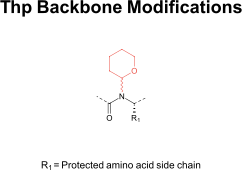
Tetrahydropyranyl (Thp) backbone protection was evaluated by Paravizzini, Hutton, and Karas (2025) as a more acid-labile alternative to benzyl-based N-alkylation. The Thp group is introduced via acid-promoted addition of 3,4-dihydro-2H-pyran to a glycine or alanine benzyl ester, forming a stable N,O-acetal linkage. The protected secondary amine is then acylated with the preceding Fmoc-amino acid using isobutylchloroformate activation, followed by palladium-catalyzed hydrogenolysis of the benzyl ester to give the dipeptide building block.
Cleavage Mechanism of Thp
TFA protonates the acetal oxygen, enabling cleavage of the N–O bond and generation of an electrophilic Thp oxocarbenium cation. This cation is scavenged effectively by water or weak nucleophiles present in the standard cleavage cocktail. Cleavage is faster than for Dcpm (the prior benchmark for acid-labile backbone groups) at both 2% and 5% TFA in direct kinetic comparison, indicating that Thp is removed rapidly under standard 95% TFA cleavage conditions.
Thf Comparison
The tetrahydrofuranyl (Thf) analog has lower steric bulk, which in principle improves coupling kinetics at the secondary amine. However, in the 2025 study, more than 50% of the Thf group was lost under mild acidic conditions used in standard washes, and Thf-protected dipeptides showed poor bench stability. Thf is a research tool, not a routine building block.
When to Choose Thp
Thp is still an emerging backbone-protection strategy. Depending on supplier availability, laboratories may need to prepare Thp-protected dipeptide building blocks in-house following the route described by Paravizzini et al. (2025). For labs equipped for synthetic chemistry, Thp is worth considering when:
- Backbone protection must be placed at a non-Gly position where the amino acid to be coupled next is β-branched (Val, Ile, Thr), and the lower steric bulk of Thp relative to the dimethoxybenzyl group provides a coupling advantage;
- When Trp alkylation risk from benzyl cations is elevated (Thp generates a smaller, less nucleophilically reactive cation than the dimethoxybenzyl system);
- Or, when sequences contain acid-sensitive residues (Met oxidation risk, Trp modification) that benefit from faster TFA treatment enabled by the higher Thp acid lability.
O-Acyl Isopeptides: The Post-Cleavage Solubility Strategy
Chemistry of the Isopeptide Linkage
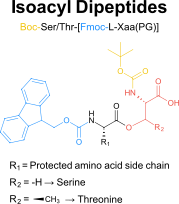
O-Acyl isopeptides replace a standard N-acyl (amide) peptide bond with an O-acyl (ester) bond at a Ser or Thr residue. The acyl group of the preceding amino acid in the sequence is esterified to the β-hydroxyl of Ser or Thr during resin assembly, rather than forming the usual amide at the backbone nitrogen. This produces a backbone ester linkage that eliminates the amide proton donor and alters local torsional flexibility: esters are more conformationally mobile than amides and do not support the planar, partial-double-bond geometry that stabilizes β-sheet hydrogen-bond geometry.
The isopeptide linkage is assembled by routing the chain elongation through the Ser or Thr side-chain hydroxyl rather than the backbone nitrogen. This requires specialized building blocks and careful resin selection. 2-Chlorotrityl chloride resin is preferred: it is compatible with the ester linkage, reduces premature cleavage during synthesis, and shows reduced epimerization at the ester-linked position compared to Wang resin.
The pH Switch: O→N Acyl Migration Under Physiological Conditions
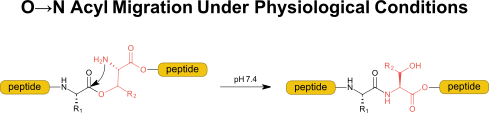
The purified isopeptide is non-aggregating and exhibits substantially higher aqueous solubility than the native peptide. When exposed to near-neutral or slightly basic aqueous conditions (pH 7.0–7.4), the free α-amino group N-terminal to the ester linkage initiates an intramolecular O→N acyl migration. This transfers the acyl group from the Ser/Thr oxygen back to the backbone nitrogen, regenerating the native amide bond quantitatively under physiological conditions, with no byproduct formation.
The migration rate is rapid under physiological conditions (pH 7.4, 37°C). O→N acyl migration is sequence- and linkage-dependent. Reported rates range from very rapid, minute-scale conversion in some O-acyl isopeptide systems to slower conversions depending on local structure, pH, temperature, and whether the migrating amine is freely available. The migration is stable under the acidic conditions of HPLC purification (typically pH 2–3) and under standard peptide storage conditions, enabling clean purification of the non-aggregating isopeptide precursor before conversion to the native sequence.
When to Use the O-Acyl Isopeptide Method
The O-acyl isopeptide strategy is useful when aggregation or insolubility affects resin assembly, cleavage handling, purification, or post-cleavage dissolution. Its strongest advantage is often seen when the native peptide is too insoluble or aggregation-prone for clean purification, but the ester-containing precursor can also reduce aggregation during synthesis. Highly amyloidogenic sequences — Aβ1-42 is the paradigm case — often synthesize and cleave with acceptable on-resin efficiency but precipitate immediately upon dissolution in aqueous buffers, rendering HPLC purification impossible. The isopeptide method converts purification from an impossible step on an insoluble peptide to a routine RP-HPLC separation on a soluble precursor.
For sequences where on-resin aggregation is the primary bottleneck (collapsed resin, deletion sequences dominating the crude LC-MS), ψPro or N-benzyl groups are more direct interventions. The isopeptide method can be combined with ψPro insertions for sequences with both on-resin and post-cleavage aggregation problems.
DKP Risk During Depsipeptide Assembly and Mitigation
During Fmoc deprotection of the amino acid immediately N-terminal to the ester linkage, the liberated free amine can attack the adjacent ester carbonyl intramolecularly. This produces a six-membered diketopiperazine (DKP) ring, cleaving the C-terminal dipeptide unit from the resin. This side reaction is most significant at positions where the chain-terminal dipeptide has low steric bulk or where the geometry favors formation of the six-membered 2,5-diketopiperazine ring.
Mitigation strategies: position the ester linkage away from C-terminal Pro-X or Gly-Pro sequences. Use low-loading resin (0.1–0.2 mmol/g) to reduce interchain proximity. Shorten piperidine exposure at the Fmoc removal step immediately following ester installation. Monitor crude LC-MS for complete absence of the target mass as a diagnostic for DKP cleavage of the C-terminal unit.
The ester linkage is stable under standard piperidine/DMF Fmoc deprotection conditions because the Ser/Thr α-amine remains Boc-protected throughout synthesis. Premature O→N migration cannot occur without the free amine nucleophile. However, if Boc protection is lost at any point during the synthesis, the liberated amine will trigger on-resin migration and cleave the chain at that position. Confirm Boc integrity at each cycle when using this strategy with extended synthesis protocols. Under microwave-assisted conditions, keep piperidine contact time and temperature at the minimum required — elevated temperature accelerates direct ester aminolysis by piperidine.
Sequence-Based Selection: Which Modification, Where, and How Many
This section provides the practical decision logic for designing a backbone modification strategy before synthesis begins.
Locate the Aggregation Nucleus — Step 1
Aggregation is a nucleation-dependent process. It initiates within a specific hydrophobic window — not uniformly along the sequence. Modifying residues outside the nucleation zone does not prevent the initial aggregation event.
Run the target sequence through Peptalyzer™ and examine the SPPS Difficulty Profile (the dual-axis chart comparing Raw Aggregation Potential against Composite Risk across sequence positions) and the Thermodynamic Aggregation Risk profile (β-sheet hotspot with Safe/Monitor/Danger zone annotations). Identify the peak of the Danger zone — this is the primary modification target.
If working without a prediction tool, apply a 5- or 7-residue Kyte-Doolittle window to identify the most hydrophobic segment. Hydrophobic clusters of four or more consecutive Val, Ile, Leu, Phe, Tyr, or Trp residues are the primary targets. Gln-rich stretches are secondary targets.
Apply the Modification Hierarchy — Step 2
When multiple positions within or near the nucleation zone could accept a modification, evaluate them in order:
ψPro first. If the aggregation nucleus or a position within three residues of its center contains Ser, Thr, or Cys, place a ψPro dipeptide there. ψPro provides the greatest disruption — conformational kinking plus hydrogen-bond donor deletion — and couples as a standard building block. A Ser or Thr at the correct position takes absolute priority over alternatives.
Dmb at Gly second. If no Ser/Thr/Cys is available in range but a Gly is present within three to four residues of the core, substitute with Fmoc-Xaa-(Dmb)Gly-OH. Gly’s absence of a β-carbon reduces steric conflict at the secondary amine and permits acceptable coupling yields.
Hmb at non-Gly third. If neither ψPro nor Gly positions are accessible near the aggregation core, and a pre-formed Hmb dipeptide exists or can be prepared for the relevant amino acid pair, use Hmb. Extend coupling time and verify completion by TNBS testing.
On-resin Hmsb fourth. If no compatible pre-formed dipeptide exists and the synthesis is automated, use on-resin Hmsb introduction via the salicylaldehyde imine/NaBH₄ reductive amination protocol. This strategy has no residue restriction.
Thp fifth. Use when the residue immediately following the backbone-modified nitrogen is β-branched (Val, Ile, Thr) and the lower steric bulk of Thp relative to Dmb/Hmb is necessary for acceptable coupling efficiency at that step. Also use when Trp alkylation risk from benzyl-group cations during cleavage is a specific concern for the sequence.
The Narita Spacing Rule: Every Six Residues
The foundational spacing guideline — one backbone modification every six residues — was established empirically by Narita and coworkers through systematic studies on Dmb-protected model peptides. This spacing ensures each modification’s six-residue disruption window covers the next aggregation-prone segment before a new modification is required.
For highly aggregation-prone sequences (Danger zone in Peptalyzer™, sequences >40 residues, multiple hydrophobic domains): one modification every five to six residues. For moderately difficult sequences (single hydrophobic cluster, 20–30 residues): spacing of eight to ten residues is often sufficient and reduces building block cost. For sequences exceeding 30 residues with multiple distinct hydrophobic windows: the required number of modifications is approximately (aggregation-prone segment length in residues) / 6, rounded up.
The Minimum Separation Rule: 2 Residues from Pro or Another Modification
Native Pro and backbone modifications both break β-sheet hydrogen-bonding networks by removing an amide donor. When two such elements are placed within one residue of each other, a local steric cluster forms. Coupling onto the Pro nitrogen — already restricted by its pyrrolidine ring — becomes kinetically unreliable when a backbone-modified secondary amine immediately precedes it in the synthesis direction. The minimum separation is two residues between any backbone modification and a native Pro.
The same minimum separation applies between two backbone modifications. Consecutive secondary amines cannot be acylated reliably under standard automated SPPS conditions. The ideal separation between a backbone modification and a native Pro is five to six residues, allowing their individual disruption windows to tile the sequence without overlap or steric conflict.
The Coupling Trap: Managing the Residue After a Backbone-Modified Nitrogen
The residue coupled onto the backbone-modified secondary amine is the highest-risk coupling step in the synthesis. The nitrogen is secondary and sterically encumbered; coupling kinetics are reduced relative to a standard primary amine. The degree of reduction depends on the N-substituent (Dmb creates the most hindrance; Thp the least) and the incoming amino acid.
Coupling a β-branched residue (Val, Ile, Thr) or an aromatic residue (Phe, Tyr, Trp) directly onto a Dmb-protected secondary amine frequently gives incomplete coupling even with extended reaction time and excess reagent. When this combination is forced by the sequence:
- Consider Thp, an emerging lower-bulk N-substituent strategy, or use on-resin Hmsb (where O→N transfer kinetics provide better acylation efficiency).
- Use HATU activation at 4 equivalents with DIPEA (8 equivalents) for 2–4 hours and apply double coupling.
- Consider microwave-assisted coupling at 50°C for 30 minutes as an alternative for particularly hindered pairs.
- If repositioning the modification by one residue is chemically feasible and still places it within the aggregation zone, that adjustment eliminates the problem without reagent modification.
Placement Relative to the Hydrophobic Core: The Center-Out Rule
In Fmoc-SPPS, synthesis proceeds C-to-N. Map the aggregation-prone region in the synthesis direction, C→N. The first backbone-disrupting unit should be present before the resin-bound chain reaches the aggregation threshold. In normal N→C sequence notation, this often means choosing a compatible residue within the C-terminal half of the hydrophobic window, or immediately C-terminal to it, rather than automatically choosing the N-terminal edge. The modification is then in place and actively disrupting structure formation as the aggregation-prone residues accumulate above it.
Placing the modification too far N-terminal to the hydrophobic core can mean the aggregation-prone window has already been assembled before the disruption is installed. For a 6-residue hydrophobic cluster, first define the numbering convention. In standard N→C notation, the modification should usually be placed before the cluster becomes aggregation-competent during C→N assembly, often near the C-terminal side of the risk window or within the window itself. Avoid giving a universal numeric rule without specifying whether positions are counted from the N-terminus or C-terminus.
When Backbone Modifications Alone Are Insufficient
For sequences exceeding 50 residues or those with multiple aggregation cores, backbone modifications alone may not fully rescue synthesis quality. Sequences dominated by very insoluble residue stretches — poly-Leu/Val/Ile segments without compatible Ser/Thr/Cys/Gly positions — particularly require combination approaches.
Chaotropic Additives and Solvent Switching
Adding 0.5–1.0 M LiCl to the DMF coupling solvent disrupts solvent structure and reduces β-sheet stability at the resin surface. Switching to a DMF/DMSO mixture (1:1 v/v) or using NMP in place of DMF improves solvation of hydrophobic sequences. These are additive interventions — they raise the energy barrier for aggregation without eliminating the hydrogen-bond donor. They can reduce deletion sequence formation in some moderately difficult sequences, but the effect is strongly sequence-dependent. Correctly placed backbone modifications usually provide a more direct intervention because they remove or disrupt the local hydrogen-bonding pattern rather than only changing the solvent environment.
HFIP (1–2% v/v in DMF) and TMAA (0.1 M in the coupling solvent) are used for sequences with strong β-sheet propensity to further disrupt interchain stacking. Both are compatible with standard Fmoc-SPPS reagents and coupling conditions.
Microwave-Assisted SPPS
Microwave-assisted coupling at 50°C, 25 W, 5–10 minutes increases both coupling and deprotection rates on aggregated resins by providing kinetic energy that partially compensates for diffusion limitations. This is most effective at secondary amine coupling positions where a hindered amino acid must be added after backbone modification installation. Microwave conditions do not remove aggregation — they accelerate kinetics enough to outpace the diffusion limitation imposed by partial aggregate formation.
Resin Selection
PEG-based resins (ChemMatrix, TentaGel) are preferred over conventional PS-DVB resins for difficult sequences. The PEG matrix swells in a wider range of solvents and provides a more hydrophilic microenvironment that retards hydrophobic chain collapse. Low loading (0.1–0.2 mmol/g) reduces local chain density and interchain proximity. Backbone modifications are most effective when paired with low-loading PEG resins — the combination is frequently required for sequences exceeding 40–50 residues.
Side Reactions Associated with Backbone Modifications
Dmb/Hmb Cation Alkylation of Trp
When Dmb or Hmb is cleaved by TFA, the released electrophilic cation alkylates the indole side chain of unprotected Trp. This can generate stable Trp-alkylated impurities. Approximate diagnostic adducts are around +150 Da for Dmb-derived alkylation and around +136 Da for Hmb-derived alkylation, although exact interpretation should be confirmed by MS/MS when the impurity is important. Using Fmoc-Trp(Boc)-OH protects the indole nitrogen during cleavage, preventing alkylation. Including ~2% TIS in the cleavage cocktail provides additional cation scavenging. See the Cleavage Cocktail article for scavenger optimization when both Dmb/Hmb and Trp are present.
Hmb Lactonization
The phenolic 2-hydroxyl of Hmb can attack an activated carbonyl under coupling conditions, forming a benzoxazepinone lactone byproduct. The lactone is acid-stable; it appears in LC-MS as a byproduct approximately −18 Da from the expected backbone-protected peptide mass at that assembly stage. Prevention requires strict control of base equivalents, avoidance of acetic anhydride capping after Hmb installation, and minimizing acylant contact time.
ψPro-Associated Aspartimide in Flow Synthesis
A recently identified observation from flow peptide chemistry (Szaniszló et al.) suggests that the oxazolidine character of the ψPro ring may, under extended basic exposure in confined flow reactor environments, catalyze rather than suppress aspartimide formation at nearby Asp residues (emerging observation, limited to specific flow conditions). In batch Fmoc-SPPS with standard piperidine/DMF protocols, the conventional understanding holds: ψPro at n+2 to Asp suppresses aspartimide. Chemists using automated flow SPPS with ψPro near Asp positions should monitor LC-MS carefully for the −18 Da aspartimide signature.
Incomplete Deprotection: Analytical Signatures
Under-cleaved backbone protecting groups produce characteristic mass adducts in LC-MS:
- Dmb retention: The 2,4-dimethoxybenzyl N-substituent retained on the backbone nitrogen shifts the peptide mass by approximately +150 Da above the native sequence mass.
- Hmb retention: The 2-hydroxy-4-methoxybenzyl group retained shifts the mass by approximately +136 Da.
- Thp retention: The tetrahydropyranyl group retained shifts the mass by +84 Da.
In RP-HPLC, backbone-protected peptides typically elute later than the native peptide because the retained N-alkyl group adds hydrophobic character. An incompletely cleaved Dmb-containing peptide may appear as a distinct later-eluting peak with the characteristic +150 Da mass shift. Extended TFA treatment — 3–4 hours in 95% TFA/TIS/H₂O/EDT at room temperature — resolves incomplete Dmb and Hmb cleavage in most cases. Thp is self-resolving under standard 2-hour cleavage conditions given its higher acid lability.
Practical Protocols
Standard Coupling Protocol for Pre-Formed Dipeptide Building Blocks
Pre-formed ψPro, Dmb, Hmb, and Thp-protected dipeptide building blocks are designed to avoid difficult direct acylation of a backbone-modified secondary amine on resin. They usually couple to resin-bound primary amines under standard or mildly extended Fmoc-SPPS conditions:
- Swell the Fmoc-deprotected peptide-resin in anhydrous DMF for 20–30 minutes.
- Dissolve the pre-formed dipeptide (4 equivalents relative to resin loading) with HATU (3.9 equivalents) or DIC/OxymaPure (5 equivalents each) in a minimum volume of anhydrous DMF.
- Add DIPEA (8 equivalents) and allow pre-activation for 1–2 minutes.
- Transfer the activated solution to the resin and agitate for 1–2 hours at room temperature.
- Drain, wash with DMF (3×), DCM (3×), DMF (3×).
- Verify completion: for coupling onto primary amines before dipeptide installation, use Kaiser. For standard pre-formed dipeptide building blocks, confirm coupling to the resin-bound primary amine using Kaiser or an equivalent primary-amine test. Use TNBS or chloranil only when the monitored resin-bound amine is a true secondary amine, such as after on-resin Hmsb/Hmnb introduction.
- Perform Fmoc deprotection with 20% piperidine in DMF (1 × 3 min, 1 × 15 min) to expose the primary amine of the newly coupled dipeptide for the next coupling cycle.
Double-Coupling Protocol for Hindered Secondary Amine Positions
When a backbone protecting group is introduced on resin and generates a backbone-modified secondary amine — for example during Hmsb/Hmnb use, or other direct N-alkylation strategies — the next coupling is a high-risk step and should be treated with extended or double coupling conditions:
- First coupling charge: 4 equivalents amino acid, 4 equivalents HATU, 8 equivalents DIPEA, DMF, 2 hours at room temperature.
- Drain without washing. Add a second charge of identical composition immediately.
- Continue agitation for 1–2 additional hours. For β-branched or aromatic residues onto Hmb nitrogen, extend to 4 hours total.
- Drain, wash. Perform TNBS test (not Kaiser) for confirmation at these positions: Kaiser gives attenuated or negative results for secondary amines and cannot confirm coupling completion here.
Monitoring note: The Kaiser ninhydrin test reliably detects free primary amines. Kaiser gives attenuated or negative results at secondary amines. This includes free secondary amines generated during on-resin backbone protection. For standard pre-formed ψPro dipeptides, the exposed N-terminus after Fmoc removal is usually the N-terminal amino acid of the dipeptide and is normally Kaiser-positive if it is a primary amine. Use TNBS or chloranil when monitoring true secondary amines. Kaiser cannot, however, confirm coupling completion at a secondary amine position. Use TNBS or the chloranil test for secondary amine monitoring. See the dedicated reaction monitoring article for full protocols.
Protocol for On-Resin Hmsb Introduction (Automated)
For automated on-resin introduction of Hmsb at any position:
- After Fmoc deprotection of the target position, drain and wash with DMF.
- Add 4-methoxy-5-(methylsulfinyl)salicylaldehyde (1.1 equivalents relative to resin loading) in DMF. Mix for 30 minutes — imine (Schiff base) formation. Wash with DMF.
- Add NaBH₄ (3 equivalents) in DMF. Mix for 20 minutes — reductive amination to secondary amine. Wash with DMF.
- Couple the next Fmoc-amino acid using HCTU/DIPEA (4 equivalents each, 30 minutes) or HATU/DIPEA under standard automated conditions.
- Continue SPPS. Hmsb is removed during TFA cleavage following mild pre-reduction of the sulfoxide group.
How Peptalyzer™ Supports Backbone Modification Planning
Peptalyzer™ provides two outputs directly relevant to backbone modification planning.
The SPPS Difficulty Profile plots two metrics across the full sequence. Engine A (Raw Aggregation Potential) captures thermodynamic β-sheet aggregation propensity from residue hydrophobicity and secondary structure propensity. Engine B (Composite Risk) adds dynamic penalties for steric burden, hydropathy, aromatic clustering, and bulky-on-bulky stacking. Together they map which residue windows represent the highest synthesis risk.
The Thermodynamic Aggregation Risk Profile displays a sliding-window aggregation score with Safe/Monitor/Danger zone annotations. The peak of the Danger zone identifies the primary aggregation-prone window, but not necessarily a single mandatory modification residue; secondary Danger peaks in multi-domain sequences indicate additional modification sites.
Applying the outputs: Identify the peak position in the aggregation risk profile. Use the Danger-zone peak to define the risk window, then choose a chemically compatible position that respects C→N synthesis direction, available Ser/Thr/Cys/Gly or Hmsb-compatible positions, native Pro spacing, and known side-reaction motifs. For sequences with multiple Danger peaks, plan one modification per peak following the minimum-separation rules.
Peptalyzer™’s SPPS aggregation model is residue-only: it does not account for resin type, resin loading density, solvent, or temperature. These physical parameters shift the effective aggregation threshold for any specific synthesis run. Interpret the profiles as thermodynamic likelihood maps that guide placement decisions, not as absolute outcome predictions.
Chemist’s Perspective
The Chemist’s Trap: Three failure modes that backbone modifications do not fix — and one they create.
Ignoring Post-Cleavage Behavior — Failure 1
A sequence that assembles cleanly on resin — because ψPro and Dmb insertions prevented β-sheet collapse during synthesis — can still precipitate immediately upon cleavage and dissolution in TFA/water. Backbone modifications are removed by TFA. The native, aggregation-prone sequence is what enters the HPLC system. Highly hydrophobic sequences often aggregate under acidic cleavage conditions before reaching the column. The crude material appears as a gel, and injection produces column fouling and ghosting peaks on subsequent runs. If post-cleavage insolubility is the bottleneck, the O-acyl isopeptide strategy is the appropriate intervention — not additional backbone modifications during synthesis.
Placing Modifications by Intuition Rather than by Sequence Analysis — Failure 2
Distributing backbone modifications evenly across the entire sequence at arbitrary intervals wastes expensive building blocks at low-risk positions and may leave the actual aggregation nucleus unprotected. Run Peptalyzer™ or a Kyte-Doolittle hydropathy analysis first. For a 35-residue sequence with a single hydrophobic core at residues 12–18, two or three modifications centered on that window are more effective than six evenly spaced modifications across the full sequence.
Not Verifying the Secondary Amine Coupling Step — Failure 3
After backbone modification is installed and the subsequent residue is added, synthesis continues automatically. If Kaiser monitoring is used — as on most automated synthesizers — the result at a secondary amine position gives false negatives, making incomplete coupling invisible. The resulting mixed population of correct and uncoupled chains produces deletion sequences that may be mistaken for aggregation artifacts in the crude LC-MS, but arise from a correctable monitoring failure. Always program TNBS verification after coupling onto a backbone-modified nitrogen.
The Synthesis Trap that Backbone Modifications Create — Failure 4
Over-modification. Placing ψPro or other backbone-disrupting units at every compatible site can create unnecessary local distortion, increase building-block cost, and introduce avoidable steric congestion. For pre-formed ψPro dipeptides, the secondary amine acylation has already been handled during building-block synthesis, but excessive use can still complicate downstream couplings and sequence handling. Apply the minimum effective density, not the maximum available. Each is a high-risk coupling with reduced efficiency. Three consecutive difficult couplings can generate more deletion sequence than a single well-targeted modification would have prevented. Apply the minimum effective density, not the maximum available.
Peptide Backbone Modifications — FAQ
Chaotropic additives reduce the thermodynamic stability of on-resin β-sheets, but they do not eliminate the hydrogen-bond donor or introduce a geometric kink. For sequences with strong aggregation propensity, additives can help but their effect is sequence-dependent. Correctly placed backbone modifications are usually more direct because they disrupt the local hydrogen-bonding pattern or backbone geometry. Additives are a complement to, not a substitute for, backbone modification at aggregation-prone sequences.
Double coupling is the diagnostic. If a second coupling charge resolves the incomplete reaction (Kaiser turns negative on the second attempt), the cause is kinetic — reagent optimization, extended time, or reagent switch is sufficient. If double coupling does not improve completion even after 4 hours, and the problem extends over several consecutive positions, aggregation is the likely cause. A simultaneous collapse of resin volume during the coupling step confirms aggregation.
Yes, chemically — TFA cleavage regenerates the native Ser and Thr regardless of how many ψPro are included. Practically, the constraint is cost and build complexity. In a 30-residue sequence with five Ser/Thr positions, three well-placed ψPro covering the highest-risk window are more cost-effective than five ψPro at every compatible position. Use Peptalyzer™ to rank positions by aggregation risk and allocate ψPro to the highest-priority sites.
Use on-resin Hmsb introduction at the target position — it places backbone protection at any residue regardless of side-chain identity. If Hmsb is not available, prepare an Hmb dipeptide for the relevant amino acid pair. When the next residue to be coupled after the modification is β-branched (Val, Ile), plan for extended coupling time (4 hours), double coupling, and consider switching the modification to Thp to reduce steric conflict at that step.
Approximate mass adducts for retained backbone groups: +150 Da for Dmb, +136 Da for Hmb, +84 Da for Thp. These appear in LC-MS as satellite peaks eluting after the native peptide peak on RP-HPLC. If a retention-adduct peak is present in the crude, extend TFA treatment to 3–4 hours, confirm 2% TIS is present in the cleavage cocktail, and re-cleave a small resin sample to distinguish incomplete cleavage from a synthetic byproduct.
In successful cleavage, ψPro is removed during final TFA deprotection, regenerating the native Ser, Thr, or Cys. The intended final peptide is chemically identical to material synthesized without ψPro. For Cys-derived ψPro or unusually difficult sequences, confirm complete deprotection by LC-MS.
Aggregation risk increases substantially above 20–25 residues for sequences with moderate-to-high hydrophobicity. For any sequence exceeding 30 residues with a Kyte-Doolittle peak above +1.5 in any 7-residue window, plan backbone modification before beginning synthesis. Waiting for synthesis failure and then attempting a rescue strategy typically requires a full resynthesis — the investment in a ψPro or Dmb building block at the planning stage is less expensive than losing a 40-residue synthesis.
References
Wöhr, T., Wahl, F., Nefzi, A., Rohwedder, B., Sato, T., Sun, X., & Mutter, M. (1996). Pseudo-prolines as a solubilizing, structure-disrupting protection technique in peptide synthesis. Journal of the American Chemical Society, 118(38), 9218–9227.
- Foundational paper establishing pseudoprolines as a reversible backbone modification strategy; introduces isopropylidene oxazolidine building blocks and demonstrates β-sheet disruption and aggregation suppression in model difficult-sequence peptides.
- DOI: 10.1021/ja961509q
Cardona, V., Eberle, I., Barthelemy, S., Beythien, J., Doerner, B., Schneeberger, P., Keyte, J., & White, P. D. (2008). Application of Dmb-dipeptides in the Fmoc SPPS of difficult and aspartimide-prone sequences. International Journal of Peptide Research and Therapeutics, 14(4), 285–292.
- Systematic evaluation of Dmb dipeptides for aggregation suppression and aspartimide prevention at Asp-Gly; includes direct comparison of Dmb versus Hmb efficiency in difficult-sequence synthesis.
- DOI: 10.1007/s10989-008-9154-z
Quibell, M., Owen, D., Packman, L. C., & Johnson, T. (1994). Suppression of piperidine-mediated side product formation for Asp(OBut)-containing peptides by the use of N-(2-hydroxy-4-methoxybenzyl) (Hmb) backbone amide protection. Journal of the Chemical Society, Chemical Communications, 2343–2344.
- Primary reference for the Hmb backbone protecting group; establishes the O→N intramolecular acyl transfer mechanism and its application to suppression of side reactions and aggregation in Fmoc-SPPS.
- DOI: 10.1039/C39940002343
Abdel-Aal, A-B. M., Papageorgiou, G., Raz, R., Quibell, M., Burlina, F., & Offer, J. (2016). A backbone amide protecting group for overcoming difficult sequences and suppressing aspartimide formation. Journal of Peptide Science, 22(5), 360–367.
- Describes the Hmnb and Hmsb backbone protecting groups and establishes the automated on-resin introduction protocol via salicylaldehyde Schiff base formation and NaBH₄ reduction; confirms Hmsb as the preferred automated strategy for position-independent backbone protection.
- DOI: 10.1002/psc.2877
Abdel-Aal, A-B. M., Papageorgiou, G., Quibell, M., & Offer, J. (2014). Automated synthesis of backbone protected peptides. Chemical Communications, 50(62), 8316–8319.
- Demonstrates fully automated on-resin introduction of Hmsb backbone protection; validates the method for challenging aggregation-prone sequences and confirms compatibility with standard automated SPPS protocols.
- DOI: 10.1039/C4CC03065F
Paravizzini, S. J., Hutton, C. A., & Karas, J. A. (2025). Tetrahydropyranyl backbone protection for enhanced Fmoc solid-phase peptide synthesis. Chemistry – A European Journal, 31, e202501510.
- Introduces the Thp group as a highly acid-labile, universally applicable backbone protecting group for Fmoc-SPPS; demonstrates improved synthesis of amyloid-β and prion-derived peptide fragments and benchmarks Thp acid lability against Dcpm.
- DOI: 10.1002/chem.202501510
Paravizzini, S. J., Hutton, C. A., & Karas, J. A. (2025). Backbone protecting groups for enhanced peptide and protein synthesis. Angewandte Chemie International Edition. Advance online.
- Comprehensive review of backbone protecting group strategies for Fmoc-SPPS; covers synthesis routes, on-resin introduction methods, aggregation suppression efficacy, and side reaction profiles for all major classes from Dmb to Thp.
- DOI: 10.1002/anie.202509939
Sohma, Y., Hayashi, Y., Kimura, M., Chiyomori, Y., Taniguchi, A., Sasaki, M., Kimura, T., & Kiso, Y. (2005). The O-acyl isopeptide method for the synthesis of difficult sequence-containing peptides: application to the synthesis of Alzheimer’s disease-related amyloid beta peptide (Aβ) 1-42. Journal of Peptide Science, 11(8), 441–451.
- Establishes the O-acyl isopeptide strategy applied to Aβ1-42; demonstrates synthesis of the water-soluble 26-O-acyl isoAβ1-42 precursor and rapid O→N acyl migration under physiological conditions at pH 7.4 with no byproduct formation.
- DOI: 10.1002/psc.649
Sohma, Y., Yoshiya, T., Taniguchi, A., Kimura, T., Hayashi, Y., & Kiso, Y. (2007). Development of O-acyl isopeptide method. Biopolymers (Peptide Science), 88(2), 253–262.
- Comprehensive review of the O-acyl isopeptide method; covers mechanism, scope, segment condensation applications, and use as a chemical biology tool for studying peptide folding and aggregation.
- DOI: 10.1002/bip.20683
Postma, T. M., & Albericio, F. (2014). Cysteine pseudoprolines for thiol protection and peptide macrocyclization enhancement in Fmoc-based solid-phase peptide synthesis. Organic Letters, 16(6), 1772–1775.
- Establishes Cys-derived thiazolidine pseudoprolines as practical building blocks for Fmoc-SPPS; demonstrates thiol protection dual function and aggregation suppression for Cys-containing sequences.
- DOI: 10.1021/ol5004725