Why HOBt and HOAt Benzotriazoles Still Matter in Peptide Coupling
In peptide synthesis, the drive for efficient and racemization-free coupling led to the development of benzotriazole additives. Among them, 1-hydroxybenzotriazole (HOBt) and 1-hydroxy-7-azabenzotriazole (HOAt) became benchmarks for understanding how N-hydroxy compounds accelerate amide-bond formation and stabilize reactive intermediates. Since their introduction in the 1970s, and refinement through 1990s, HOBt peptide coupling and its HOAt variant have remained central to both solid-phase and solution-phase synthesis—still defining the mechanistic framework of modern peptide chemistry despite the rise of newer systems such as OxymaPure and COMU.
Their importance, however, extends beyond pure reactivity:
- They suppress racemization by channeling unstable O-acylisourea intermediates into stable active esters (O-acyl-OBt/OAt).
- They improve solubility and selectivity in polar aprotic solvents (DMF, NMP).
- They serve as mechanistic benchmarks for comparing newer reagents such as Oxyma/DIC or HATU/DIPEA systems.
Yet, benzotriazoles illustrate the trade-off between efficiency and safety: highly effective, but energetically hazardous in dry form. This has driven the development of hydrated, halogenated, and polymer-supported analogs to retain performance while minimizing risk.
This article focuses exclusively on benzotriazole-based coupling reagents — HOBt, HOAt, and their close analogs — detailing their mechanisms, selection criteria, and safe handling. Other reagent classes (e.g., Onium salts and Oxyma-type additives) will be treated in companion articles for clarity and cross-reference.
Chemistry and Mechanism of HOBt Peptide Coupling
Structures and Electronic Features
Benzotriazole-based additives such as HOBt and HOAt share a common structural motif — a 1-hydroxybenzotriazole ring, in which the N–OH group is conjugated with an aromatic triazole system. This arrangement provides both stabilization of the O-acyl intermediate and fine control of acidity and leaving-group ability.
In HOBt, the hydroxyl group is connected to the N-1 atom of the benzotriazole nucleus. The key to its reactivity lies in tautomeric equilibrium between the N–OH and O–H forms, which allows the anion (OBt⁻) to act as a nucleophile toward activated carboxyl groups. This transient nucleophilicity enables the interception of the O-acylisourea intermediate (from DIC or DCC activation) to form the more stable O-acyl-OBt ester, effectively preventing N-acylurea by-products and racemization.
HOAt differs from HOBt by an additional nitrogen at position 7 of the benzene ring (1-hydroxy-7-azabenzotriazole). The presence of this heteroatom exerts two major effects:
- Increased acidity (pKₐ ≈ 3.3 in MeCN vs ≈ 4.6 for HOBt), improving anion formation under mild base.
- Enhanced leaving-group ability and anchimeric assistance, as the adjacent N7 can stabilize the developing positive charge in the transition state.
Therefore, hese combined effects make HOAt typically faster and less prone to racemization than HOBt in identical conditions.

The benzotriazole ring itself is remarkably versatile: electron-withdrawing substituents on the aromatic portion (e.g., 6-Cl, 6-CF₃, 6-NO₂) further increase acidity and leaving-group ability, while electron-donating groups decrease them. Accordingly, these derivatives have been explored as safer or more reactive analogs, discussed below.
HOAt and Halogenated Variants of HOBt Coupling Additives
While HOBt and HOAt define the core chemistry of benzotriazole additives, structural modification of the aromatic ring has produced several analogs designed to enhance reactivity, stability, or safety. The most studied are halogenated and nitro-substituted variants, which fine-tune acidity and leaving-group behavior.
Halogenated Derivatives
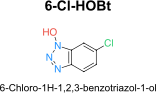
6-Chloro-1-hydroxybenzotriazole (6-Cl-HOBt) is the best-known improved analog. The electron-withdrawing chlorine atom increases acidity (pKₐ ≈ 3.3 in MeCN), strengthening the conjugate base (OBt⁻) and thereby improving the rate of acyl transfer. Couplings using DIC/6-Cl-HOBt or EDC/6-Cl-HOBt typically proceed faster and with lower epimerization than HOBt under identical conditions. Importantly, the 6-Cl substituent also reduces the explosive sensitivity of the anhydrous solid, allowing safer handling and shipping.
Further halogenation, such as 1-Hydroxy-6-(trifluoromethyl)benzotriazole (6-CF₃-HOBt), enhances these electronic effects but may over-stabilize the conjugate base, slightly lowering coupling efficiency in some sequences. Consequently, such derivatives remain less common but illustrate how electron withdrawal correlates with both acidity and reactivity.

Polymer-Supported HOBt / HOAt Coupling Systems
In the early 2000s, several vendors introduced polymer-bound HOBt resins designed to improve handling safety and simplify purification. These reagents immobilized the benzotriazole moiety on cross-linked polystyrene supports, allowing filtration of the spent additive after coupling.
Although conceptually appealing, limited reactivity and poor solvation restricted their use, and by the mid-2010s all commercial versions were discontinued. For this reason, today, the safety objectives they addressed are better achieved through hydrated HOBt or non-benzotriazole substitutes such as OxymaPure.
Overview of Benzotriazole Additives
| Reagent | CAS No. | Approx. pKa (medium) | Relative Reactivity | Structure–Reactivity Insight |
|---|---|---|---|---|
| HOBt | 123333-53-9 | ≈4.6 (MeCN) | Reference | Balances acidity and leaving-group ability; benchmark OBt active-ester formation. |
| HOAt | 39968-33-7 | ≈3.3 (MeCN) | 2–4× faster vs HOBt | 7-aza nitrogen increases acidity and provides anchimeric (n→π*) assistance in the transition state. |
| 6-Cl-HOBt | 26198-19-6 | ≈3.3 (MeCN) | ~1.5× faster vs HOBt | Inductive withdrawal (Cl) strengthens OBt⁻ and improves leaving-group ability; safer and more stable than HOBt. |
| 6-CF3-HOBt | 26198-21-0 | ≈3.2 (DMF) | ~1.5–2× faster | Strong –CF3 withdrawal increases acidity and stability of the O-anion; promotes clean active-ester formation. |
| Polymer-supported OBt / OAt | — | — | Lower than free analogs | Historical concept: benzotriazole moieties immobilized on polystyrene to improve safety and simplify work-up; no longer commercially available and limited by diffusion/solvation effects. |
Note: pKa values depend on medium; relative acidity and kinetics in polar aprotic solvents (DMF, NMP, MeCN) best predict coupling behaviour.
Mechanism of Peptide Coupling with HOBt and HOAt

1. Activation of the Carboxylic Acid by the Carbodiimide
The carboxylate oxygen of the protected amino acid adds to the central carbon of DIC or DCC, forming a transient zwitterionic intermediate that collapses to the O-acylisourea. This electrophilic intermediate is kinetically unstable; without an additive it can rearrange to an unreactive N-acylureaor cyclize to an oxazolone, leading to racemization. With DIC, the by-product N,N′-diisopropylurea (DIU) remains soluble in DMF/NMP—ideal for SPPS—whereas DCC produces the less soluble N,N′-dicyclohexylurea (DCU), which often precipitates, simplifying work-up in solution-phase couplings.
2. Interception by the Benzotriazole Additive
The additive—either as the neutral N-hydroxy form or its conjugate base (OBt⁻ / OAt⁻)—attacks the carbonyl carbon of the O-acylisourea, displacing the carbodiimide fragment and forming the O-acyl-OBt (or O-acyl-OAt) active ester. This transformation converts a labile, rearrangement-prone intermediate into a well-defined acylating species, greatly suppressing side reactions.
3. Amide-Bond Formation (Aminolysis)
The peptide amine then performs a nucleophilic acyl substitution on the active ester, producing the amide bond and liberating the benzotriazolate anion. Proton transfer from the conjugate acid of the base regenerates the neutral additive. The carbodiimide is converted into its urea by-product (DIU from DIC, DCU from DCC).
4. Neighboring-Group and Electronic Effects
In HOAt, the 7-aza nitrogen participates through anchimeric n→π* assistance and intramolecular hydrogen bonding, stabilizing the developing positive charge on the ring during C–O bond cleavage. This intramolecular participation lowers the activation barrier, accelerates breakdown of the tetrahedral intermediate, and suppresses oxazolone formation, giving faster coupling and lower racemization than HOBt.

Reactivity and leaving-group trend:
HOAt > 6-Cl-HOBt ≈ 6-CF₃-HOBt > HOBt
Electron-withdrawing substituents such as Cl and CF₃ further enhance acidity and leaving-group ability by stabilizing the conjugate base, while maintaining lower detonation sensitivity.
5. Competing Pathways and Control
- N-Acylurea formation competes when the additive concentration is too low.
- Oxazolone formation and epimerization arise under strongly basic or dehydrating conditions.
To suppress these:
- Maintain a slight excess of the benzotriazole additive.
- Use minimal base (or none for Cys, His).
- Pre-activate briefly at room temperature and add the amine promptly.
Coupling efficiency correlates with the leaving-group ability of the additive and the stabilization of the tetrahedral intermediate.
Key Mechanistic Takeaways
- HOAt’s 7-aza nitrogen provides anchimeric stabilization, explaining its superior rate and stereochemical fidelity.
- The efficiency of coupling follows the order HOAt > 6-Cl-HOBt ≈ 6-CF₃-HOBt > HOBt.
- Reaction kinetics are first-order in amine and pseudo-first-order in active ester, consistent with a bimolecular acyl-transfer mechanism.
- Moreover, polar aprotic solvents (DMF, NMP, MeCN) and moderate moisture improve reproducibility by balancing reactivity and stability.
Optimizing HOBt Peptide Coupling Conditions
Efficient use of benzotriazole additives depends on balancing reactivity, stability, and selectivity. The following parameters—solvent, base, stoichiometry, and temperature—govern coupling efficiency in both solid-phase and solution-phase synthesis.
Solvent and Base Effects
Solvent Choice
Benzotriazole-mediated couplings perform best in polar aprotic solvents such as N,N-dimethylformamide (DMF) or N-methyl-2-pyrrolidone (NMP). These media ensure adequate solubility of carboxylates, carbodiimides, and the OBt/OAt intermediates while maintaining additive stability. They also solvate both the carbodiimide and the benzotriazolate anion, promoting smooth acyl transfer and preventing premature precipitation of reactive species.
For less polar substrates, mixed solvent systems (e.g., DCM/DMF or THF/DMF) may be used, provided the overall polarity remains sufficient to stabilize the O-acylisourea intermediate. Avoid strongly protic solvents, which hydrolyze active esters or protonate the additive, reducing activation efficiency and yield.
Base Selection
A tertiary amine base (typically DIPEA or NMM) can be included to deprotonate the N–OH group and generate the reactive OBt⁻ or OAt⁻ anion. However, the need for an external base depends on the system:
- Base-free DIC/HOBt or DIC/HOAt couplings remain the best low-racemization options, especially for Cys, His, or other racemization-prone residues.
- Limited base addition (≤1 eq) can accelerate anion formation for moderately hindered residues while minimizing oxazolone formation.
- Full base charge (2–6 eq) may be required for difficult couplings (secondary amines, Val, Ile, or α,α-dialkylglycines).
- Weaker bases such as sym-collidine are suitable when racemization is critical to avoid, while stronger aminesthan DIPEA often promote oxazolone formation, particularly with Asp or Cys residues.
Mechanistic schemes often omit the base for clarity, but in practice, it governs the balance between reaction rate and stereochemical fidelity.residues.
Stoichiometry and Reaction Time
Use the additive in slight excess (1.1–1.3 eq relative to the carboxylic acid) to ensure complete interception of the O-acylisourea. Typical SPPS conditions:
- 3–5 eq amino acid
- 3–5 eq DIC
- 3–5 eq HOBt or HOAt
- 6–8 eq tertiary amine base (DIPEA, NMM, or collidine) if required
Typical solution-phase coupling:
- 1.1–1.5 eq additive
- 1 eq base, usually sufficient
Run reactions at ambient temperature. Elevated temperatures increase the risk of O-acylisourea rearrangement or additive decomposition. As a result, HOAt-based couplings are typically faster and reach completion within 15–30 min, whereas HOBt may require up to 1 hour under identical conditions.
Influence of Additive Concentration and Moisture
Trace water (≤0.5%) can stabilize HOBt and HOAt and lower explosion risk, but higher water content causes hydrolysisof the O-acyl-benzotriazole ester. To maintain balance:
- Use anhydrous DMF or NMP, but handle benzotriazoles as monohydrates.
- Prepare solutions freshly; avoid long-term storage of premixed DIC/HOBt or DIC/HOAt systems, as self-condensation or polymerization can occur.
Integration into Fmoc Deprotection Workflows
During repetitive SPPS cycles, small amounts of HOBt or HOAt may be added to the Fmoc deprotection solution(typically piperidine/DMF) to suppress aspartimide formation and backbiting reactions. These additives act as mild nucleophilic traps, stabilizing transient carboxylates formed during deprotection.
However, this stabilizing effect can slightly reduce the Fmoc cleavage rate. For this reason, Oxyma has largely replaced HOBt in modern deprotection cocktails—it offers equivalent suppression of side reactions with substantially lower energetic risk.
Temperature and Agitation
Temperature strongly influences both activation rate and side-product formation:
- Below 25 °C: Optimal for minimizing racemization and decomposition.
- Above 40 °C: Increases risk of N-acylurea formation and partial decarboxylation (e.g., Boc-Asp).
Gentle agitation or continuous-flow conditions improve coupling uniformity, particularly in large-scale SPPS or resin-swelled systems.
In Summary
Benzotriazole-based couplings perform best under mildly basic, polar, and anhydrous conditions. Reaction success depends less on reagent excess than on precise control of solvation, timing, and temperature, which together define the balance between reactivity, yield, and stereochemical integrity.
Reactivity and Selection Criteria of HOBt and HOAt Coupling Additives
Acidity and Leaving-Group Ability
The reactivity of benzotriazole additives is governed primarily by their acidity and the stability of the departing anionduring amide-bond formation. Absolute pKₐ values vary depending on solvent and measurement method, but for peptide synthesis, the relevant parameter is the relative acidity and leaving-group ability in polar aprotic media (DMF, NMP), not in water.
Aqueous pKₐ data often appear in literature but correlate poorly with actual coupling behavior. Under solid-phase peptide synthesis (SPPS) conditions, relative acidity (and thus leaving-group strength) correlates far more closely with both coupling rate and racemization control.
In this environment, the following qualitative order of acidity and reactivity is consistently observed:
HOAt > 6-Cl-HOBt ≈ 6-CF₃-HOBt > HOBt
This hierarchy mirrors both experimental kinetic studies and DFT-calculated energy barriers:
- Notably, HOAt is the most acidic and provides the best leaving-group ability, largely due to anchimeric assistance via N7 and enhanced electron withdrawal.
- 6-Cl-HOBt and other halogenated derivatives gain acidity through inductive effects, offering faster couplings and lower racemization than HOBt.
- HOBt remains the standard benchmark, balancing reactivity and selectivity for general-purpose coupling reactions.
Comparative Performance of Benzotriazole Additives
Overall, the differences in acidity and leaving-group ability translate directly into practical performance. More acidic additives such as HOAt or 6-CF₃-HOBt accelerate acyl-transfer and minimize epimerization in difficult residues, while milder analogs like HOBt provide optimal control for routine sequences. Furthermore, 6-Cl-HOBt offers an excellent compromise between reactivity and safety and is often chosen when shipping or storage restrictions apply.
| Reagent | Advantages | Limitations | Typical Use / Selection Criteria | Safety / Handling Notes |
|---|---|---|---|---|
| HOBt | Balanced rate and selectivity; benchmark additive in peptide coupling | Energetic when dry; moderate racemization risk with difficult residues | General-purpose additive for SPPS and solution coupling; standard benchmark | Use as monohydrate or in solution; avoid drying, impact, and friction. |
| HOAt | Highest coupling rate; lowest epimerization; efficient for hindered or N-methyl residues | Energetically sensitive; higher cost; limited long-term stability | For difficult or stalled couplings requiring enhanced reactivity | Use hydrated or solvated forms; mix immediately before coupling. |
| 6-Cl-HOBt | Improved acidity and safety; reduced detonation sensitivity | Slightly lower solubility in DMF/NMP; moderate availability | Preferred substitute for HOBt when safety or transport constraints apply | Supplied as wet solid or DMF solution; verify water content and storage temperature. |
| 6-CF3-HOBt | High reactivity and clean OBt ester formation; excellent for hindered amines | Expensive; may overactivate labile residues; limited vendor availability | Used for challenging or sterically hindered couplings requiring strong activation | Use freshly; avoid prolonged heating; monitor for overactivation or side reactions. |
Selection at a Glance
Choosing the optimal additive depends on the coupling context, steric demand, and safety profile. The summary below provides a quick decision framework, linking typical experimental situations with the most suitable benzotriazole derivative.
| Coupling Context | Recommended Additive | Base | Reason |
|---|---|---|---|
| Easy coupling, low racemization risk | HOBt | None | Balanced reactivity |
| Difficult or hindered coupling | HOAt | Optional mild base | Highest rate, low racemization |
| Racemization-prone residues (Cys, His) | HOBt or HOAt | None | Base-free preserves stereochemistry |
| Safety-prioritized synthesis | 6-Cl-HOBt | Optional | Lower explosive sensitivity |
| Large-scale or automated process | Polymer-supported OBt/OAt | Optional | Safer handling, simpler purification |
Related Reagent Families
Other reagent families, such as benzotriazinones (HOOBt, DEPBT), share the same conceptual goal of enhancing acyl-transfer efficiency but function as standalone coupling reagents rather than auxiliary additives. Their chemistry and applications will be discussed separately.
Safety and Regulatory Guidelines for HOBt & HOAt Peptide Coupling
Thermal Hazard and Decomposition Mechanism
Benzotriazole additives are highly effective coupling accelerators, but their energetic nature requires careful handling. Anhydrous HOBt, HOAt, and their halogenated analogs are classified as energetic materials because the aromatic triazole system contains both oxidizing (N–O) and reducing (N–N) bonds. Under confinement or heating, these reagents can undergo rapid exothermic decomposition, releasing gases such as N₂, NO, CO, CO₂, HCN, and C₂H₂.
| Substance | UN Number | Hazard Class | Packing Group | Common Form Allowed |
|---|---|---|---|---|
| HOBt (anhydrous) | UN 0508 | 1.3C (Explosive – mass fire hazard) | I | Prohibited for air transport |
| HOBt (monohydrate) | UN 3474 | 4.1 (Flammable solid) | I | Permitted in small quantities |
| HOAt (anhydrous) | — | 4.1 (similar risk) | I | Handle as “wet solid” only |
| 6-Cl-HOBt | Not classified | — | — | Safer alternative for shipping |
| Polymer-supported OBt/OAt | Not regulated | — | — | Preferred for scale-up and GMP production |
Experimental calorimetry (DSC, TGA, ARC) and ab initio studies indicate that the decomposition begins with N–O and N–N bond cleavage, followed by ring fragmentation and radical-chain oxidation. The onset temperature for runaway decomposition lies between 150 °C and 190 °C for anhydrous HOBt and slightly higher for its monohydrate. Hydration or dilution strongly suppresses this exotherm by dissipating heat and stabilizing hydrogen bonding in the solid state.
Mechanistic note: decomposition is triggered by homolytic N–O cleavage forming NO· and benzotriazolyl radicals; secondary oxidation of the aromatic fragment sustains the runaway reaction.
Safe Handling and Storage
| Condition / Practice | Risk or Rationale | Recommended Action |
|---|---|---|
| Physical form | Anhydrous benzotriazoles are energetic solids prone to friction and heat sensitivity. | Handle only as the monohydrate (≈12 % H₂O) or as a solution in DMF/NMP. Avoid drying below 5 % moisture. |
| Temperature & Storage | Elevated temperature accelerates decomposition and increases explosion risk. | Store at 2–8 °C in tightly sealed containers, away from ignition sources. Label form, water content, and hazard class. |
| Mechanical handling | Friction, impact, or grinding can trigger localized heating or detonation. | Handle gently; avoid grinding or vacuum drying. Never scrape dried residues from glassware. |
| Mixing with DIC/DCC | Premixed solutions slowly self-heat and form polymeric by-products. | Generate active esters in situ. Mix immediately before coupling; discard after use. |
| Preferred safer grades | Hydrated and halogenated forms lower energetic sensitivity while maintaining reactivity. | Use HOBt·H₂O, HOAt·H₂O, 6-Cl-HOBt, or 6-CF₃-HOBt as standard reagents. Among them, 6-CF₃-HOBt should be stored and handled with particular care, as it gradually decomposes above 25 °C through partial hydrolysis of the trifluoromethyl group, leading to loss of activity over time. |
| Scale-up or automation | Dust and mechanical stress increase hazard in large reactors. | Prefer 6-Cl-HOBt or, historically, polymer-supported OBt/OAt (now discontinued). Maintain enclosed handling systems. |
| Non-benzotriazole alternatives | Seeking safer additives with equivalent efficiency. | OxymaPure (ethyl cyano(hydroxyimino)acetate) provides comparable performance with negligible explosive potential. |
| Disposal | Residual material can retain energetic potential if dried. | Dilute in aqueous ethanol, neutralize with base, and dispose as organic waste following institutional protocols. |
Troubleshooting Common Issues in HOBt / HOAt Peptide Coupling
Even with optimized conditions, incomplete couplings or side reactions can occur. The table below summarizes the most common issues observed in DIC/HOBt and DIC/HOAt systems, their probable causes, diagnostic checks, and recommended corrective actions.
| Symptom | Likely Cause | What to Check | Recommended Action |
|---|---|---|---|
| Incomplete coupling or persistent free amine (Kaiser +) | Insufficient activation; additive degraded or base too weak | Fresh DIC/HOBt solution? Additive stored dry? Base strength adequate? | Use freshly prepared reagents; verify additive integrity; consider HOAt or mild base (DIPEA ≤ 1 eq). |
| Slow coupling with hindered residues (Val, Ile, N-Me) | Low reactivity of active ester; steric hindrance | Temperature, solvent polarity, additive identity | Switch to HOAt or 6-Cl-HOBt; increase reaction time; gentle heating (<30 °C). |
| Racemization or by-product peaks in LC-MS | Excess base or prolonged preactivation → oxazolone formation | Reaction time before amine addition; base equivalents | Reduce base; perform direct mixing (no long preactivation); keep <25 °C. |
| N-acylurea formation or low product yield | O-acylisourea rearrangement before interception | Delay between activation and amine addition | Add amine immediately after activation; increase additive ≥ 1.1 eq. |
| Color change or self-heating in coupling mixture | Exothermic decomposition (over-concentrated DIC/HOBt) | Batch size, mixing efficiency, temperature profile | Dilute reaction; use cooled solvent; prepare smaller aliquots. |
| Resin discoloration or persistent by-products in SPPS | Accumulated urea or benzotriazole residues | Washing efficiency; resin swelling | Wash with DMF → IPA → DMF; apply short base rinse (2 % piperidine). |
| Unexpected cleavage or side reactions during Fmoc deprotection | Additive reacting with base; high temperature | Presence of HOBt/HOAt in deprotection solution | Reduce additive concentration (<0.05 eq); use Oxyma if persistent. |
Summary and Outlook on HOBt and HOAt Peptide Coupling
Benzotriazole additives remain among the most instructive and versatile reagents in peptide coupling chemistry. Their effectiveness stems from three mechanistic principles:
- Stabilization of reactive intermediates — conversion of transient O-acylisoureas into controlled O-acyl-benzotriazole esters.
- Suppression of racemization — interruption of the oxazolone pathway through rapid ester formation.
- Leaving-group optimization — fine control of acidity and anchimeric assistance through structural modification (HOAt, halogenated analogs).
From a practical standpoint, HOBt and HOAt still set the benchmark for coupling selectivity and mechanistic clarity. Their safer analogs — 6-Cl-HOBt, 6-CF₃-HOBt, and polymer-supported variants — offer improved handling and compatibility with process-scale synthesis. Finally, understanding their acidity and electronic effects helps chemists choose reagents rationally rather than by habit.
Anhydrous benzotriazoles are energetic solids and must be handled as hydrated or solution forms. Regulatory classification (UN 0508 / UN 3474) should always be respected, and process chemists are encouraged to substitute 6-Cl-HOBt or OxymaPure whenever appropriate.
Benzotriazoles continue to shape both the mechanistic understanding and the practical execution of peptide bond formation. Their legacy is not just historical but foundational—every modern coupling reagent, from uronium salts to Oxyma derivatives, builds on the same core principles established by HOBt and HOAt.
HOBt and HOAt Peptide Coupling — FAQ
HOBt converts unstable O-acylisourea intermediates into reactive and stable O-acyl-OBt esters, which suppress racemization and improve coupling efficiency in both SPPS and solution-phase synthesis.
HOAt contains an extra nitrogen atom (7-aza position) that increases acidity and enables anchimeric n→π* assistance, leading to faster couplings and lower racemization compared with HOBt.
Anhydrous HOBt is an energetic material (UN 0508, class 1.3C). It can decompose violently under heat, friction, or impact. Always handle it as the monohydrate or in solution form.
6-Cl-HOBt provides nearly the same coupling performance as HOBt while being significantly less sensitive to heat or impact, making it ideal for lab and scale-up use.
Use HOAt for hindered or N-methyl amino acids where higher reactivity is required and racemization control is critical.
Trace moisture (≤ 0.5 %) stabilizes the additive and reduces explosion hazard, but excess water hydrolyzes the active ester. Maintain moderate dryness and prepare solutions freshly.
OxymaPure (ethyl cyano(hydroxyimino)acetate) and COMU provide comparable or higher efficiency with negligible explosive potential.
Dilute residues in aqueous ethanol, neutralize with mild base, and dispose of them as organic waste according to institutional and regulatory guidelines.
References
Historical Foundations
König, W., & Geiger, R. (1970). Eine neue Methode zur Synthese von Peptiden: Aktivierung der Carboxylgruppe mit Dicyclohexylcarbodiimid und 3-Hydroxy-4-oxo-3,4-dihydro-1,2,3-benzotriazin. Chemische Berichte, 103(7), 2034-2040.
- Introduction of N-hydroxybenzotriazole as a carbodiimide additive that suppresses racemization and N-acylurea formation by generating a stable O-acyl-benzotriazole intermediate—the mechanistic foundation of all subsequent benzotriazole-based peptide coupling reagents.
- DOI: 10.1002/cber.19701030705
Mechanistic and Structural Insights
Carpino, L.A. (1993). 1-Hydroxy-7-azabenzotriazole: An efficient peptide coupling additive. Journal of the American Chemical Society, 115(10), 4397–4398.
- Introduces HOAt and explains anchimeric n→π* assistance enhancing reactivity and reducing racemization.
- DOI: 10.1021/ja00063a082
Carpino, L.A., El-Faham, A., et al. (2000). Comparison of the effects of 5- and 6-HOAt on model peptide coupling reactions relative to the cases for the 4- and 7-isomers. Organic Letters, 2(15), 2253–2256.
- Demonstrates how positional isomers of HOAt differ in acidity, hydrogen bonding, and coupling efficiency, confirming that 7-HOAt (the common form) offers the best balance of reactivity and stereochemical control.
- DOI: 10.1021/ol006013z
Hoffmann, F., Kolbe, A., & Griehl, C. (1999). Solid-state and solution structure of a commonly used peptide coupling additive. Journal of Molecular Structure, 476, 289–294.
- Determines the HOAt crystal structure and explains its enhanced reactivity via hydrogen-bond dimer formation.
- DOI: 10.1016/S0022-2860(98)00582-1
Han, S.-Y., & Kim, Y.-A. (2004). Recent development of peptide coupling reagents in organic synthesis. Tetrahedron, 60(11), 2447–2467.
- Comprehensive review covering all major classes of coupling reagents (phosphonium, uronium, carbodiimide, and imidazolium types). Summarizes the mechanistic role of HOBt and HOAt as racemization suppressants, highlighting the anchimeric (neighboring group) effect of the additional nitrogen in HOAt that enhances reactivity and stereochemical control.
- DOI: 10.1016/j.tet.2004.01.020
Safety, Stability, and Regulatory Considerations
Wehrstedt, K.D., Wandrey, P.A., & Heitkamp, D. (2005). Explosive properties of 1-hydroxybenzotriazoles. Journal of Hazardous Materials, A126, 1–7.
- Quantifies explosive sensitivity of HOBt, HOAt, and 6-Cl-HOBt and defines safe handling conditions (wet forms ≥10 % H₂O).
- DOI: 10.1016/j.jhazmat.2005.05.044
Comparative Reactivity and Modern Developments
Valeur, E., & Bradley, M. (2009). Amide bond formation: Beyond the myth of coupling reagents. Chemical Society Reviews, 38(2), 606–631.
- Comprehensive review of amide-bond formation mechanisms and benzotriazole additives in modern context.
- DOI: 10.1039/b701677h
Albericio, F., & El-Faham, A. (2018). Peptide coupling reagents: More than a letter soup. Chemical Reviews Journal, 2011, 111, 11, 6557–6602.
- Authoritative overview of modern coupling reagents linking benzotriazoles, uronium salts, and Oxyma-type systems.
- DOI: 10.1021/cr100048w
Albericio, F., & El-Faham, A. (2018). Choosing the Right Coupling Reagent for Peptides: A Twenty-Five-Year Journey. Organic Process Research & Development, 22(6), 760–772.
- Comprehensive review linking the development of HOBt, HOAt, and Oxyma-based reagents; details historical mechanisms, pKₐ trends, and safety transition after explosive classification of benzotriazoles.
- DOI: 10.1021/acs.oprd.8b00159
Practical and Green Applications
Herrera-Guzmán, K., Jaime-Vasconcelos, M.Á. , et al.(2024). A practical method for the synthesis of small peptides using DCC and HOBt as activators in H₂O–THF while avoiding the use of protecting groups. RSC Advances, 14, 39968–39976.
- Demonstrates a green, protection-free liquid-phase synthesis using DCC/HOBt in THF–H₂O with recyclable HOBt.
- DOI: 10.1039/D4RA07847K
Related Articles
 Peptide Cleavage from the Resin with TFA (Fmoc-SPPS)
  OxymaPure DIC in Peptide Coupling: Mechanism, Efficiency, and Safety
  Fmoc Deprotection Monitoring in SPPS: Acceptance Criteria, On-Resin Tests, and UV–Vis Quantification
  Arg Pbf Deprotection in Fmoc-SPPS: Mechanism, Optimization & Side Reaction Control