The concept of “peptide size” is intrinsically ambiguous. Unlike rigid small molecules, peptides exist in solution as dynamic conformational ensembles, continuously sampling compact, partially folded, and extended states. As a result, any attempt to assign a single size to a peptide is necessarily model-dependent. Biophysical chemistry recognizes this ambiguity. Experimental observables such as hydrodynamic radius, radius of gyration, or sedimentation coefficients each report on different aspects of molecular dimensions, and none alone defines a unique size.
In practice, peptide size therefore requires complementary descriptors, each tied to a specific physical assumption:
- Compact-state representation, derived from average biomolecular density,
- Expanded-state representation, derived from polymer physics, and
- Composition-based representation, reflecting intrinsic steric constraints encoded in the sequence.
Researchers often neglect this last aspect, but it remains chemically meaningful. Even in the absence of any defined structure, amino acid composition directly influences steric composition and packing constraints, although these effects depend on sequence patterning and average-based descriptors do not resolve them. The distinction between geometric size and steric density is therefore essential, particularly for applications such as solid-phase peptide synthesis (SPPS) and aggregation analysis. Accordingly, Peptalyzer™ reports multiple size descriptors (Estimated Molecular Volume, Equivalent Sphere Radius, Flexible-Chain Radius), not as redundant outputs, but as orthogonal views of peptide behavior in solution. This article describes physical property models, not bio-predictive indices, and does not replace experimental characterization.
Predict Peptide Size with Peptalyzer™
Use Peptalyzer™ to calculate peptide size metrics, including molecular volume, compact-state radius, and flexible-chain radius, to better understand sequence-dependent spatial behavior in solution.
📘 What will you learn here?
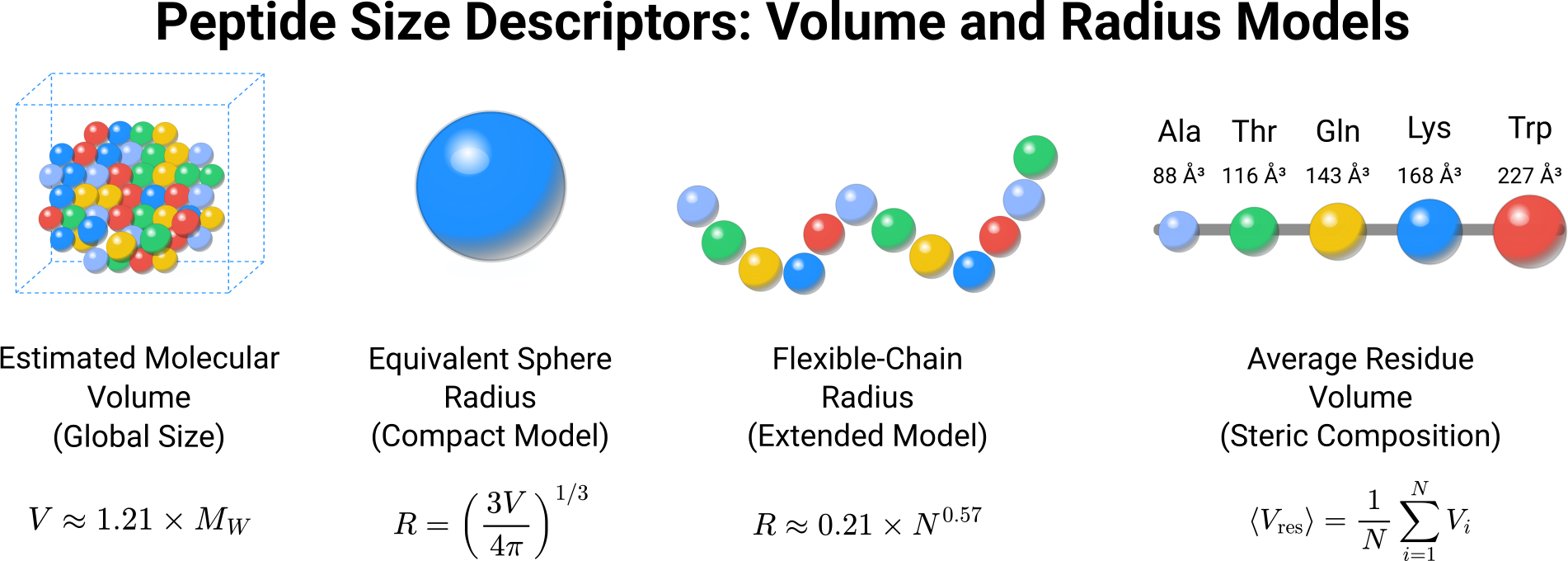
Estimated Molecular Volume (Global Size)
Definition and Calculation
The estimated molecular volume derives from the partial specific volume of proteins, a well-established parameter in biophysical chemistry. Typical values for proteins cluster around 0.73–0.74 cm³·g⁻¹, with measurable variation depending on amino acid composition, solvation, and conformational state. Short peptides and highly charged or disordered sequences may deviate more significantly from this average..
Using this average density, we can approximate the volume of a macromolecule when expressed in ų and Daltons as:
\[V \approx 1.21 \times M_{W}\]Where:
- V is estimated molecular volume (in ų). Represents the effective volume occupied by the peptide in a compact, protein-like state
- 1.21 is a conversion factor derived from the partial specific volume (~0.73 cm³·g⁻¹), after unit conversion using Avogadro’s number to express volume in ų per Dalton. It reflects the partial specific volume of the solvated macromolecule, including excluded volume and solvation effects
- Mw is molecular weight of the peptide (in Daltons). Total mass of the sequence including all residues and termini
This relationship follows directly from converting mass to volume via the partial specific volume and Avogadro’s number, and is used as a first-order approximation in protein biophysics and hydrodynamic modeling. In Peptalyzer™, this residue-derived compact-state term is the baseline, and terminal-modification runs may include an additional calibrated terminal volume increment when such terminal constants are curated.
Physical Meaning and Limitations
Physically, this quantity represents the effective volume occupied by the molecule in a condensed, protein-like state, reflecting the partial specific volume of the solvated macromolecule. Do not interpret it as a strict geometric boundary. Instead, it corresponds to a thermodynamic volume, relevant for buoyancy, sedimentation, and density-based calculations.
A key limitation comes from its implicit assumptions. The use of an average partial specific volume assumes globular packing and homogeneous density, conditions that peptides often do not meet for short peptides or intrinsically disordered sequences. Moreover, the measured partial specific volume itself depends on composition and solvation, meaning that the constant 1.21 ų/Da is an approximation rather than a universal constant. Consequently, interpret this metric as a reference compact-state volume, providing a compact-state estimate of spatial occupancy under dense packing conditions. The constant 1.21 ų/Da reflects an average partial specific volume and is not sequence-specific. Deviations of approximately 5–10% are expected depending on amino acid composition and solvation.
Equivalent Sphere Radius (Compact Model)
Definition and Physical Meaning of Equivalent Sphere Radius
The equivalent sphere radius comes from converting the estimated molecular volume into the radius of a sphere of equal volume:
\[R = \left(\frac{3V}{4\pi}\right)^{1/3}\]Where:
- R represents the equivalent sphere radius (reported in nm in Peptalyzer™, with V expressed in ų). It is the radius of a sphere with the same volume as the peptide
- V is the molecular volume (ų), typically from is the molecular volume (ų), typically from for residue-only baseline calculations; in terminal-modification-aware app output, an additive calibrated terminal volume increment may also be included.
- π is a mathematical constant (~3.1416) from sphere geometry
- represents the volume of a sphere; rearranged here represents the volume of a sphere; rearranged here to solve for radius
- to solve for radius
- Exponent is the cube root, reflecting conversion from volume to linear dimension
This transformation is standard in protein biophysics and yields what researchers often call the radius of an idealized compact sphere of equivalent volume.
The key point is that this radius does not describe the actual shape of the peptide, but rather the size of an idealized compact object that would contain the same mass at typical protein density. In this sense, it defines a compact-state lower-bound estimate under the assumption of uniform density and maximal packing efficiency.
Limitations of the Compact Sphere Model
For globular proteins, this approximation is often reasonable because folded structures exhibit relatively dense cores and limited anisotropy. However, even in proteins, deviations arise due to elongation, domain structure, or hydration effects, which are captured experimentally by frictional ratios greater than unity.
For peptides, the limitations are more pronounced. Most peptides do not adopt stable globular conformations and instead populate ensembles of extended or partially collapsed states. In such cases, the sphere assumption breaks down entirely, and the equivalent radius typically underestimates the spatial extent of the molecule in solution, particularly for flexible or disordered peptides. Thus, the equivalent sphere radius should be interpreted strictly as a compact-state limit, not as a descriptor of solution behavior or diffusion.
Flexible-Chain Radius (Extended Model)
Polymer Scaling Law
To describe peptide dimensions in solution, polymer physics provides a more appropriate framework. Unfolded proteins and intrinsically disordered peptides follow scaling laws relating chain length to spatial dimensions. In its general form, this relationship takes the form:
\[R \sim N^{\nu}\]Where:
- R is a generic chain dimension (typically the radius of gyration Rg or hydrodynamic radius Rh, depending on the experimental observable)
- N is the number of residues (polymer length, degree of polymerization)
- ν (nu, scaling exponent) describes how chain size scales with length and depends on solvent quality and intrachain interactions. Typical values:
- ~0.33 → compact (folded proteins)
- ~0.5 → ideal (theta conditions)
- ~0.55–0.60 → expanded coil (good solvent)
Empirical Polymer-Scaling Approximation
Experimental studies on disordered proteins report scaling exponents typically in the range 0.5–0.6, intermediate between ideal chains (ν ≈ 0.5) and self-avoiding walks (ν ≈ 0.588) (good solvent conditions). A commonly used empirical approximation, derived from experimental datasets on unfolded proteins in aqueous solution, is:
\[R \approx 0.21 \times N^{0.57}\]Where:
- R The reported value is a polymer-scaling size estimate expressed in units of length (nm), derived from empirical relationships for unfolded polypeptides. While the prefactor and exponent originate from datasets reporting hydrodynamic radii, do not interpret this metric as a directly calculated hydrodynamic radius. Instead, it provides a length-based approximation of expanded-chain size that ignores sequence-dependent effects such as charge distribution, hydrophobicity, and secondary structure propensity.
- 0.21 is an empirical prefactor (in nm) corresponding to the effective segment length and chain stiffness of polypeptides; it is derived from experimental fits and is not a universal constant
- N corresponds to the number of residues
- 0.57 represents the scaling exponent for disordered proteins in solution, consistent with self-avoiding polymer behavior
Physical Meaning and Limitations of the Flexible-Chain Radius
Physically, this quantity corresponds to an expanded-chain size scale in solution. Interpret it as a relative measure of chain expansion rather than as a direct predictor of diffusion or hydrodynamic behavior. It does not represent a direct experimental measurement, but a polymer-scaling approximation expressed in length units and derived from relationships established for unfolded polypeptides.
Importantly, real peptides often deviate from this scaling depending on sequence composition (see how sequence-dependent behavior is captured in membrane partitioning models such as the Wimley–White scale). Charge distribution, hydrophobicity, proline content, and secondary structure propensities all modulate chain expansion. Experimental data show that unfolded proteins in water often exhibit partial compaction relative to ideal self-avoiding chains, reflecting a balance between attractive and repulsive interactions. Therefore, the flexible-chain radius should be interpreted as a statistical estimate of ensemble-averaged size, representing typical behavior rather than a sequence-specific prediction.
Why Equivalent Sphere and Flexible-Chain Radii Can Differ Dramatically
The discrepancy between compact and extended radii arises directly from the underlying physical models. The compact radius assumes uniform density and isotropic shape, while the flexible-chain model describes a highly anisotropic, fluctuating ensemble.
In solution, peptides are not static objects but dynamic entities interacting continuously with solvent. Hydration layers, intramolecular contacts, and conformational entropy all contribute to their effective size. As a result, the same peptide can exhibit a compact-state radius corresponding to dense packing and, simultaneously, a much larger solution dimension due to chain expansion.
From a polymer perspective, this behavior reflects the competition between intrachain attractive interactions (favoring collapse) and excluded volume and solvation effects (favoring expansion). The observed scaling behavior of disordered proteins demonstrates that these interactions are finely balanced and sequence-dependent.
The difference between the two radii is therefore not an artifact but a meaningful descriptor. A small gap indicates closer agreement between compact-density and polymer-scaling models, which may be consistent with more compact conformations, but this is not a structural prediction. This distinction provides a useful conceptual framework for interpreting peptide behavior in solution, including aggregation, diffusion, and interaction propensity, but does not replace experimental characterization.
Connection to Experimental Measurements
While these descriptors provide useful physical models, experimental techniques report different size observables that do not map directly onto any single metric described above.
Diffusion-based methods such as dynamic light scattering (DLS) and pulsed-field gradient NMR report the hydrodynamic radius (Rh), which reflects solvent-coupled motion and typically aligns more closely with expanded-chain behavior than with compact-state assumptions.
Small-angle X-ray scattering (SAXS) provides the radius of gyration (Rg), which describes the distribution of mass around the center of the molecule and is sensitive to overall chain expansion.
Size-exclusion chromatography (SEC) reports an apparent size based on elution volume, which depends on both shape and interaction with the stationary phase and cannot be interpreted as a direct geometric radius.
Importantly, none of these observables correspond exactly to the equivalent sphere radius or the flexible-chain radius described here. Instead, these models provide physically grounded reference points for interpreting experimental data under defined assumptions.
Quantifying Expansion: The Expansion Ratio
While the difference between compact-state and extended-state radii is conceptually important, you can express this relationship as a single dimensionless descriptor.
The Expansion Ratio is defined as (values > 1 indicate expansion relative to the compact state):
\[\text{Expansion Ratio} = \frac{R_{\text{flexible}}}{R_{\text{compact}}}\]Where:
- Rflexible is the flexible-chain (polymer-scaling) radius
- Rcompact is the equivalent sphere radius
This ratio provides a normalized measure of how far a peptide deviates from a compact, dense state toward an expanded, solvent-exposed ensemble. Because the compact and flexible-chain models follow different scaling laws with chain length, the Expansion Ratio increases systematically with peptide length even in the absence of sequence-specific effects. As a result, values should not be compared directly across peptides of very different lengths. Interpret it as a heuristic model-gap descriptor rather than as a size-independent structural classifier.
Interpretation Framework
As a heuristic guide, lower values indicate closer agreement between compact-density and flexible-chain models, whereas higher values indicate a larger model gap. In the current Peptalyzer™ output card, the displayed classes are: Small model gap (<1.5), Moderate model gap (1.5 to <2.5), and Large model gap (≥2.5). Because this ratio is length-dependent, treat categorical thresholds cautiously when comparing peptides of very different sizes.
Important Limitations
The Expansion Ratio is a model-derived descriptor, not a structural prediction. Several important limitations apply:
- It depends on two independent approximations (density-based and polymer-scaling)
- It does not account for sequence-dependent effects such as charge patterning, hydrophobic clustering, or secondary structure
- It does not distinguish between different types of compaction (e.g., molten globule vs fully folded states)
As a result, the Expansion Ratio should be interpreted as a relative indicator of conformational expansion, not as a direct measure of structure or folding state.
Average Residue Volume (Steric Composition)
Definition of Average Residue Volume and Dataset Used in Peptalyzer™
While global descriptors describe the spatial extent of the peptide, they do not capture sequence-level steric composition, which is encoded directly in the amino acid sequence. We define the average residue volume as:
Where:
- ⟨Vres⟩ is the average residue volume (ų), a mean steric volume per amino acid in the sequence, obtained by averaging over all residues i. These values come from residue volumes derived from protein packing and solution-volume analyses and include both backbone and side-chain contributions.
- N corresponds to the number of residues
- Vi represents the volume assigned to residue i. Typically derived from tabulated side-chain + backbone volumes
| Amino Acid | Volume (ų) |
|---|---|
| G (Gly) | 60 |
| A (Ala) | 88 |
| S (Ser) | 89 |
| C (Cys) | 108 |
| D (Asp) | 111 |
| P (Pro) | 112 |
| N (Asn) | 114 |
| T (Thr) | 116 |
| E (Glu) | 138 |
| V (Val) | 140 |
| Q (Gln) | 143 |
| H (His) | 153 |
| M (Met) | 162 |
| I (Ile) | 166 |
| L (Leu) | 166 |
| K (Lys) | 168 |
| R (Arg) | 173 |
| F (Phe) | 189 |
| Y (Tyr) | 193 |
| W (Trp) | 227 |
In Peptalyzer™, average residue volume is computed directly from tabulated residue volumes and therefore includes both backbone and side-chain contributions. You can obtain a separate side-chain volume descriptor by subtracting the glycine reference volume from each residue.
These volumes reflect the space occupied by amino acid side chains and backbone contributions in protein environments. Values depend on the dataset (e.g., Zamyatnin vs Chothia-type volumes), and absolute values may vary by ~5–10% across sources, while relative trends remain consistent.
What Average Residue Volume Tells You
Unlike global volume or radius, this metric does not depend on conformation. It describes the sequence-averaged steric composition of the peptide, providing a composition-level indication of packing tendency and steric crowding. This concept closely relates to compositional effects observed in partial specific volume measurements, which vary with amino acid content and solvation properties.
From a chemical standpoint, average residue volume has direct implications. Residues with larger tabulated volumes tend to increase steric hindrance, reduce conformational flexibility, and can limit reagent access during SPPS. Conversely, sequences enriched in smaller residues allow greater backbone mobility and more efficient packing rearrangements. These effects arise from residue-level steric properties but are averaged in this metric and therefore do not capture positional clustering or local sequence effects.
From Residue Volume to Side-Chain Volume
Glycine Reference Decomposition
While average residue volume provides a useful measure of overall steric density, it includes a contribution that is effectively constant across all amino acids: the peptide backbone. As a result, differences between residues are dominated by their side chains, which are the primary source of steric variation along the sequence.
To isolate this contribution, you can decompose residue volumes into backbone and side-chain components using glycine as a reference. Because glycine lacks a side chain beyond a hydrogen atom, its residue volume represents the minimal backbone contribution. You can approximate side-chain volumes as:
\[V_{\text{side-chain}} = V_{\text{residue}} – V_{\text{Gly}}\]This subtraction isolates the portion of the residue that extends beyond the common backbone framework and is consistent with approaches used in structural analyses of protein packing. The resulting values provide a direct measure of local steric bulk, independent of global conformation.
| Amino Acid | Volume (ų) |
|---|---|
| G (Gly) | 0.0 |
| A (Ala) | 28.5 |
| S (Ser) | 28.9 |
| C (Cys) | 48.4 |
| D (Asp) | 51.0 |
| P (Pro) | 52.6 |
| N (Asn) | 54.0 |
| T (Thr) | 56.0 |
| E (Glu) | 78.3 |
| V (Val) | 79.9 |
| Q (Gln) | 83.7 |
| H (His) | 93.1 |
| M (Met) | 102.8 |
| I (Ile) | 106.6 |
| L (Leu) | 106.6 |
| K (Lys) | 108.5 |
| R (Arg) | 113.3 |
| F (Phe) | 129.8 |
| Y (Tyr) | 133.5 |
| W (Trp) | 167.7 |
Side-Chain Volume Table and Interpretation
In contrast to average residue volume, which reflects overall steric density, side-chain volume captures the effective spatial demand of individual residues. This distinction is particularly relevant in contexts where local accessibility and crowding dominate behavior. In solid-phase peptide synthesis (SPPS), for example, side chains define the steric environment around the reactive amine, influencing coupling efficiency, reagent accessibility, and the likelihood of incomplete reactions. Similarly, in aggregation processes, bulky side chains contribute to packing interfaces and can stabilize intermolecular contacts.
Note that this decomposition is an approximation. It assumes a constant backbone contribution across residues and does not account for geometric effects such as β-branching (e.g., valine, isoleucine) or conformational constraints imposed by specific residues such as proline, nor variations in backbone geometry and flexibility. These features can significantly influence steric hindrance despite similar nominal volumes. In addition, side-chain volume does not capture sequence patterning, and clustered bulky residues may have a disproportionate effect compared to evenly distributed ones.
For practical interpretation, side-chain volumes can be grouped into broad steric classes:
- small (< 50 ų)
- medium (50–100 ų)
- large (100–130 ų)
- very large (> 130 ų)
This classification is heuristic and intended for qualitative interpretation rather than strict physical categorization. Within this framework, residues such as glycine and alanine define low steric environments, whereas aromatic residues such as tryptophan and tyrosine represent extreme steric demand. Taken together, side-chain volume provides a local steric descriptor that complements global size metrics. While molecular volume and radius describe how large a peptide is as a whole, side-chain volume helps explain how crowded it is at the level where chemical reactions and intermolecular interactions occur.
The Chemist’s Perspective
Why Peptide Size Matters in Practice
From a practical standpoint, the relevance of peptide size is not abstract; it manifests directly in laboratory behavior. Properties such as solubility, aggregation, diffusion, and synthetic accessibility all depend on how a peptide occupies space in solution and how its steric features are distributed along the chain. However, these effects depend on different aspects of “size,” and no single descriptor captures them all.
Compact vs Extended Behavior in Solution
In solution, the distinction between compact and extended states is critical. A peptide with a small equivalent sphere radius may behave as a larger, solvent-exposed object if it lacks stabilizing intramolecular interactions. Chemists frequently observe this for short or moderately hydrophobic sequences that do not form stable tertiary structures. In such cases, the flexible-chain radius provides a more relevant expanded-state size estimate for thinking about solvent exposure and chain extension. Conversely, peptides that exhibit partial collapse or secondary structure formation may behave closer to their compact-state dimensions, particularly in low-dielectric or structure-promoting environments.
What Controls Reactivity in SPPS
In synthetic contexts, particularly in solid-phase peptide synthesis (SPPS), global size is often less informative than local steric effects. Coupling efficiency depends primarily on the accessibility of the reactive amine and the steric environment created by neighboring residues. Bulky side chains, β-branching, and conformational constraints can all reduce effective reactivity, even in relatively short sequences. This explains why composition-based descriptors, such as side-chain volume, often correlate more directly with synthesis difficulty than global dimensions.
The Chemist’s Trap — Misinterpreting Compact Size
Chemists often misinterpret results when compact-state descriptors are treated as representative of solution behavior. The equivalent sphere radius defines a lower bound based on dense packing assumptions, but most peptides do not exist in such states under standard conditions. Interpreting this value as a true molecular size can therefore lead to underestimation of diffusion length scales, solvent exposure, and aggregation propensity. Misinterpretation of peptide size often leads to incorrect expectations in synthesis outcomes, similar to issues observed in racemization-prone sequences (e.g., sequences containing cysteines and/or histidines).
How to Interpret Peptide Size Correctly
This leads to a recurring practical error, confusing compact-state size with real solution behavior. Avoiding this trap requires considering both global and local descriptors together. The combination of molecular volume, compact and extended radii, and residue-level steric metrics provides a more complete picture of how a peptide will behave under experimental conditions.
How Peptalyzer™ Calculates Peptide Size Metrics
Peptalyzer™ implements these size descriptors using transparent, physically grounded models derived from established relationships in protein chemistry and polymer physics.
The estimated molecular volume is calculated directly from molecular weight using a fixed conversion factor derived from the average partial specific volume of proteins. This provides a consistent approximation of compact-state volume across sequences of varying length and composition.
The equivalent sphere radius is then obtained by converting this volume into the radius of a sphere of equal volume. This step introduces a geometric assumption of isotropic packing, allowing the volume to be expressed as a single linear dimension representing the minimal compact size of the peptide.
The flexible-chain radius is calculated using a polymer scaling law, where chain length determines spatial expansion according to an empirically derived exponent. The prefactor and exponent used in this relationship are based on experimental observations of unfolded proteins in aqueous solution and reflect average behavior across diverse sequences. This model captures the expected size of a peptide when it behaves as a flexible, solvent-exposed chain.
Average residue volume is computed by summing tabulated residue volumes and normalizing by sequence length. These residue volumes are derived from experimentally observed packing in protein structures and include both backbone and side-chain contributions. As discussed previously, side-chain volume can be extracted from this dataset by subtracting the glycine reference value, enabling decomposition of global steric density into local contributions.
Importantly, all of these calculations are deterministic and sequence-derived. All reported size metrics are model-based approximations derived from simplified physical assumptions. Peptalyzer™ does not perform structural prediction, ensemble sampling, or sequence-specific conformational modeling. The outputs therefore reflect model-based approximations, not predictions of specific conformations or experimentally measured properties.
Practical Interpretation Peptide Size Metrics
Interpreting Compact vs Extended Radius
Interpreting peptide size requires combining the different descriptors rather than relying on any single value. Each metric provides a partial view of the system, and meaningful conclusions arise from their relative relationships.
When the equivalent sphere radius and flexible-chain radius are similar, the compact-density and polymer-scaling models yield similar size estimates. This may be consistent with relatively compact behavior, but it should not be interpreted as evidence of partial folding or structural collapse. In such cases, global dimensions derived from compact-state assumptions may provide a reasonable approximation of behavior.
In contrast, a large difference between compact and extended radii reflects divergence between compact-density and polymer-scaling models. This is often consistent with extended or disordered behavior in solution, but Peptalyzer™ does not explicitly model conformational ensembles, and this interpretation should be treated as qualitative. The flexible-chain radius should then be considered the more relevant expanded-state size descriptor, particularly when thinking about solvent exposure and chain extension.
Role of Residue Volume
Average residue volume provides an orthogonal perspective. High values indicate a sequence enriched in bulky residues, suggesting increased steric congestion, reduced flexibility, and potential challenges in synthesis. When combined with a large flexible-chain radius, this may signal peptides that are both extended and locally crowded, a combination often associated with aggregation-prone behavior.
Conversely, low residue volume combined with a large flexible-chain radius suggests a flexible, solvent-exposed chain with minimal steric constraints, typically associated with high conformational entropy and lower aggregation propensity under dilute conditions.
Combined Interpretation Framework
In practice, these metrics should be interpreted as a set:
- Compact radius → compact-state lower-bound estimate
- Flexible-chain radius → polymer-scaling estimate of chain expansion
- Average residue volume → sequence-averaged residue steric composition
- Average side-chain volume → sequence-averaged side-chain steric bulk
Together, they provide a framework for understanding how sequence translates into physical behavior. These interpretations can be explored directly using sequence-based calculators such as Peptalyzer™.
Which Peptide Size Metric Should You Use?
The relevance of each size descriptor depends on the experimental or practical context. For solution behavior and diffusion-related questions, the flexible-chain radius provides the most appropriate estimate, as it reflects the expanded, solvent-exposed nature of most peptides.
Regarding packing considerations, density approximations, or lower-bound size estimates, the equivalent sphere radius offers a useful compact-state reference.
For synthesis-related questions, particularly in solid-phase peptide synthesis (SPPS), local steric effects dominate. In this context, average residue volume and side-chain volume provide more relevant information than global size descriptors, as they directly influence coupling efficiency and reagent accessibility.
These metrics should therefore be interpreted as complementary rather than interchangeable, each providing insight into a different physical aspect of peptide behavior.
Peptide Size Metrics — FAQ
No. The reported value is an empirical polymer-scaling estimate derived from relationships observed for unfolded polypeptides. It provides an approximate expanded-chain size scale but is not a direct experimental hydrodynamic measurement such as those obtained from diffusion-based methods.
Because peptides do not have a single size. The compact radius represents a dense, minimal configuration, while the flexible-chain radius represents an expanded, solution-state ensemble. Both are valid within their respective assumptions.
It depends on the context. For diffusion and solution behavior, the flexible-chain radius is generally more relevant. For packing or minimal size considerations, the compact radius provides a useful lower bound.
No. These descriptors do not predict folding or structure formation. They describe size under defined assumptions but do not account for specific intramolecular interactions required for stable folding.
They are approximations based on established physical models. They are not direct experimental measurements and should be interpreted within the assumptions of the underlying models.
References
Molecular Volume and Compact-State Models
Zamyatnin, A. A. (1984). Protein volume in solution. Progress in Biophysics and Molecular Biology, 44(2), 107–123.
- Provides foundational residue volume data and establishes relationships between amino acid composition and molecular volume.
- DOI: 10.1016/0079-6107(72)90005-3
Zamyatnin, A. A. (1984). Amino acid, peptide, and protein volume in solution. Annual Review of Biophysics and Bioengineering, 13(1), 145–165.
- Provides comprehensive residue volume datasets and establishes relationships between amino acid composition and molecular volume.
- DOI: 10.1146/annurev.bb.13.060184.001045
Erickson, H. P. (2009). Size and shape of protein molecules at the nanometer level determined by sedimentation, gel filtration, and electron microscopy. Biological Procedures Online, 11(1), 32–51.
- Establishes quantitative relationships between molecular weight, molecular volume, and hydrodynamic dimensions in proteins.
- DOI: 10.1007/s12575-009-9008-x
Polymer Scaling and Solution Dimensions
Wilkins, D. K., Grimshaw, S. B., Receveur, V., Dobson, C. M., Jones, J. A., & Smith, L. J. (1999). Hydrodynamic radii of native and denatured proteins measured by pulse field gradient NMR techniques. Biochemistry, 38(50), 16424–16431.
- Establishes empirical relationships for hydrodynamic radius scaling (Rh ∝ N0.57) in unfolded proteins, forming the basis of common Rh approximations.
- DOI: 10.1021/bi991765q
Kohn, J. E., Millett, I. S., Jacob, J., Zagrovic, B., Dillon, T. M., Cingel, N., Dothager, R. S., Seifert, S., Thiyagarajan, P., Sosnick, T. R., Hasan, M. Z., Pande, V. S., Ruczinski, I., Doniach, S., & Plaxco, K. W. (2004). Random-coil behavior and the dimensions of chemically unfolded proteins. Proceedings of the National Academy of Sciences of the United States of America, 101(34), 12491–12496.
- Defines polymer scaling relationships (R ∼ Nν) and provides experimental basis for dimensions of unfolded polypeptide chains.
- DOI: 10.1073/pnas.0403643101
Hofmann, H., Soranno, A., Borgia, A., Gast, K., Nettels, D., & Schuler, B. (2012). Polymer scaling laws of unfolded and intrinsically disordered proteins quantified with single-molecule spectroscopy. Proceedings of the National Academy of Sciences of the United States of America, 109(40), 16155–16160.
- Demonstrates experimentally that scaling exponents vary with solvent and sequence (ν ≈ 0.46–0.62), confirming polymer physics behavior of unfolded proteins.
- DOI: 10.1073/pnas.1207719109
Nygaard, M., Kragelund, B. B., Papaleo, E., & Lindorff-Larsen, K. (2017). An efficient method for estimating the hydrodynamic radius of disordered protein conformations. Biophysical Journal, 113(3), 550–557.
- Provides experimentally validated scaling laws for hydrodynamic radius with explicit prefactors (R₀) and exponents for folded and unfolded proteins.
- DOI: 10.1016/j.bpj.2017.06.042
Sequence Composition and Residue-Level Effects
Harpaz, Y., Gerstein, M., & Chothia, C. (1996). Volume changes on protein folding. Structure, 4(6), 641–649.
- Describes decomposition of residue and side-chain volumes from protein structures and their role in packing and folding.
- DOI: 10.1016/S0969-2126(00)00065-4
Marsh, J. A., & Forman-Kay, J. D. (2010). Sequence determinants of compaction in intrinsically disordered proteins. Biophysical Journal, 98(10), 2383–2390.
- Demonstrates how sequence composition (charge and hydrophobicity) modulates expansion and compaction of disordered protein chains.
- DOI: 10.1016/j.bpj.2010.02.006