Mechanism-focused · chemist-to-chemist
Peptide chemistry, explained at the bond level.
Reference articles for Fmoc-SPPS, coupling reagents, protecting groups, and side reactions — plus Peptalyzer™, a physicochemical calculator built for the bench. Real conditions, real analytical signatures, no vendor spin.
Start typing a sequence — e.g. PEPTIDECHEMISTRY — and get monoisotopic mass, pI, net charge, aggregation risk, and solubility in one pass.
The tool
Peptalyzer™ — sequence in, chemistry out.
Enter a sequence and read back the numbers that decide a synthesis. Every output shows the model or dataset behind it, and predictive indices are labelled as estimates — not measurements.
Mass spectrometry
Monoisotopic + average, SS H-loss
pI & net charge
Four pKa scales, charge at any pH
Hydropathy
GRAVY, Kyte–Doolittle, Wimley–White
ε₂₈₀ / ε₂₀₅
Trp/Tyr/SS + backbone
Aggregation risk
β-sheet hotspots, Chou–Fasman
SPPS difficulty
Aspartimide & oxidation audit
Structure maps
Helical wheel, Eisenberg moment
Z-scales, size envelope, solubility
The reference
Five hubs, one knowledge graph.
Every article sits in one of these hubs and links to the ones around it — so you land on a mechanism and leave knowing where it fits in the wider synthesis.
Bench tools
Two lookups you’ll keep open in a tab.
Peptide Mass-Shift Index
A ΔDa you can’t explain? Map the mass difference in your LC-MS to its most likely chemical origin — +16 oxidation, −18 aspartimide, +178 DBF, and more.
Peptide Synthesizer Finder
Filter instruments across many makers by synthesis scale, throughput, and capability — from single-channel research units to production-scale reactors.
Recent & cornerstone
Deep articles, not summaries.
The latest deep articles, pulled automatically as they publish.
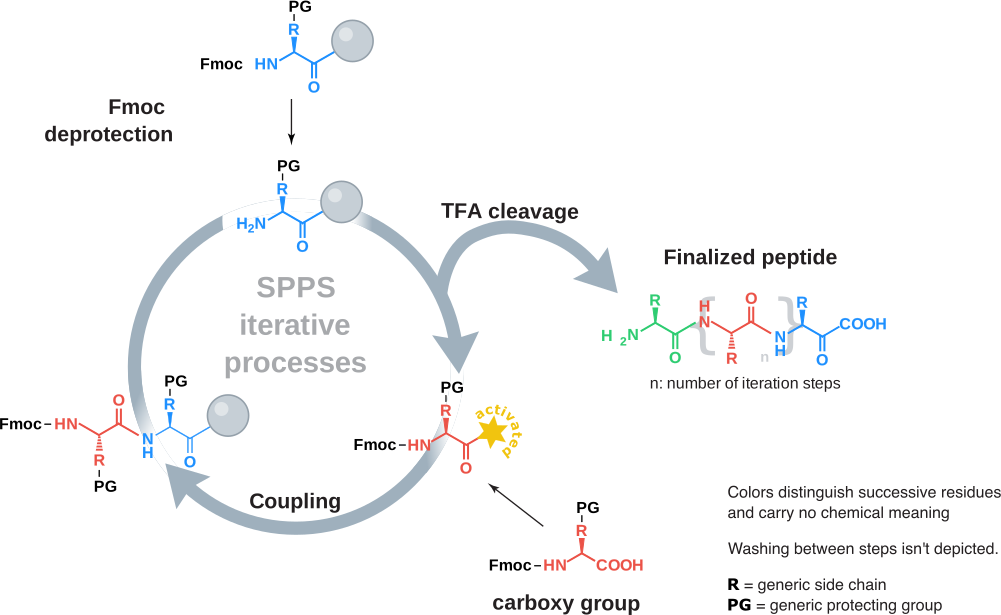

Solid Phase Peptide Synthesis: A Complete Guide
Solid phase peptide synthesis is the method that builds a peptide one residue at a time on an…
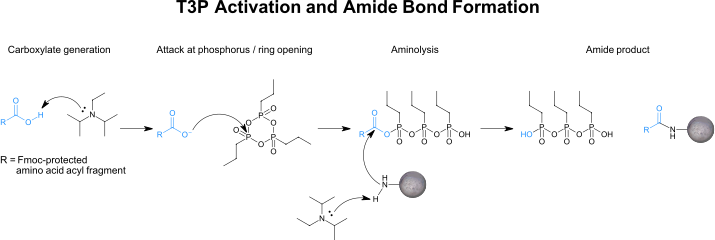

T3P Peptide Coupling: Mechanism and Selection
T3P peptide coupling uses propylphosphonic anhydride — the cyclic trimeric anhydride of propylphosphonic acid — to activate a…
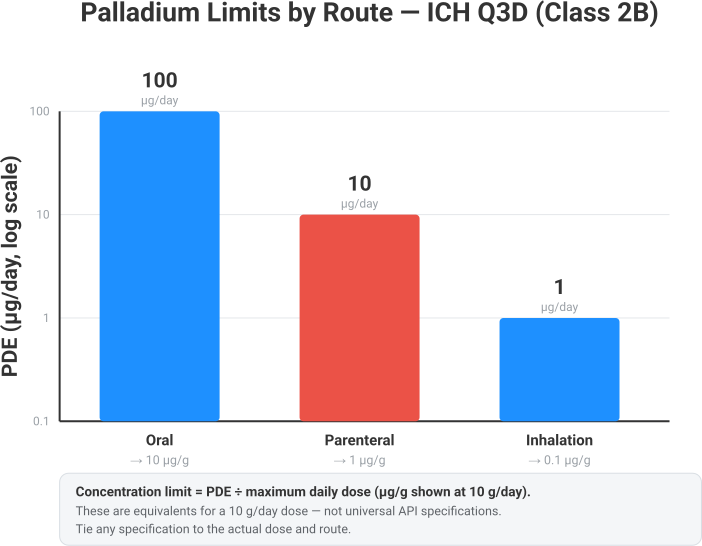

Residual Palladium Removal in Peptide Synthesis
Residual palladium removal is the step that decides whether a palladium-mediated peptide route is a laboratory curiosity or…
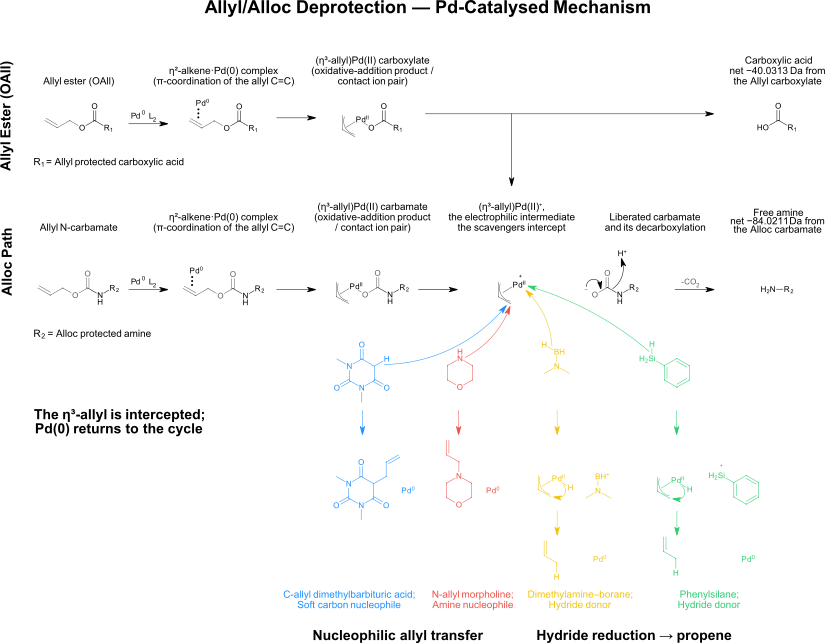

Alloc Deprotection: Alloc and Allyl Ester Removal in SPPS
Alloc deprotection is the palladium-catalysed removal of the allyloxycarbonyl group from an amine. It sits on a third…
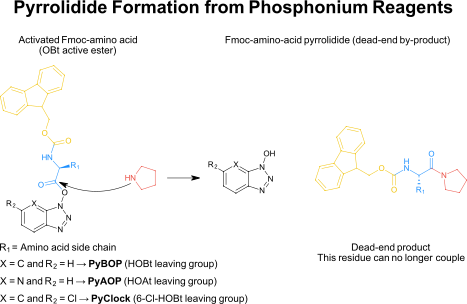

PyBOP Side Reactions: Pyrrolidide, Racemization, and the Guanidinylation It Avoids
PyBOP side reactions come from the reagent and its activation chemistry, not from the amino acid being coupled.…
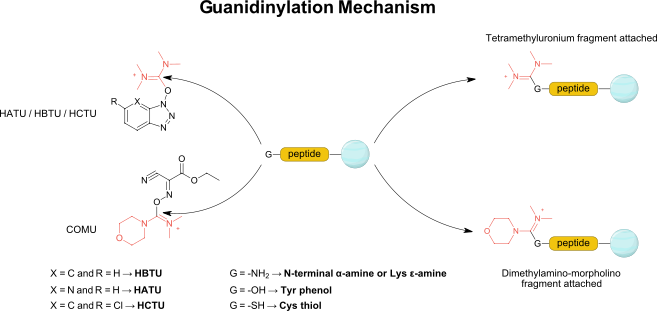

Guanidinylation in Peptide Synthesis: Mechanism, Mass Shifts, and Prevention
Guanidinylation in peptide synthesis is the side reaction in which a free amine — usually the N-terminal α-amine…
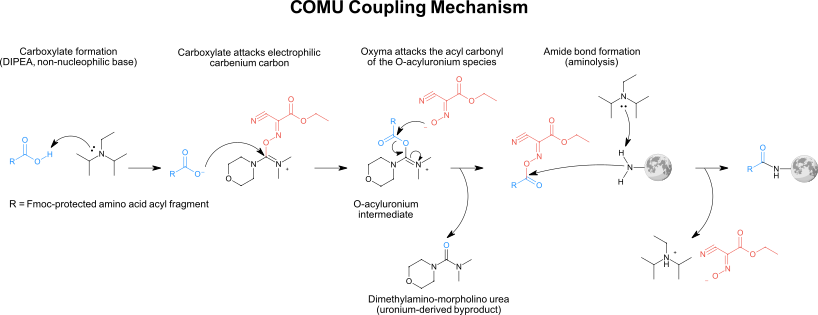

COMU Peptide Coupling: Mechanism, Stability, and Selection
COMU peptide coupling uses a standalone Oxyma-based carbenium reagent — (1-cyano-2-ethoxy-2-oxoethylidenaminooxy)dimethylamino-morpholino-carbenium hexafluorophosphate — to activate a protected carboxylic…
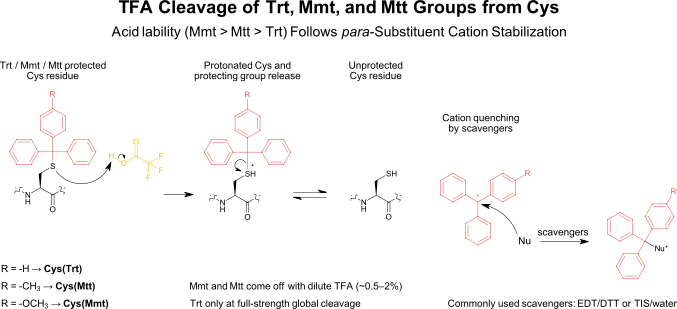

Cysteine Protecting Groups in Fmoc-SPPS
The choice of cysteine protecting groups decides more about a Cys-containing synthesis than almost any other building-block decision.…
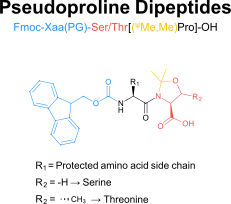

Peptide Backbone Modifications for On-Resin Aggregation
On-resin aggregation is one of the major causes of synthesis failure for sequences longer than 20–25 residues, especially…
What this is
A working reference for peptide chemists.
PeptideChemistry.org is a single-focus resource for people who synthesise peptides for a living. Articles explain the why at the bond level, specify the actual solvent, base, temperature, and reagent, and give the analytical signature you need to confirm what happened. Predictive numbers are labelled as estimates, not measurements.
Written for
Practising peptide & process chemists
SPPS method developers
Biotech & pharma discovery scientists
BSc / MSc / PhD students at the bench