Among all protecting groups in peptide chemistry, those for Arg Pbf deprotection have always posed a delicate balance between stability during synthesis and clean removal during global deprotection.
The guanidinium side chain is strongly basic and nucleophilic, demanding protection throughout the Fmoc cycle. Early sulfonyl systems such as Mtr and Pmc fulfilled this role but revealed a chronic flaw during TFA cleavage: the same sulfonyl linkage that secured arginine under mild bases became a source of sulfonyl electrophiles in strong acids, giving rise to alkylation and sulfonation side reactions.
The introduction of the Pbf group in the early 1990s changed that narrative. Its benzofuran-based sulfonyl ring was engineered to cleave more rapidly and produce less persistent cationic intermediates. Understanding the chemistry of Arg Pbf deprotection under TFA is therefore essential for controlling side reactions and ensuring analytical purity in modern peptide synthesis.
📘 What will you learn here?
Evolution of Arg Pbf Deprotection Strategies in Fmoc-SPPS
The evolution of arginine side-chain protection reflects a steady refinement of acid lability, cleavage selectivity, and control over electrophilic side reactions. Early sulfonyl protections were robust but slow to remove, whereas modern systems—designed primarily for Fmoc-based solid-phase peptide synthesis (Fmoc-SPPS)—prioritize rapid, clean cleavage under TFA.
This article focuses on protecting groups relevant to Fmoc-SPPS, where deprotection occurs under acidic conditions, while other groups used in Boc, Bn, or orthogonal chemistries are discussed only briefly for historical and comparative context. Each generation pursued the same goal: to shorten the lifetime of reactive sulfonyl intermediates and minimize undesired alkylations during peptide cleavage.

Arginine Protecting Groups in Fmoc-SPPS
Fmoc chemistry relies on protecting groups removable by TFA-based cocktails. This generation—spanning Pmc, Pbf, MIS, and NO₂—balances fast acidolysis with minimized side reactions on Trp, Cys, and Met.
The introduction of Pbf was a pivotal advance: replacing the six-membered chroman of Pmc with a five-membered benzofuran ring increased electron donation into the sulfonyl system, weakened the S–N bond, and enabled complete Arg deprotection within minutes at room temperature. In comparison, Pmc and older reagents generate longer-lived sulfonyl cations that promote side alkylation unless strong sulfur scavengers are present. Subsequent refinements such as MIS further accelerated deprotection, while NO₂ offered a non-sulfonyl, hydrogenolytic route for particularly sensitive peptides.
| Protecting Group | Structural Core | Relative Acid-Lability | Key Traits and Limitations | When to Use Instead of Pbf |
|---|---|---|---|---|
| Pbf | 2,2,4,6,7-Pentamethyl-dihydro-benzofuran-5-sulfonyl | Fast (≈ 1.2–1.4 × Pmc) | Aromatic sp² O donates into the ring, stabilizing the S–N cleavage transition state; yields clean deprotection and minimal side reactions | Default choice for all Fmoc-SPPS workflows |
| Pmc | 2,2,5,7,8-Pentamethyl-chroman-6-sulfonyl | Moderate | sp³ O provides only inductive stabilization; slower cleavage and more Trp/Cys side reactions than Pbf | When regulatory or historical constraints prevent transition to Pbf |
| Mtr | 4-Methoxy-2,3,6-trimethyl-benzenesulfonyl | Slow | Weak +M donation from methoxy group; steric hindrance disrupts aromatic planarity; incomplete deprotection under short TFA exposure | Occasionally in legacy or process-validated Fmoc sequences where Mtr was historically qualified |
| MIS | 2,4-Dimethoxy-6-(isopropyl-sulfonyl)phenyl | Very fast (≈ ½ Pbf) | Features N–S linkage; sulfonamide N readily protonated; extremely acid-labile; limited commercial access | For Trp-rich or sterically hindered Arg sites; typically available only via custom synthesis |
| NO2 | p-Nitro | Not TFA-labile | Removed by catalytic hydrogenolysis; completely avoids sulfonyl electrophiles; orthogonal to TFA cleavage | When sulfonyl electrophiles must be avoided (e.g., highly Trp/Cys-sensitive sequences) |

Pbf vs MIS in SPPS: Why the Field Kept the Older Protecting Group
Although MIS is chemically more acid-labile than Pbf, the peptide community continued to favor Pbf for practical reasons rather than mechanistic superiority. The original MIS study demonstrated that MIS deprotects quantitatively within 30 minutes under mild TFA conditions, while only ~4% of Pbf is removed in the same time. Follow-up reviews confirmed MIS as the most acid-labile sulfonyl-type Arg protecting group. In principle, this makes MIS attractive for multi-arginine peptides and for constructs containing acid-sensitive elements.
However, MIS has a documented operational drawback: cleavage releases 1,2-dimethylindole-3-sulfonic acid, a polar, strongly UV-absorbing by-product that co-precipitates during ether work-up and complicates crude handling unless non-standard scavenger systems are used. Additional scavengers such as 3,4-dimethoxyphenol or 1,3,5-trimethoxybenzene were introduced specifically to suppress MIS-OH accumulation, adding steps to cleavage optimization and making MIS less “plug-and-play” in routine workflows.
In contrast, Pbf integrates smoothly into the TFA/EDT or TFA/TIS cocktails already used throughout Fmoc-SPPS. Its by-products are easier to suppress with standard sulfur scavengers, and its behavior is compatible with high-throughput, automated, and GMP-validated processes. Vendors reinforced this stability: Fmoc-Arg(Pbf)-OH is universally stocked in multi-gram to kilogram quantities with full QC documentation, while Fmoc-Arg(MIS)-OH remains a specialty or custom-order reagent offered by a limited number of suppliers.
As a result, MIS remains a niche, high-performance option for sequences that benefit from extremely fast deprotection or reduced acid load, while Pbf stays the operational standard due to robustness, commercial maturity, and broad industrial adoption—despite being mechanistically slower to cleave.
Arginine Protecting Groups in Boc, Bn, and Orthogonal Chemistries
Before the dominance of Fmoc-SPPS, arginine protection evolved through strong-acid and orthogonal systemsdesigned for stability during repetitive acidolysis. These include bis-Boc, Tos, Mts, and Mtr—robust sulfonyl or carbamate groups that tolerate repeated TFA treatments but require HF, TFMSA, or hydrogenation for final removal.
While largely historical, they remain essential for reproducing validated industrial or regulatory processes. Modern orthogonal variants such as bis-Z and bis-Alloc persist in solution-phase or hybrid syntheses, offering acid stability and mild Pd- or H₂-mediated removal. These strategies provide flexibility where Fmoc-based sulfonyl systems are incompatible or too reactive.
| Protecting Group | Structural Core | Relative Acid-Lability | Key Traits and Limitations | When to Use Instead of Pbf |
|---|---|---|---|---|
| bis-Boc | ω,ω′-bis-tert-Butoxycarbonyl | Removed by strong acid (HBr/TFA, HCl/dioxane, HF) | Protects both guanidinium nitrogens; stable to base; slow cleavage; incompatible with mild TFA conditions | Used in Boc-SPPS or mixed-mode syntheses where Arg must remain protected through strong acid treatment |
| Tos | p-Toluenesulfonyl | Very slow (HF or TFMSA required) | Simple sulfonyl; hydrophobic; may promote side reactions under extended acid exposure | For legacy Boc-SPPS workflows or regulatory reproduction of validated methods |
| Mts | 2,4,6-Trimethyl-benzenesulfonyl (mesitylenesulfonyl) | Very slow (TFA-resistant) | No heteroatom donor; purely inductive; requires HF or TFMSA for removal | Historical use only—mainly for comparison or legacy synthesis |
| bis-Z | ω,ω′-bis-Benzyloxycarbonyl | Removed by catalytic hydrogenation | Dual carbamate protection; highly acid-stable; long hydrogenolysis times; sensitive to over-reduction | Used in Boc/Bn or solution-phase synthesis where Arg must survive strong acid conditions |
| bis-Alloc | ω,ω′-bis-Allyloxycarbonyl | Removed by Pd(0) catalysis | Orthogonal to both acid and base; mild Pd(PPh3)4-mediated deprotection; incompatible with sulfur scavengers | For orthogonal or segment-condensation strategies requiring mild, selective Arg deprotection |

Mechanistic Pathway of Arg Pbf Deprotection in TFA
The removal of the 2,2,4,6,7-pentamethyl-dihydrobenzofuran-5-sulfonyl (Pbf) protecting group from arginine proceeds through acid-promoted heterolysis of the sulfonamide bond, initiated by protonation of the sulfonamide nitrogen rather than by any reaction at the guanidinium site.
When the peptide resin is treated with trifluoroacetic acid (TFA), every basic site of the molecule is exposed to a strongly acidic environment. The guanidinium side chain of arginine is fully protonated under these conditions but plays no direct mechanistic role in the cleavage. The event that triggers removal of Pbf occurs specifically on the sulfonamide linkage connecting the arginine δ-nitrogen to the aryl-sulfonyl moiety.

In summary, the Arg Pbf removal happens in 5 steps:
- Protonation step: TFA protonates the sulfonamide nitrogen, forming Ar–SO₂–NH₂⁺–Arg.
- Bond scission: The S–N bond breaks heterolytically; electrons flow toward nitrogen.
- Electrophile generation: The leaving group is an aryl-sulfonyl electrophile (Ar–SO₂⁺ ↔ Ar⁺–SO₂).
- Scavenger capture: Thioanisole, thiocresol, or EDT rapidly form sulfonium or thioether adducts.
- Final products: Neutral arginine (still protonated at guanidinium) and inert Ar–SO₂–SNu by-product.
The next chapters provide detailed mechanistic explanations of Arg Pbf Deprotection.
Formation of the Protonated Sulfonamide Intermediate During Arg Pbf Deprotection
The first chemical transformation is protonation of the sulfonamide nitrogen, producing the transient cationic species Ar–SO₂–NH₂⁺–Arg, often called the protonated sulfonamide intermediate. This protonation substantially weakens the S–N σ-bond. In the neutral sulfonamide, electron donation from nitrogen into the antibonding orbitals of sulfur (n → σ*) stabilizes the bond. Protonation removes that lone-pair donation, leaving an electron-poor nitrogen (N⁺) attached to an already electron-deficient sulfonyl sulfur. The result is a bond polarized as Sδ⁺–Nδ⁺, primed for heterolysis.
At this stage, the benzofuran oxygen of Pbf plays its distinctive role. It is not protonated in TFA (its basicity is too low, pKₐ ≈ –7) but acts as an electron-donating substituent that enriches the aromatic ring. This donation stabilizes the charge developing on the sulfonyl fragment in the transition state, thereby increasing the rate of acidolysis compared with Pmc. This effect explains why Pbf is typically cleaved 1.2–1.4 × faster than Pmc under identical TFA conditions.
Electronic Basis for the Higher Acid Lability of Pbf vs Pmc, Mtr and Mts
Although all aryl-sulfonyl protecting groups release reactive sulfonyl species upon protonation, their intrinsic acid lability depends strongly on how much electron density the aromatic ring can donate into the sulfonyl moiety during S–N bond cleavage. The Pbf group stands out because its oxygen atom resides in an aromatic benzofuran system rather than a saturated ether. This structural nuance determines how efficiently charge can be delocalized in the transition state.
Aromatic vs Saturated Oxygen Donation
- In Mts, there is no heteroatom donor; only inductive effects from methyl groups remain.
- Result: very slow; requires HF or TFMSA.
- In Pbf, the oxygen is sp²-hybridized and conjugated within the aromatic π-system. Its lone pair overlaps with the ring orbitals, increasing electron density on the aromatic framework and stabilizing any developing positive charge on the sulfonyl group during heterolysis.
- Result: fast cleavage (≈ 1.2–1.4 × Pmc).
- In Pmc, the oxygen is sp³-hybridized within a non-aromatic chroman (tetrahydropyran) ring. Its lone pairs cannot delocalize; the effect is purely inductive and much weaker.
- Result: moderate cleavage rate.
- In Mtr, the para-methoxy substituent donates weakly by resonance, but steric congestion from multiple methyl groups disrupts planarity and reduces overlap.
- Result: slow cleavage.
- In MIS, the heteroatom directly attached to sulfur is nitrogen rather than oxygen. The sulfonamide N is more basic and readily protonated in TFA, while the 2,4-dimethoxyphenyl ring donates strongly by resonance. The combination lowers the S–N bond-cleavage barrier dramatically.
- Result: very fast cleavage (≈ ½ Pbf); limited stability and niche use in custom syntheses.
Heterolytic Cleavage of the S–N Bond
Once protonated, the S–N bond undergoes heterolytic cleavage. The electron pair from the S–N σ-bond moves toward nitrogen, restoring its neutral state and releasing the sulfonyl fragment. In formal arrow notation:
Ar–SO₂–NH₂⁺–Arg → Ar–SO₂⁺ + NH₂–Arg
This step generates two species:
- Neutral arginine (the protecting group has been removed; its guanidinium remains protonated overall).
- A reactive aryl-sulfonyl electrophile, best represented as the resonance hybrid Ar–SO₂⁺ ↔ Ar⁺–SO₂, where the positive charge is delocalized between sulfur and the aromatic ring.
Although the curved arrow formally points to nitrogen, the leaving fragment is not nucleophilic; its electron density is pulled toward oxygen and the aromatic ring, giving it an overall electron-deficient character. This is the key reason that sulfonyl protecting groups release electrophilic fragments under TFA.
Capture of the Aryl-Sulfonyl Electrophile
The nascent Ar–SO₂⁺ fragment is highly reactive and short-lived. If left unquenched, sulfonyl-derived electrophiles can cause (i) Trp aryl-alkylation (+252/+266 Da) and (ii) downstream sulfur(VI) O-sulfonation on Ser/Thr/Tyr (+80 Da), depending on sequence proximity and workup conditions.
To prevent this, modern cleavage cocktails incorporate sulfur-based scavengers such as thioanisole, thiocresol, ethanedithiol (EDT), or dimethyl sulfide. These reagents are soft nucleophiles perfectly matched to the soft electrophilic character of the sulfonyl cation. They react within seconds, forming stable thioether adducts:
Ar–SO₂⁺ + R–S–R′ → Ar–SO₂–SR′
This rapid quenching step terminates the electrophile’s lifetime and prevents secondary sulfonation of the peptide backbone or side chains.
Charge Redistribution and Product Stabilization
Following capture, charge redistribution within the aryl-sulfonyl system restores neutrality. The benzofuran oxygen continues to delocalize electron density across the aromatic ring, yielding an inert thioether by-product and the fully deprotected peptide bearing free arginine. The overall reaction is charge-neutral: one proton transferred from nitrogen to the bulk acid medium balances the positive charge on the sulfonyl fragment.
Because the entire sequence is controlled by the electronic properties of the sulfonamide, not by nucleophilic attack on the guanidinium, Pbf cleavage is clean, predictable, and rapid compared with older groups such as Pmc or Mtr.
The Chemistry of Scavenging
During Arg Pbf deprotection, sulfonyl-type protecting groups on arginine—particularly Pbf, Pmc, and MIS—release aryl-sulfonyl electrophiles once the S–N bond is protonated and cleaved. These fragments are soft electrophiles, and they are best quenched by soft sulfur nucleophiles rather than by silane-based hydride donors.
Aryl thioethers such as thioanisole or thiocresol rapidly trap the transient Ar–SO₂⁺ species, forming stable thioether adducts and preventing unwanted sulfonation of tryptophan, tyrosine, or cysteine. Small thiols such as ethanedithiol (EDT) or dithiothreitol (DTT) complement these scavengers by reducing oxidized intermediates and ensuring complete quenching. In contrast, triisopropylsilane (TIS) and other silanes react more slowly and primarily target carbocationic species derived from tert-butyl protecting groups, offering little protection against sulfonyl electrophiles.
The balance between scavenger types reflects the protecting group’s intrinsic acid lability:
- Mtr and Mts—with sluggish S–N cleavage—release smaller amounts of electrophilic by-products, but require longer TFA exposures that can oxidize sensitive residues.
- Pmc and Pbf—the current Fmoc standards—generate short-lived Ar–SO₂⁺ fragments that must be immediately trapped by sulfur nucleophiles.
- MIS, being even more acid-labile, releases reactive fragments almost instantaneously and demands a sulfur-rich cocktail for safe handling.
In practical terms, combining an aryl thioether (e.g., thioanisole 2–5 %) with a thiol reductant (e.g., EDT 1–3 %) provides synergistic protection—suppressing Arg sulfonation to trace levels, minimizing Trp alkylation, and improving peptide color and purity. See also our related guide on TFA Peptide Cleavage Mechanism and Optimization.
Sequence-Dependent Side Reactions
Even under optimized conditions, reactive fragments released during Arg(Pbf) or Arg(Pmc) cleavage can transiently interact with neighboring residues. The key culprit is the aryl-sulfonyl electrophile (Ar–SO₂⁺) generated upon S–N bond heterolysis. Its short lifetime is sufficient to cause selective side reactions if sulfur scavengers or hydration are insufficient.
- Tryptophan: The indole ring can capture sulfonyl-derived aryl fragments under TFA cleavage, producing aryl-alkylated Trp adducts (mass shift +252 Da for Pbf or +266 Da for Pmc), especially when Trp is near Arg(Pbf/Pmc).
- Cysteine: Unprotected or poorly reduced thiols react with Ar–SO₂⁺, forming mixed thio-sulfonyl or t-Bu adducts (+56 Da / +80 Da).
- Tyrosine and Serine: Occasionally undergo mild O-alkylation when dry TFA or weak scavenging allows prolonged cation persistence.
- Methionine: Oxidizes to sulfoxide (+16 Da) in over-long or reused cocktails.
These reactions remain negligible when Arg(Pbf) deprotection is:
- kept short (≤ 2 h total exposure),
- hydrated (3–5 % H₂O) to promote cation hydrolysis, and
- performed with a sulfur-rich cocktail (thioanisole ± EDT).
Note: Dry TFA and missing sulfur scavengers almost guarantee detectable Trp or Cys artifacts.
Optimizing Time, Hydration, and Composition for Arg Pbf Deprotection
Effective removal of Arg protecting groups such as Pbf, Pmc, and MIS depends on fine control of exposure time, cocktail hydration, and scavenger composition. Excessive reaction times or insufficient hydration can hinder deprotection and promote oxidation. Follow the practical workflow below to ensure complete and clean Arg deprotection.
Choose Arg Pbf Deprotection Duration Based on Arginine Content
| Arginine Content | Cleavage Duration | Optimized Strategy and Composition |
|---|---|---|
| 1–2 residues | 20–30 min | Use 95:2.5:2.5 TFA/H2O/thioanisole or 95:2.5:2.5 TFA/H2O/EDT at ≤25 °C. Hydration ensures full protonation; sulfur scavengers minimize Trp/Cys modification. Single-pass cleavage sufficient for most short sequences. |
| 3–5 residues | 45–60 min | Begin with 92.5:5:2.5:2.5 TFA/H2O/thioanisole/TIS. For Arg-rich or Trp/Cys-containing peptides, add 1–3 % EDT. Reassess by LC–MS; if incomplete, perform a second 15–30 min re-cleavage with fresh cocktail. Two-pass format preferred over extended single exposure. |
| ≥6 residues | 60–90 min total (split into two passes) | Apply 90:5:2.5:2.5:0–2.5 TFA/H2O/thioanisole/EDT/(±TIS). Perform two shorter cleavages (e.g., 60 min + 30 min) with fresh cocktail each time. Exposure beyond 90 min promotes oxidation rather than yield improvement. Keep temperature ≤25 °C; mild 30–35 °C acceptable for robust sequences only. |
*Conditions optimized for Arg(Pbf), Arg(Pmc), and Arg(MIS) side-chain deprotection under TFA. Short, sulfur-rich two-pass cleavages minimize oxidation and Arg sulfonation.
Adjust Hydration and Scavenger Ratios
Beyond moderating acidity, this small water fraction accelerates quenching and limits persistence of sulfonyl-derived electrophiles; key oxygen-incorporating steps often occur during dilution/rehydration/workup rather than as a single ‘hydrolysis’ event in neat TFA.
- Base cocktail:
- 95:2.5:2.5 TFA/H2O/TIS for Arg-poor sequences.
- For Arg-rich or Arg + Trp/Cys peptides, include sulfur scavengers:
- 92.5:5:2.5:2.5 TFA/H2O/thioanisole/TIS or
- 91:2.5:2.5:2.5:1.5 TFA/H2O/thioanisole/TIS/EDT (1–3 % EDT).
- For highly labile Arg(MIS) or Arg(Pbf) clusters:
- Ensure ≥ 3 % H2O and both an aryl thioether and a thiol reductant.
Tip: Hydration between 3–5 % promotes protonation of sulfonamide nitrogens and stabilizes intermediate ions. Sulfur scavengers (thioanisole + EDT) rapidly quench Ar–SO₂⁺ fragments and suppress Trp alkylation or Cys sulfonation.
Resin Type and Physical Handling
- Preferred supports: PEG–PS resins such as TentaGel® or ChemMatrix® improve diffusion and accelerate Arg(Pbf) removal.
- Cocktail volume: 8–10 mL per g of resin ensures full swelling and uniform contact.
- Agitation: Swirl occasionally or bubble nitrogen to enhance mass transfer and avoid local heating.
- Temperature: Maintain ≤ 25 °C. Use 30–35 °C only when oxidation-sensitive residues are absent.
Handling Trp, Cys, Set, or Thr During Cleavage
If beside Arg, the peptide sequence is rich in Trp, Cys, or Met, adjust the cleavage cocktail according to table below.
| Residue | Risk During Acidolysis | Preventive Additives and Practices |
|---|---|---|
| Trp | Indole aryl-alkylation by sulfonyl-derived aryl fragments (Pbf/Pmc), and (less commonly) other acid-derived electrophiles (+252 Da / +266 Da adducts) | Include thioanisole + EDT and maintain ≥ 3 % H2O. Hydration and sulfur scavengers rapidly quench sulfonyl-derived electrophiles, suppressing Trp aryl-alkylation (+252/+266). |
| Cys | S-alkylation (t-Bu, +56 Da) or S-sulfonylation (+80 Da); risk of sulfoxide formation | Use a thiol reductant (EDT 1–3 % or DTT 0.5 %) and limit oxygen exposure. Perform cleavage under nitrogen when feasible; avoid overlong acid contact. |
| Ser / Thr | O-sulfonation giving +80 Da sulfate monoesters, plausibly mediated by reactive sulfur(VI) species (shorthand SO₃/HSO₃⁺) derived from sulfonyl cleavage byproducts; mixed anhydride-type intermediates may contribute. | Add phenol or anisole (1–2 %) and keep 3–5 % H2O; shorten cleavage time. These intercept mixed anhydrides and reduce O-sulfonation risk. |
| Arg | Arg(+80) via irregular/incomplete sulfonamide cleavage (sulfonyl-retaining product) | Maintain 3–5 % H2O, use balanced thioanisole + EDT, keep ≤ 25 °C, and favor two short passes (e.g., 60 + 30 min). These conditions shorten sulfonyl-cation lifetime and prevent irregular cleavage. |
Practical Workflow for Arg Pbf Deprotection
- Pre-weigh dry resin (≈ 8–10 mL cocktail / g).
- Add freshly prepared cleavage cocktail (select from table above).
- Agitate gently at ≤ 25 °C for prescribed time.
- Take a small aliquot at 30–45 min and verify Arg deprotection by LC–MS.
- If incomplete, perform a second short cleavage (fresh cocktail, 15–30 min).
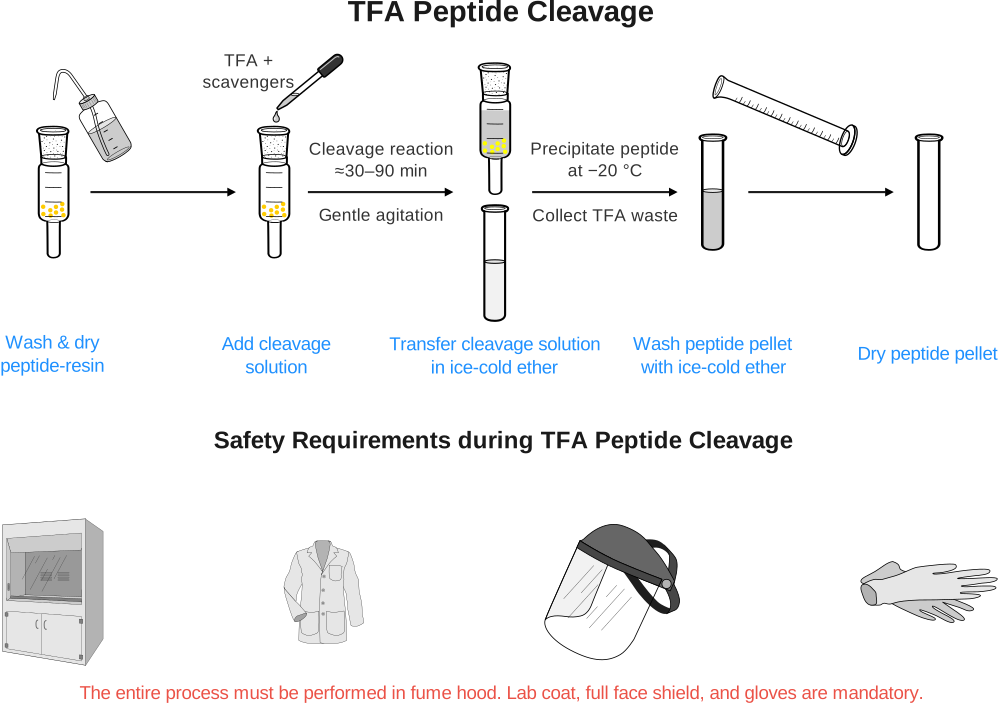
- Filter and precipitate filtrate into cold ether or MTBE; wash 2–3 × and dry.
- Optional: Dissolve crude in 10 % acetic acid and lyophilize to convert to acetate salt.
Two-Pass Cleavage (Best Practice): For Arg-rich peptides, perform two shorter cleavages (e.g., 60 min + 30 min) with a fresh, sulfur-rich cocktail rather than one extended exposure. This ensures fully active scavengers and prevents oxidation.
Consistent with Peptide Cleavage from the Resin with TFA (Fmoc-SPPS), this protocol maintains total TFA contact ≤ 90 min, promotes 3–5 % hydration, and prioritizes sulfur nucleophiles over silanes. For detailed discussion, see the section “Sequence-Dependent Challenges: Arginine-Rich Peptides.”
Analytical Verification
Complete Arg Pbf deprotection is confirmed by LC–MS, where the observed monoisotopic mass matches the theoretical neutral peptide value. IIncomplete reactions can yield Trp aryl-alkylation adducts at +252 Da (Pbf-derived) or +266 Da (Pmc-derived), while prolonged cleavage or scavenger depletion may also produce +56 Da (t-Bu addition) or +16 Da (oxidation). Their absence verifies efficient scavenging and full deprotection.
In RP–HPLC, a single dominant peak with minimal tailing is consistent with clean deprotection. If you compare protected vs deprotected material by MS, the protected precursor will be heavier by +252 Da per Pbf group removed. Residual sulfonyl-derived adducts (e.g., Trp aryl-alkylation +252/+266, or +80 Da O-sulfates on Ser/Thr/Tyr) can create shoulders or broadened peaks that resolve once hydration and scavenger balance are optimized. A short second cleavage test of the crude material can confirm whether incomplete removal was due to chemistry or diffusion.
Troubleshooting Common Outcomes
| Observation | Probable Cause | Corrective Action |
|---|---|---|
| Residual protected Arg species | Under-hydrated or exhausted cocktail | Increase H2O to 5 %; prepare a fresh mix and apply a two-pass cleavage |
| Hydrophobic microheterogeneity (Trp) | Indole alkylation by sulfonyl cations | Strengthen aryl-thioether + thiol scavengers; limit total time ≤ 2 h |
| Cys S-alkylation or S-tBu formation | Excess tertiary cations or low sulfur content | Add a thiol reductant (EDT/DTT), maintain thioether component, and perform the cleavage cold |
| Met oxidation | Old or oxygen-rich cocktail | Prepare fresh reagents under inert gas and shorten the exposure time |
Most issues arise from inadequate sulfur, dryness, or prolonged acid exposure—factors easily corrected once recognized.
Summary and Outlook
Arg Pbf deprotection remains the most efficient and predictable protecting group for arginine in Fmoc-SPPS. Its benzofuran oxygen stabilizes the developing positive charge during acidolysis, allowing fast, clean cleavage under TFA with 3–5 % H₂O and sulfur-based scavengers. Side reactions from residual sulfonyl cations are minimal when short, two-pass cleavages are applied.
Alternatives such as MIS (faster but less available) and NO₂ (non-sulfonyl, hydrogenolytic) remain niche options for specialized sequences. Continued improvements will likely focus on greener cleavage systems and reduced sulfur volatility without compromising selectivity.
Arg Pbf Deprotection – FAQ
Arg(Pbf) deprotects more cleanly because it generates less persistent sulfonyl-derived electrophiles during acidolysis. These species are quenched more rapidly under standard cleavage conditions, reducing Trp aryl-alkylation and other sulfonyl-derived side reactions compared to Pmc or Mtr.
For most peptides, use 95:2.5:2.5 TFA/H₂O/thioanisole. For Arg-rich or Trp/Cys-containing sequences, use 92.5:5:2.5:2.5 TFA/H₂O/thioanisole/TIS with 1–3% EDT. Maintaining 3–5% water and thiol scavengers minimizes sulfonyl-derived artifacts.
Most peptides deprotect fully within 30–60 minutes. Arg-rich sequences may benefit from a two-pass protocol (60 + 30 min) using fresh cocktail. Extending beyond 90 minutes increases secondary reactions without improving yield.
Tryptophan can undergo aryl-alkylation, giving characteristic +252 Da adducts (Pbf-derived), especially when proximal to Arg(Pbf). Ser, Thr, or Tyr may show +80 Da O-sulfonation. Prolonged cleavage can cause Met oxidation (+16 Da).
Not recommended. Silane scavengers alone are slow at quenching sulfonyl-derived electrophiles. Adding 1–2% EDT markedly suppresses Trp aryl-alkylation.
LC–MS +252 Da peaks and broadened or shouldered RP-HPLC peaks indicate incomplete cleavage. Apply a short 15–30 min re-cleavage with fresh cocktail rather than extending time.
MIS cleaves faster and suits Trp-rich peptides; NO₂ is hydrogenolytic, ideal for avoiding sulfonyl electrophiles in sensitive sequences.
Maintain ≤ 25 °C. Mild heating (30–35 °C) is acceptable only for oxidation-insensitive peptides. Cooling the reaction can further suppress carbocation-mediated side reactions.
Generally yes. MIS cleaves about twice as fast as Pbf, while Pmc requires slightly longer exposure (60–90 min). For mixed Arg protections, follow Pbf conditions and verify completion by LC–MS.
References
Foundational Studies on Protecting Group Chemistry
Isidro-Llobet, A., Álvarez, M., & Albericio, F. (2009). Amino acid protecting groups. Chemical Reviews, 109(6), 2455–2504.
- Comprehensive review of amino-acid protecting groups, including Arg side-chain protections (e.g., Mtr, Pmc, Pbf) and their practical acidolysis/side-reaction considerations.
- DOI: 10.1021/cr800323s
Carpino, L. A., Han, G. Y., (1972). The 9-fluorenylmethoxycarbonyl amino-protecting group. The Journal of Organic Chemistry, 37(22), 3404–3409.
- Primary introduction of the Fmoc Nα-protecting group (base-labile), which enabled the modern Fmoc/tBu strategy (acidolytic side-chain deprotection).
- DOI: 10.1021/jo00795a005
Mechanistic Understanding of Deprotection
Yang, Y. (2016). Peptide Global Deprotection/Scavenger-Induced Side Reactions in Side Reactions in Peptide Synthesis, pp 43-75, , Academic Press.
- Practical/mechanistic discussion of cleavage and scavenger-dependent side reactions during global deprotection.
- DOI: 10.1016/B978-0-12-801009-9.00003-3
Pires, D. A. T., Bemquerer, M. P., & do Nascimento, C. J. (2014). Some mechanistic aspects on Fmoc solid-phase peptide synthesis. International Journal of Peptide Research and Therapeutics, 20, 53–69.
- Mechanistic overview of Fmoc SPPS steps (coupling, deprotection, cleavage) with general discussion of protecting groups and reagents.
- DOI: 10.1007/s10989-013-9366-8
Discovery and Characterization of Pbf
Carpino, L. A., Shroff, H., Triolo, S. A., Mansour, E.-S. M. E., Wenschuh, H., & Albericio, F. (1993). The 2,2,4,6,7-pentamethyldihydrobenzofuran-5-sulfonyl group (Pbf) as arginine side-chain protectant. Tetrahedron Letters, 34(49), 7829–7832.
- Primary introduction of Pbf; reports easier TFA removal than the corresponding Pmc analog.
- DOI: 10.1016/S0040-4039(00)61487-9
Identification of Side Reactions in Arg-Protected Peptides
Beck-Sickinger, A. G., Schnorrenberg, G., Metzger, J., & Jung, G. (1991). Sulfonation of arginine residues as side reaction in Fmoc-peptide synthesis. International Journal of Peptide and Protein Research, 38(1), 25–31.
- Early experimental report documenting Arg sulfonation side products associated with Fmoc SPPS / TFA cleavage of arginine-protected peptides; evaluates scavenger conditions to suppress these by-products.
- DOI: 10.1111/j.1399-3011.1991.tb01405.x
Related Articles
 Side Reactions of Arg-Sulfonyl Protecting Groups (Mtr, Pmc, Pbf, MIS) in Fmoc-SPPS
  Peptide Cleavage from the Resin with TFA (Fmoc-SPPS)
  Fmoc Deprotection Monitoring in SPPS: Acceptance Criteria, On-Resin Tests, and UV–Vis Quantification
  Fmoc Cleavage in Peptide Synthesis: Mechanism, Risks, and Alternatives