PyBOP peptide coupling — using (benzotriazol-1-yloxy)tripyrrolidinophosphonium hexafluorophosphate — generates amide bonds through a phosphorus-mediated two-step activation pathway. The reagent produces an OBt active ester intermediate that couples standard amino acids within 30 to 60 minutes and resists premature hydrolysis under normal SPPS conditions.
PyBOP belongs to the phosphonium class of coupling reagents, built around an electrophilic tetracoordinate phosphonium center bearing three pyrrolidinyl substituents and a benzotriazolyloxy leaving group. This architecture distinguishes phosphonium reagents from uronium/aminium salts such as HATU and HBTU in one operationally significant way: unlike uronium/aminium reagents, PyBOP does not form uronium-type N-guanidinium capping products under normal SPPS conditions. This makes it more tolerant of reagent excess when the N-terminus is exposed — an advantage in slow couplings, on-resin cyclizations, and fragment condensations where driving force is needed.
This article covers the activation mechanism and competing pathways, racemization suppression, the decision logic for selecting PyAOP or PyClock over PyBOP, substrate-specific strategies for N-methylated junctions and Arg/Cys positions, the mass transfer problem at aggregation-prone sequences, practical SPPS and solution-phase protocols, quantitative coupling monitoring, and macrocyclization.
For background on the coupling cycle and resin chemistry, see Peptide Coupling Reactions.
Check Coupling Difficulty with Peptalyzer™
Use Peptalyzer™ to identify aggregation-prone regions, β-branched hotspots, and high-risk sequence positions before selecting your coupling reagent.
📘 What will you learn here?
From BOP to PyBOP: Replacing a Carcinogen
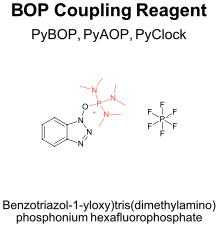
The phosphonium approach to carboxylate activation was introduced by Castro and colleagues in 1975 with BOP — (benzotriazol-1-yloxy)tris(dimethylamino)phosphonium hexafluorophosphate. BOP integrated the activating group and leaving group into a single crystalline salt, delivering faster coupling and lower racemization than carbodiimide-only protocols. Its byproduct, hexamethylphosphoramide (HMPA), is classified as a probable human carcinogen (IARC Group 2B).
HMPA in reaction mixtures and waste streams made BOP impractical in any setting with controlled exposure requirements. The structural fix was straightforward: replace the three dimethylamino groups on phosphorus with pyrrolidino rings. Coste and colleagues introduced PyBOP in 1990. Its primary byproduct — tris(pyrrolidin-1-yl)phosphine oxide — carries no known carcinogenic classification and is manageable as standard laboratory chemical waste.
The substitution preserved reactivity. PyBOP matched BOP’s coupling efficiency across standard amino acid substrates, with improved solubility in DMF and NMP. The reduced basicity of the pyrrolidino byproduct also simplified aqueous workup in solution-phase reactions. This design logic — where byproduct toxicity is a primary constraint, not an afterthought — carried forward into the development of PyAOP and PyClock.
Mechanism: Carboxylate Activation via the Phosphorus–OBt Axis
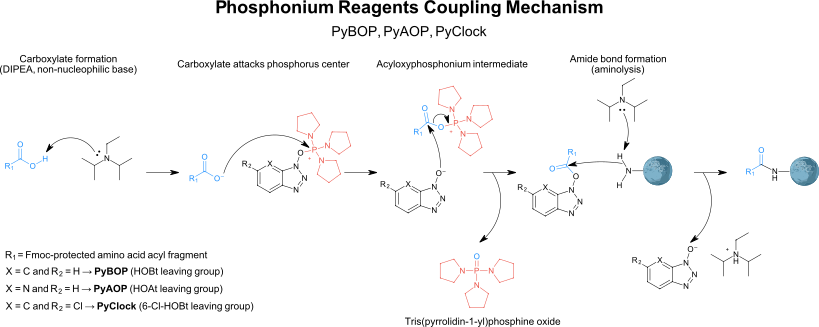
PyBOP activates carboxylic acids through a two-step sequence.
Acyloxyphosphonium Formation
A tertiary base (DIPEA or NMM) deprotonates the Fmoc-amino acid carboxyl group to generate a carboxylate anion. This anion attacks the electrophilic phosphorus center of PyBOP, displacing the benzotriazolyloxy anion (OBt⁻) and forming a transient acyloxyphosphonium intermediate.
OBt Active Ester Formation
The displaced OBt⁻ immediately attacks the carbonyl carbon of the acyloxyphosphonium species. Tris(pyrrolidin-1-yl)phosphine oxide is released, and the OBt active ester is formed. The OBt active ester then undergoes aminolysis by the resin-bound amine to form the peptide bond, releasing HOBt as the terminal byproduct.
The pKa of HOBt is approximately 4.6. This value provides a practical balance: the OBt ester reacts with the amine within 30 to 90 minutes, yet is stable enough to resist hydrolysis from trace moisture in standard SPPS solvents. Step 1 — acyloxyphosphonium formation — is rate-limiting. Once the active ester forms, aminolysis is fast relative to the total coupling cycle.
Competing Pathways: Symmetric Anhydride and Active Ester Aging
The two-step sequence in the previous section assumes ideal stoichiometry. Real SPPS conditions deviate from this in two ways that affect coupling yield and racemization profile.
Symmetric Anhydride Formation
When Fmoc-AA-OH is in excess relative to PyBOP — typical when protocols use 5 equivalents of AA against 3 equivalents of reagent — a second carboxylate can attack the OBt active ester before aminolysis occurs. The product is the symmetric anhydride (Fmoc-AA)₂O, with HOBt released as the leaving group. Symmetric anhydrides are more electrophilic than OBt esters and couple faster, but they show higher racemization at α-stereocenters under basic conditions. The proportion of symmetric anhydride depends on AA:PyBOP ratio, base concentration, and pre-activation time.
Active Ester Aging
The OBt ester is metastable in DMF or NMP at room temperature. Beyond approximately 5 minutes of pre-activation at 25°C, two competing processes reduce effective active ester concentration: hydrolysis from trace solvent moisture, and symmetric anhydride formation if excess AA is present. Racemization risk also increases with extended pre-activation time — not through oxazolone formation from the OBt ester itself, which is slow, but through oxazolone formation from any unreacted or incompletely activated AA remaining in the mixture under basic conditions. Pre-activation longer than 5 minutes typically reduces aminolysis efficiency and increases epimerization risk at sensitive positions.
Practical Implication
Limit pre-activation to 1–3 minutes before transferring to resin. For racemization-sensitive positions, pre-activate at 0–5°C and keep timing tighter (≤ 90 seconds). Avoid AA:PyBOP ratios above approximately 2:1 to suppress symmetric anhydride formation, particularly at His, Cys, and fragment junction couplings.
Racemization Suppression: OBt Ester vs. the Oxazolone Pathway
Racemization in peptide coupling proceeds primarily through oxazolone formation. Carbodiimide activation of a C-terminal amino acid generates an O-acylisourea — reactive but unstable. Under basic coupling conditions, the backbone carbonyl oxygen attacks the activated carbonyl to form a five-membered oxazolone ring. The oxazolone α-proton is acidic; base-mediated abstraction yields a planar enolate that racemizes before aminolysis occurs.
PyBOP suppresses this pathway by bypassing the O-acylisourea stage entirely. The OBt active ester is generated directly without a carbodiimide-derived intermediate. The OBt ester is less electrophilic than the O-acylisourea and cyclizes to the oxazolone at a substantially lower rate under standard coupling conditions.
Racemization risk with PyBOP is reduced but not eliminated. It increases when:
- DIPEA exceeds approximately 4 equivalents relative to the amino acid
- Reaction time extends beyond 2 hours in DMF at room temperature
- The coupling involves His, Cys, or a C-terminal fragment junction
- Pre-activation extends beyond 5 minutes
For racemization-sensitive positions, supplemental HOBt (0.1–0.5 equivalents, where the additive is permitted) shifts equilibrium further toward the OBt ester. Cooling to 0–5°C reduces epimerization risk at His and Cys positions.
See Histidine Racemization in SPPS: Prevention & Detection for the full oxazolone mechanistic pathway.
HOBt-Free Workflows: When and Why to Skip the Additive
The previous section recommends supplemental HOBt for racemization-sensitive coupling. In many operating environments, this is no longer practical. Anhydrous HOBt is classified as an explosive (UN 0508; Class 1 hazard under transport regulations) following thermal stability studies that demonstrated rapid decomposition under confinement. HOBt monohydrate is more stable but still faces transportation and storage restrictions in some jurisdictions. Many industrial sites have removed both forms from approved reagent lists.
This regulatory shift changes the reagent selection logic for racemization-sensitive coupling.
OxymaPure as the Standard Alternative
Ethyl (hydroxyimino)cyanoacetate (OxymaPure) suppresses racemization through OBt-ester-like activation chemistry without the explosive hazard. It is widely used as an additive with carbodiimides (DIC/OxymaPure) and is compatible with phosphonium reagents in HOBt-restricted environments. Its decomposition profile is significantly safer than HOBt.
PyAOP as a Built-In Solution
PyAOP carries HOAt as its leaving group, which provides racemization suppression equivalent to or better than HOBt without a separate additive. In facilities that have eliminated anhydrous HOBt, PyAOP becomes the practical default for racemization-sensitive couplings — not just a performance upgrade for hindered substrates. The cost differential is justified by the elimination of a regulated additive from the supply chain.
PyClock as the Industrial Alternative
For multi-kilogram synthesis, PyClock provides similar racemization performance to PyAOP and is manufactured pyrrolidine-free. Its 6-Cl-HOBt leaving group is bound within the reagent and is not handled as a separate explosive material. This combination — built-in racemization suppression plus controlled impurity profile — has driven PyClock adoption in process chemistry environments where HOBt is no longer permitted.
PyOxym as the OxymaPure-Native Option
PyOxym carries the Oxyma anion as its leaving group, generating an Oxyma active ester through the same phosphorus-mediated two-step pathway as PyBOP. This makes it the logical phosphonium-class analog of DIC/OxymaPure — the leaving group already present in most HOBt-restricted workflows is now embedded in the reagent itself. Racemization data for PyOxym are limited relative to PyAOP and PyClock, and industrial adoption remains narrow. For routine HOBt-restricted SPPS, PyAOP and PyClock are the established choices; PyOxym is worth considering when OxymaPure compatibility is specifically required and reagent availability permits.
Phosphonium vs. Uronium Reagents: The Guanidinylation Problem
HATU, HBTU, and related uronium/aminium salts activate carboxylates efficiently and are broadly compatible with Fmoc-SPPS. Their structural constraint is the central uronium carbon — an electrophile that reacts preferentially with carboxylates, but also reacts with the free N-terminus of the growing chain, producing an N-guanidinium derivative that permanently caps the peptide and terminates elongation.
Guanidinylation risk is highest when:
- The reagent is added to the resin before the amino acid carboxylate is present
- Reagent equivalents exceed approximately 2–3 relative to resin loading
- The N-terminus is transiently exposed during a slow or failing coupling cycle
PyBOP and PyAOP do not carry a uronium carbon. The phosphorus center is selective for carboxylate oxygen and does not produce uronium-type N-guanidinium capping under standard conditions. This allows phosphonium reagents to be used at 3 to 5 equivalents without chain termination risk. The advantage is most significant in:
- Macrocyclization, where slow intramolecular coupling requires excess reagent
- Fragment condensations with partially protected substrates
- Difficult sequences where double or triple coupling is required to reach completion
The practical rule: use PyBOP or PyAOP when reagent excess is required or when N-terminus exposure cannot be excluded. Use HATU when a single equivalent is sufficient, fast kinetics are the priority, and addition order is consistently controlled.
Selecting Within the Class: PyBOP, PyAOP, and PyClock
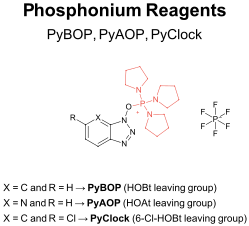
All three reagents share the tripyrrolidinophosphonium hexafluorophosphate core. They differ in leaving group, which determines reactivity, racemization profile, and cost.
PyBOP uses HOBt (pKa ≈ 4.6) as its leaving group. It is the standard choice for routine Fmoc-SPPS of canonical sequences: adequate reactivity, low racemization, high DMF and NMP solubility, and the lowest cost in the phosphonium class. Most couplings of unhindered canonical amino acids complete within 30 to 60 minutes with 3 equivalents of PyBOP and 6 equivalents of DIPEA.
PyAOP replaces HOBt with HOAt (pKa ≈ 3.3). Two effects distinguish PyAOP from PyBOP. The lower pKa produces a more electrophilic OAt active ester, increasing aminolysis rate at hindered positions. Additionally, the nitrogen at the 7-position of the azabenzotriazole ring provides a neighboring group effect — it assists amine deprotonation and directs the nucleophile toward the carbonyl carbon. PyAOP is the preferred reagent for consecutive β-branched residues (Val-Val, Ile-Val), N-methylated junctions, the residue immediately following Arg(Pbf), and fragment condensations. It also shows lower racemization than PyBOP at extended reaction times.
PyClock uses 6-Cl-HOBt as its leaving group (pKa ≈ 3.35), placing its reactivity between PyBOP and PyAOP. It was developed for industrial synthesis: PyClock is manufactured pyrrolidine-free, eliminating the pyrrolidide side reaction described in a later section. For large-scale synthesis of difficult sequences, PyClock offers PyAOP-class reactivity at lower unit cost with a controlled impurity profile.
| Reagent | Leaving Group | pKa (LG) | Primary Application |
|---|---|---|---|
| PyBOP | HOBt | ≈ 4.6 | Routine Fmoc-SPPS; canonical sequences; lowest cost in class |
| PyAOP | HOAt | ≈ 3.3 | Hindered couplings; β-branched and N-methylated junctions; Arg-Pbf N+1 positions; fragment condensation; HOBt-restricted environments |
| PyClock | 6-Cl-HOBt | ≈ 3.35 | Industrial scale; pyrrolidine-free manufacturing; difficult sequences requiring PyAOP-class reactivity at lower unit cost |
See PyBOP related side reactions in a dedicated article.
Specialized Reagents: PyBroP and PyCloP for Hindered Couplings
PyBroP (bromotripyrrolidinophosphonium hexafluorophosphate) and PyCloP (chlorotripyrrolidinophosphonium hexafluorophosphate) operate through a different activation pathway than OBt-ester-forming phosphonium reagents. Rather than generating a stable active ester, these halogenophosphonium salts generate a highly reactive acyloxyphosphonium intermediate. The carboxylate displaces the halide from phosphorus, forming R-C(=O)-O-P⁺(pyrrolidinyl)₃. This species is more electrophilic at the carbonyl carbon than an OBt or OAt ester because the tris(pyrrolidinyl)phosphine oxide is a poorer leaving group than HOBt or HOAt — the thermodynamic driving force for aminolysis is therefore higher.
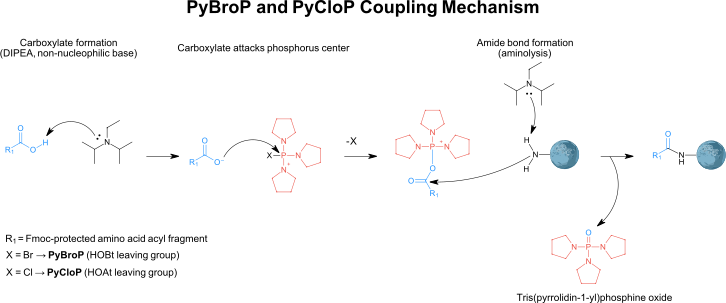
Acyl halides are substantially more reactive than OBt or OAt esters. This additional electrophilicity addresses sterically demanding couplings where active ester chemistry stalls — including coupling onto N-methylated amines and coupling from α,α-dialkyl residues such as Aib (α-aminoisobutyric acid), where steric compression at the carboxylate-bearing carbon reduces reactivity below the threshold for practical OBt ester rates.
The reactivity increase carries direct costs:
- Racemization risk at the α-carbon is elevated relative to active ester pathways
- O-acylation of Ser, Thr, and Tyr side chains is possible under incomplete protection
- Lys ε-amine and Cys thiol can react if protection is compromised
Robust protecting groups are required throughout. Coupling times should be kept short — 15 to 30 minutes — and reaction progress confirmed by Kaiser or chloranil test. Pbf, Boc, and Trt groups remain compatible.
PyBroP and PyCloP are best treated as high-reactivity halogenophosphonium reagents for difficult couplings, including N-methylated amino acids and α,α-dialkyl residues such as Aib. They are useful when OBt/OAt active ester chemistry is too slow, but their higher reactivity narrows the safety margin for racemization and side reactions.
Coupling at N-Methylated Junctions
N-methylated amino acids (Sar, MeAla, MeLeu, MePhe, MeVal) appear in many cyclic peptide therapeutic candidates because they can increase conformational rigidity, protease resistance, and permeability. They also create the most consistently difficult coupling challenge in modern Fmoc-SPPS, and the standard PyBOP protocol fails at these junctions more often than at any other position.
The mechanistic problem is the secondary amine. Coupling onto an N-methyl α-nitrogen requires the active ester to react with a sterically hindered, electronically less nucleophilic amine. The reaction rate drops by one to two orders of magnitude compared to coupling onto a primary α-amine. Standard PyBOP at 30–60 minutes at room temperature can leave substantial truncation at N-methylated junctions, especially on higher-loading resin or in sterically crowded sequences.
Practical strategy:
- Switch from PyBOP to PyAOP. The HOAt neighboring group effect provides faster aminolysis at sterically demanding amines.
- Increase coupling temperature to 40–50°C. This is one of the few situations where elevated temperature is genuinely helpful in Fmoc-SPPS, and it accelerates aminolysis without significantly increasing racemization at the previous (already-coupled) residue.
- Extend coupling time to 60–120 minutes.
- Use double or triple coupling. Kaiser test does not detect free secondary amines; chloranil test is required for monitoring N-Me junction reactions.
- If PyAOP double coupling still fails, PyBroP or PyCloP can be considered for the N-methylated junction, with short activation time, robust side-chain protection, and analytical confirmation by LC-MS.
This problem is mechanistically distinct from coupling at α-methylated residues (Aib, α-MePhe), which is also addressed by PyBroP/PyCloP. N-methylated and α-methylated junctions present different steric problems but often respond to the same halogenophosphonium fallback when active ester chemistry stalls.
Position-Specific Strategies: Arg(Pbf) and Cys
Arg(Pbf) and the N+1 Coupling
Arg residues are common in therapeutic peptides, and Pbf is the standard side-chain protecting group. Coupling Fmoc-Arg(Pbf)-OH onto a chain proceeds normally with PyBOP. The problem is the next coupling — adding the residue immediately after Arg in the sequence. The Pbf group is bulky and partially obstructs the α-amine of the just-incorporated Arg, particularly on standard polystyrene resins at higher loading. Coupling efficiency at this N+1 position can drop noticeably below adjacent positions in the same sequence.
For sequences with consecutive Arg residues, or Arg followed by β-branched residues (Arg-Val, Arg-Ile), switch to PyAOP at the N+1 coupling step. Lower resin loading (≤ 0.3 mmol/g) reduces the steric problem. This failure mode is one of the most underdiscussed in routine Fmoc-SPPS literature.
Cys and S-Acylation Risk
The earlier section flagged Cys as racemization-sensitive. A second concern operates when Cys protecting group integrity is incomplete. Standard Trt-protected Cys is robust under coupling conditions — the thiol is fully protected and unreactive.
With weaker or differentially designed protecting groups — Acm, designed for orthogonal removal, or StBu, which allows controlled reduction — incomplete protection or trace deprotection during synthesis can expose free thiol. The free thiol is a strong nucleophile and reacts readily with the OBt active ester of an incoming amino acid, generating a thioester instead of extending the chain at the next α-amine position (Level B mechanism).
The thioester impurity may have the same monoisotopic mass as the target sequence but a different connectivity. MS/MS fragmentation reveals the difference. For sequences containing Acm-Cys or other weakly protected Cys positions, characterize by LC-MS/MS rather than mass alone.
Aggregation, Resin Loading, and the Mass Transfer Problem
A later section recommends NMP and DMF/DCM mixtures for aggregation-prone sequences. The deeper question — why aggregation defeats PyBOP coupling specifically — explains why adding more reagent rarely helps.
The Mass Transfer Problem
Aggregation in SPPS is a physical event, not a kinetic one. β-sheet associations between resin-bound chains bury the N-terminal α-amine inside a hydrophobic core. The active ester in solution is not chemically unreactive with a buried amine — it is sterically inaccessible to it. Coupling efficiency collapses regardless of PyBOP equivalents, base concentration, or pre-activation timing. The reagent reaches the resin but cannot find the nucleophile.
Why “More PyBOP” Fails
Increasing reagent equivalents, extending coupling time, or adding base does not address inaccessibility. The activated AA hydrolyzes, ages, or forms symmetric anhydride before the buried amine becomes accessible.
Solutions that address mass transfer:
- Backbone protection. Pseudoproline dipeptides (Ser/Thr ψ-Pro) and Hmb/Dmb backbone amides disrupt β-sheet hydrogen bonding and prevent aggregate formation at the chemical level.
- Chaotropic additives. LiCl or magnesium chloride (approximately 0.4 M) in DMF disrupts hydrogen-bonded aggregates and restores chain accessibility.
- Elevated coupling temperature. 40–60°C reduces aggregate stability and increases conformational sampling.
- Resin choice and loading. PEG-based resins (ChemMatrix, Tentagel) aggregate less than polystyrene Wang or Rink. Sequences synthesized at 0.1–0.2 mmol/g aggregate less than the same sequences at 0.5–0.8 mmol/g — chain-to-chain proximity scales with loading.
For Peptalyzer™-flagged aggregation-prone sequences, the first intervention is loading and resin selection, not reagent change.
The Chemist’s Perspective
Five failure modes account for most PyBOP-related synthesis problems.
Pyrrolidine contamination. Commercial PyBOP contains approximately 0.5% w/w free pyrrolidine. In SPPS, this trace amine consumes activated AA in solution to form a soluble Fmoc-AA-pyrrolidide byproduct. The practical consequence is reduced effective AA concentration during coupling. In solution-phase synthesis or fragment condensation, the pyrrolidide remains in the mixture as a +53 Da impurity relative to the free acid. Recrystallize PyBOP for critical syntheses, or use PyClock (manufactured pyrrolidine-free).
Solution stability and visual cues. PyBOP in DMF loses coupling efficiency after approximately 24 hours at room temperature; NMP solutions show modestly better stability. A visible yellow tint should be treated as a practical warning sign of aged or degraded reagent solution. Evidence is limited for using color alone as a universal diagnostic, so confirm questionable stocks with a known control coupling or HPLC where possible. Prepare fresh solutions each session.
Base stoichiometry. Two to four equivalents of DIPEA per amino acid is the practical operating range. Below this, incomplete carboxylate deprotonation slows acyloxyphosphonium formation. Above 6 equivalents, racemization risk increases at His, Cys, and fragment junctions.
Pre-activation timing. Pre-activate for 1–3 minutes before transferring to resin. Beyond 5 minutes, hydrolysis, oxazolone formation, and symmetric anhydride formation reduce effective active ester concentration and increase racemization risk.
Mass transfer at aggregation positions. When coupling fails at sequence positions flagged for aggregation, the problem is usually steric inaccessibility of the resin-bound amine, not coupling kinetics. Use backbone protection, chaotropic additives, elevated temperature, or lower loading rather than adding more PyBOP.
Practical Protocols: SPPS and Solution-Phase Coupling
SPPS Standard Protocol
- PyBOP: 3–5 equivalents relative to resin loading
- DIPEA: 6–10 equivalents
- Resin loading: 0.3–0.5 mmol/g for canonical sequences; 0.1–0.2 mmol/g for aggregation-prone or therapeutic-grade syntheses
- Solvent: DMF; NMP for aggregation-prone sequences; DMF/DCM (1:1) for very hydrophobic chains
- Pre-dissolve Fmoc-AA-OH and PyBOP separately in DMF; combine, add DIPEA, transfer to resin within 1–3 minutes
- Reaction time: 30–60 minutes at room temperature
- Monitoring: see next section
- Double coupling: repeat once when monitoring indicates incomplete reaction
Solution-Phase Standard Protocol
- PyBOP: 1.1–1.5 equivalents
- DIPEA: 2–3 equivalents
- Solvent: DMF or DCM
- Temperature: 0–5°C for His, Cys, or fragment junction couplings; room temperature for standard substrates
- Reaction time: 30–90 minutes
Solvent Alternatives
DMF is classified as a reproductive toxicant under EU REACH; NMP faces parallel restrictions. Cyrene and dimethyl isosorbide show acceptable PyBOP solubility and comparable coupling efficiency for standard sequences. 2-MeTHF works for less polar substrates with adequate Fmoc-AA-OH solvation.
For aggregation-prone sequences flagged by Peptalyzer™ SPPS Difficulty Profile, the appropriate first intervention is reduced resin loading and a more polar solvent system, not changes to reagent equivalents.
Coupling Efficiency Monitoring Beyond Kaiser
Kaiser and chloranil tests are qualitative. They detect free amine at approximately 1% sensitivity — below this threshold, both tests read negative. For research-scale synthesis of short peptides, this is usually adequate. For long sequences or therapeutic-grade peptides, qualitative tests miss what matters most.
UV monitoring of Fmoc release. During Fmoc deprotection of the just-incorporated residue, the piperidine-dibenzofulvene adduct absorbs at 301 nm. The integrated UV absorbance is proportional to the moles of Fmoc removed, which equals the moles of residue coupled in the previous step (assuming complete deprotection). Comparing UV traces across successive cycles gives a quantitative coupling efficiency per step. Most automated synthesizers include this measurement. Watch for sudden drops in cycle yield as a leading indicator of coupling failure or aggregation onset.
LC-MS of cleaved test resin. Remove a small resin portion (1–5 mg), perform mini-cleavage with TFA cocktail, and analyze by LC-MS. This detects:
- Truncation sequences (free α-amine survivors at shorter mass)
- Insertion sequences (extra residue from premature Fmoc removal)
- Mass shifts from oxidation, aspartimide, or capping events
- Diastereomers from racemization (with chiral analysis)
This is the only method that confirms the identity of resin-bound species, not just the absence of free amine.
Combined workflow. Use UV Fmoc release as a real-time per-step monitor; perform LC-MS of test resin samples at key positions (every 5–10 residues and after high-risk couplings). Kaiser test remains useful as a fast pre-coupling readiness check, not a final confirmation of coupling success.
Macrocyclization: Head-to-Tail Cyclization with PyBOP and PyAOP
Head-to-tail macrocyclization couples the C-terminus of a linear precursor to its own N-terminus — a reaction that competes with intermolecular oligomerization. Phosphonium reagents are preferred here because they tolerate the excess required to drive slow intramolecular coupling without risk of N-terminal capping.
On-resin cyclization — with orthogonal side-chain protecting groups removed while the linear precursor remains resin-bound — is effective for rings of six residues or larger. On-resin cyclization for hexapeptides and above under PyBOP/DIPEA conditions generally proceeds with high yield and minimal oligomer formation. For pentapeptides and smaller rings, transannular strain shifts product distribution toward cyclic dimers or larger oligomers. PyAOP’s higher reactivity partially compensates, but below five residues, high-dilution solution-phase conditions are generally required over on-resin methods.
Solution-phase macrocyclization protocol:
- Peptide concentration: < 1 mM (high-dilution conditions to suppress oligomerization)
- Pre-activate with PyBOP or PyAOP in DMF; add DIPEA last
- Add the activated species dropwise to suppress intermolecular reaction
- PyAOP is preferred over PyBOP for rings of five to seven residues
- Monitor by LC-MS; the cyclic product typically elutes earlier than the linear precursor due to the loss of free charged termini
Fragment condensation cyclizations — where a protected fragment is cyclized in solution — benefit directly from phosphonium selectivity: the N-terminus remains unmodified throughout the reaction.
Automated SPPS: Cartridge Stability and Multi-Run Considerations
Automated synthesizers pre-dissolve coupling reagents in cartridges that may sit for hours during multi-sequence runs. The 24-hour DMF stability window from earlier sections is a theoretical maximum at controlled laboratory temperature. Real-world automated synthesis frequently violates this assumption.
Temperature Effects
PyBOP solutions degrade faster at elevated temperatures. At 22–25°C (typical lab ambient), 24-hour stability holds. At 28–30°C (synthesis room with running instrument), coupling efficiency decline is detectable earlier. Industrial labs running synthesizers in non-climate-controlled rooms often see this without recognizing the cause.
Multi-Day Runs
Automated syntheses spanning 48–72 hours risk using degraded reagent solutions in later cycles. The result is a quality gradient — early peptides in the run pass; later peptides show truncation patterns indistinguishable from coupling failure due to other causes. The pattern is sometimes misread as instrument failure when it is really reagent age.
Practical Countermeasures
- Sub-aliquot PyBOP solutions and refresh every 24 hours, ideally before each new peptide in a multi-peptide run
- Use NMP-based stocks for runs longer than 24 hours; NMP solutions show modestly better PyBOP stability than DMF
- Refrigerate cartridges to 4–8°C between active runs when the synthesizer permits
- For HOBt-restricted environments running automated synthesis, PyAOP or PyClock provides better cartridge stability than research-grade PyBOP
Visual Check Before Start-Up
Yellow discoloration of the reagent solution should be treated as a practical warning of degradation. Confirm questionable stocks against a known control coupling or by HPLC of the reagent solution before committing to a multi-day run.
Industrial Scale-Up: Byproduct Management, Economics, and Thermal Safety
Byproduct Removal
Tris(pyrrolidin-1-yl)phosphine oxide — the primary PyBOP byproduct — is more polar than HMPA and partitions partially into aqueous phases during workup, though removal in DCM-based extractions can be incomplete. Standard aqueous extraction (saturated NaHCO₃ wash, then brine) reduces residual phosphine oxide in solution-phase reactions but rarely eliminates it; final removal often requires chromatography. Unlike dicyclohexylurea from DCC, the phosphine oxide does not precipitate and cannot be removed by filtration. In SPPS, the phosphine oxide is washed away with the coupling solution and does not carry through to the final cleaved product.
Scale Economics
PyBOP carries a higher unit cost than carbodiimides. At research scale, this is offset by higher crude purity and reduced downstream purification burden. At pilot and industrial scale, fragment condensation strategies reduce total coupling cycles and reagent consumption. PyClock’s controlled manufacturing process — pyrrolidine-free, compatible with HOBt-restricted environments — provides consistent impurity profiles and better cost predictability than research-grade PyBOP at multi-kilogram scale.
Thermal Safety
DSC analysis places PyBOP’s onset temperature for exothermic decomposition at approximately 150–157°C, with a high enthalpy of decomposition — consistent with the energetic character of benzotriazole-containing reagents. At laboratory scale, standard handling presents no operational concern under normal storage conditions. At industrial scale, Accelerating Rate Calorimetry (ARC) is required to define the self-accelerating decomposition temperature (SADT) and safe operating envelopes for bulk storage and reactor operation. PyBOP should not be subjected to grinding, impact, or electrostatic discharge in quantities above gram scale without a documented thermal hazard assessment.
PyBOP Peptide Coupling — FAQ
Pre-dissolve Fmoc-AA-OH and PyBOP separately in DMF. Combine, add DIPEA, transfer to resin within 1–3 minutes. Adding base before combining acid and reagent increases racemization exposure. Transferring after 5+ minutes of pre-activation reduces effective ester concentration through aging.
No. PyBOP generates the OBt ester intrinsically. Supplemental HOBt (0.1–0.5 equivalents) is useful only for racemization-sensitive couplings. In HOBt-restricted environments — increasingly common at industrial scale — switch to PyAOP rather than adding regulated material.
For consecutive β-branched residues (Val-Val, Ile-Val), N-methylated junctions, the residue immediately following Arg(Pbf), or wherever PyBOP double coupling fails within 2 hours. The HOAt neighboring group effect addresses sterically demanding positions where standard PyBOP rates are inadequate. PyAOP also becomes the default in HOBt-restricted facilities.
His is racemization-sensitive. Use PyBOP at 0–5°C with supplemental HOBt (0.1–0.3 equivalents, where permitted) or switch to PyAOP. Limit DIPEA to 2–3 equivalents. Trt-protected His is preferred over Boc-His(Trt). If chiral analysis shows epimerization, PyAOP at 0–5°C is the next step.
No. The OBt ester hydrolyzes rapidly in aqueous media. Use anhydrous DMF, NMP, or DCM. For aqueous compatibility, use water-tolerant carbodiimide systems (EDC with sulfo-NHS).
Absence of detectable primary amine — consistent with successful coupling, but not diagnostic of identity. Insertion sequences, thioester formation at incompletely protected Cys, or capping events can all give Kaiser-negative resin. LC-MS of cleaved test resin is the only method that confirms identity.
Recurring failure at one position usually indicates aggregation, not coupling kinetics. Try lower resin loading (0.1–0.2 mmol/g), pseudoproline dipeptide insertion if Ser/Thr is nearby, or coupling at 40–60°C before changing reagents. More PyBOP rarely solves a mass-transfer problem.
Yellow discoloration is a useful warning sign but not a definitive diagnostic on its own. Coupling efficiency drop on a known-easy control sequence confirms degradation, and HPLC of the reagent solution shows reduced active ester formation. Treat any visibly discolored stock as suspect and run a control coupling before committing to a critical synthesis.
References
Castro, B., Dormoy, J. R., Evin, G., & Selve, C. (1975). Peptide coupling reagents I — [(Benzotriazolyl)oxy]tris(dimethylamino)phosphonium hexafluorophosphate (BOP). Tetrahedron Letters, 16(14), 1219–1222.
- Introduced the BOP phosphonium platform that established the benzotriazolyloxy-phosphonium activation strategy; the HMPA byproduct concern in this work directly motivated the development of PyBOP.
- DOI: 10.1016/S0040-4039(00)72100-9
Coste, J., Le-Nguyen, D., & Castro, B. (1990). PyBOP: A new peptide coupling reagent devoid of toxic by-product. Tetrahedron Letters, 31(2), 205–208.
- Primary reference for the introduction of PyBOP; reports coupling efficiency, racemization data, and the replacement of HMPA by tris(pyrrolidin-1-yl)phosphine oxide.
- DOI: 10.1016/S0040-4039(00)94371-5
König, W., & Geiger, R. (1970). A new method for the synthesis of peptides: Activation of the carboxyl group with dicyclohexylcarbodiimide using 1-hydroxybenzotriazoles as additives. Chemische Berichte, 103(3), 788–798.
- Original report of HOBt as a coupling additive for racemization suppression; establishes the mechanistic basis for OBt active ester formation that underlies PyBOP chemistry.
- DOI: 10.1002/cber.19701030319
Carpino, L. A. (1993). 1-Hydroxy-7-azabenzotriazole. An efficient peptide coupling additive. Journal of the American Chemical Society, 115(10), 4397–4398.
- Introduction of HOAt and description of the neighboring group effect that distinguishes PyAOP from PyBOP; foundational reference for the mechanistic basis of PyAOP’s superiority at hindered coupling positions.
- DOI: 10.1021/ja00063a082
Bechtler, C., & Lamers, C. (2021). Macrocyclization strategies for cyclic peptides and peptidomimetics. RSC Medicinal Chemistry, 12(8), 1325–1351.
- Comprehensive review of amide-bond and chemoselective macrocyclization strategies; covers phosphonium reagent use in head-to-tail lactamization and the pseudo-dilution effect of on-resin cyclization relevant to PyBOP-mediated macrocycle synthesis.
- DOI: 10.1039/D1MD00083G