Conceptual Overview of TFA Peptide Cleavage
Trifluoroacetic acid (TFA) is the cornerstone reagent for the final stage of Fmoc-based solid-phase peptide synthesis (SPPS) – TFA peptide cleavage. Since its adoption in the late 1970s, TFA has replaced the far harsher anhydrous HF and TFMSA used in Boc chemistry. The shift was driven by the emergence of acid-labile linkers such as Wang (1970), Rink Amide (1987), and Sieber (1987), that release the peptide under moderate acid conditions while retaining side-chain integrity.
In modern Fmoc-SPPS, TFA performs a dual role:
- Global deprotection of side-chain protecting groups (tBu, Boc, Trt, Pbf).
- Cleavage of the linker–peptide bond, liberating the fully deprotected peptide from the resin.
Despite decades of refinement, TFA cleavage remains mechanistically rich and practically delicate, balancing deprotection kinetics, cation scavenging, and peptide stability.
📘 What will you learn here?
Mechanistic Framework of TFA Peptide Cleavage
This schematic illustrates the molecular events during TFA-mediated peptide cleavage from solid support in Fmoc SPPS. Trifluoroacetic acid (TFA) removes acid-labile protecting groups such as Boc, Trt, Pbf, and tBu, and simultaneously cleaves the peptide–linker bond to release the fully deprotected peptide. The color coding corresponds to protecting groups (red), linker (blue), and reagent (yellow).

Protonation and Linker Fragmentation
Acid Activation and Carbocation Formation
TFA, a strong, volatile organic acid (pKₐ ≈ 0.5), protonates the acid-labile benzylic ether or amide linkers that anchor the peptide to the solid support. This protonation initiates heterolytic C–O bond cleavage, generating a stabilized benzylic or trityl-type carbocation that releases the peptide while the linker fragments remain attached to the resin.
The rate and efficiency of cleavage are governed by two primary factors:
- Intrinsic linker stability, which dictates how readily the carbocation forms, and
- Availability of scavengers, which capture the carbocation before it can react with nucleophilic peptide side chains.
Different resin families define both the acid-labile linker type and cleavage behavior under TFA. The table in the next section summarizes the main classes encountered in Fmoc-based SPPS, highlighting the support polymer, linker functionality, cleavage outcome, and relative acid sensitivity.
Once the linker is activated, its behavior under TFA depends on the stability of the intermediate carbocation and the surrounding polymer environment.
Linker Families and Cleavage Behavior
| Resin / Linker Family | Support Polymer | Typical Linker | Cleavage Outcome | Acid Sensitivity (TFA) |
|---|---|---|---|---|
| Wang / p-Alkoxybenzyl alcohol | Polystyrene or PEG-PS (TentaGel®) | p-Alkoxybenzyl ether | Peptide–COOH | Moderate; full cleavage with 95 % TFA |
| Rink Amide | Polystyrene or PEG-PS | Aminomethyl–benzhydryl amide | Peptide–CONH2 | Moderate; global TFA gives full release |
| Sieber Amide | Polystyrene | 2,4-Dimethoxybenzhydrylamine | Peptide–CONH2 | Very acid labile; use short global cleavage, typically 30–45 min. Do not simply extend beyond 45 min; if multiple Arg(Pbf) residues require longer exposure, consider two-step release plus separate global deprotection. |
| Trityl / Trt-Cl | Polystyrene, PEG-PS, HypoGel® | Trityl chloride or trityl alcohol | Peptide–COOH or protected fragment | High lability; cleaves readily at low % TFA. Use low-% TFA/DCM for protected fragments; for global release, use short TFA exposure and avoid unnecessary prolonged acid contact. |
| 2-Chlorotrityl (2-CTC) | Polystyrene or PEG-PS | 2-Cl-trityl chloride | Peptide–COOH or protected fragment | Extremely acid sensitive; protected fragments are commonly released with 0.5–2 % TFA/DCM or HFIP/DCM while retaining side-chain protections. For global release, use short TFA exposure and watch for conflicts with Arg(Pbf), which may require longer deprotection. |
| Merrifield / Chloromethyl | Polystyrene | –CH2Cl | Peptide–COOH (after ester linkage) | Less acid labile; used for Boc-SPPS or modified linkers |
| PAM / MBHA | Polystyrene | p-Methylbenzhydrylamine or amide linker | Peptide–CONH2 | Moderate; historical precursor to Rink Amide |
| Hydrazide / Oxime / Aldehyde linkers | Polystyrene, PEG-PS, or HypoGel® | Hydrazone, oxime, or formyl functionality | Peptide–CONHNH2 or Peptide–CHO intermediates | Variable; generally stable to TFA unless engineered for release |
| TentaGel® / HypoGel® hybrid supports | PEG–PS or polyacrylamide | Various linkers (Wang, Rink, Trt, 2-CTC) | As per linker type | Enhanced solvation; same acid sensitivity as linker core |
| Ramage / PEG-based hydrophilic resins | PEG–polystyrene or pure PEG | Hydrophilic benzhydryl amides | Peptide–CONH2 (improved swelling in polar media) | Moderate to high; cleaves under standard TFA |
| Specialty / REM / Safety-Catch linkers | Polystyrene or HypoGel® | Reductive-elimination or sulfonamide linkers | Custom termini (e.g., thioesters, N-methyl amides) | Tunable; some require post-TFA activation |
Linker and Resin Factors Governing TFA Cleavage
The polymer backbone—whether polystyrene, PEG–PS, or polyacrylamide—governs resin swelling and solvation, while the linker defines acid lability and the resulting C-terminal functionality. Under standard global deprotection conditions (≈95 % TFA, 0–25 °C), the most common linkers—Wang, Rink, Sieber, Trityl, and 2-CTC—achieve complete cleavage within 30–90 min when appropriate scavengers are present.
Resin swelling during cleavage also strongly influences acid diffusion and reaction kinetics: PEG–PS hybrid supports (e.g., TentaGel®) swell efficiently in polar TFA mixtures, whereas purely polystyrene (PS) resins may require larger cocktail volumes or longer contact times to ensure uniform acid penetration.
Side-Chain Deprotection and Carbocation Generation
Simultaneously, TFA removes acid-labile side-chain protecting groups. Each deprotection releases a potential carbocation:
| Protecting-Group Type | Key Electrophile | Typical Amino-Acid Sources | Reactivity / Risk |
|---|---|---|---|
| t-Butyl ethers / esters | t-Bu⁺ | Ser, Thr, Tyr, Asp, Glu | Highly reactive; strong alkylating agent that can modify nucleophilic residues (Trp, Cys, Met, His). |
| Trityl and Boc protections | Trt⁺ | Cys, His | Moderately reactive; prone to aromatic substitution or thiol alkylation under prolonged exposure. |
| Pbf / Pmc protections | Sulfonyl-derived electrophiles (Pbf/Pmc fragments) | Arg | Sequence-dependent risk; can drive Trp aryl-alkylation (+252/+266 Da) if not quenched rapidly by hydration and sulfur scavengers. |
These reactive species can alkylate or oxidize nucleophilic residues unless trapped rapidly. Hence, scavengers are not optional—they are integral co-reagents that define the outcome of global cleavage.
TFA Peptide Cleavage Cocktails – Composition, Mechanistic Strength, and Role of Scavengers
Each TFA cleavage cocktail represents a compromise between acid strength, hydration, and carbocation quenching capacity. While the overall TFA concentration defines protonation power, the choice and ratio of scavengers determine whether the liberated peptide emerges intact or chemically modified. Understanding how each scavenger family works mechanistically allows chemists to select the optimal cocktail for sequence composition and sensitivity.
Composition and Mechanistic Balance
A well-designed cleavage mixture must simultaneously:
- Provide sufficient acidity to remove acid-labile linkers and side-chain protections (e.g., Trt, tBu, Pbf, Pmc).
- Contain controlled hydration to accelerate Arg(Pbf/Pmc) deprotection and quench sulfonyl-derived electrophiles.
- Include scavengers capable of quenching reactive intermediates (tBu⁺, Trt⁺, and sulfonyl-derived electrophiles from Arg(Pbf/Pmc)) before they attack residues such as Trp, Met, Cys, or Tyr.
| Composition (v/v) | Mechanistic Profile | When to Use / Remarks |
|---|---|---|
| 95 % TFA / 2.5 % H2O / 2.5 % TIS | Balanced acid strength with dual quenching by water (hydrolytic trapping) and silane hydride transfer; suppresses t-Bu⁺ and Trt⁺ alkylation while allowing efficient Pbf cleavage. | Default cleavage for most sequences; low odor; reliable removal of Trt and Pbf with minimal side reactions. |
| 90 % TFA / 5 % Thioanisole / 3 % EDT / 2 % Anisole | High sulfur nucleophilicity and π-donor stabilization; rapid interception of tertiary carbocations and sulfonyl fragments; strongest protection against Trp, Met, and Cys oxidation. | Use for Trp-, Met-, or Cys-rich peptides or when oxidation and alkylation are observed; strongest but most malodorous system. |
| 92.5 % TFA / 5 % H2O / 2.5 % TIS | Increased hydration accelerates hydrolysis of Arg(Pbf/Pmc) sulfonyl intermediates and improves Trt removal without increasing carbocation lifetime. | Use when residual Arg(Pbf/Pmc) is detected after default cleavage; increase hydration rather than extending time. |
| 95 % TFA / 2.5 % Thioanisole / 2.5 % TIS | Moderate sulfur assistance combined with silane hydride quenching; improves carbocation trapping with reduced odor and viscosity compared to full sulfur systems. | Intermediate option when default cocktail is insufficient but full sulfur systems are undesirable. |
| 94 % TFA / 2 % Phenol / 2 % Thioanisole / 2 % H2O | Phenol acts as a π-donor carbocation buffer and suppresses Tyr O-alkylation; sulfur nucleophile assists quenching of benzylic and tert-butyl cations. | Preferred for Tyr-containing peptides; perform at 0–5 °C to avoid over-reaction. |
| 90–95 % TFA / balance Anisole or Cresol | Weak π-donor stabilization only; limited carbocation quenching capacity compared to sulfur or silane systems. | Only for acid-tolerant peptides when sulfur odor must be avoided; not suitable for sensitive residues. |
Safety note: EDT and thioanisole emit persistent odor and should be handled in closed vessels with fume extraction. Dispose sulfur cocktails separately to avoid peroxide formation upon storage.
Mechanistic Role of Scavengers
Scavengers act as sacrificial reagents that intercept electrophiles and oxidants generated during TFA acidolysis. They function through three complementary pathways:
- Direct nucleophilic trapping — sulfur nucleophiles (e.g., EDT, thioanisole) capture tBu⁺, Trt⁺, and benzylic carbocations, forming stable sulfides.
- Hydride transfer (silane quenching) — TIS or TES donate hydride to carbocations, producing inert alkanes and siloxanes.
- π-Donor stabilization — aromatic species (anisole, phenol, cresol) delocalize charge via π-complexes, tempering acidity and protecting aromatic residues.
Scavenger Families and Applications
| Scavenger | Mechanistic Class | Primary Function and Notes |
|---|---|---|
| TIS (Triisopropylsilane) | Hydride donor / Reductant | Traps Trt⁺ and t-Bu⁺ via hydride transfer; clean, odorless, compatible with LC–MS. Default scavenger for most cleavages. |
| TES (Triethylsilane) | Hydride donor (stronger) | Faster than TIS but more volatile; suitable for stubborn Trt linkers or Pmc removal. At scale or during prolonged exposure, TES may generate volatile siloxane residues on glassware or vessel walls, which should be rinsed with organic solvent (e.g., DCM or acetone) to prevent film formation. |
| H2O | Protic nucleophile | Accelerates Arg(Pbf/Pmc) deprotection through hydration; 2–5 % water is essential for complete side-chain cleavage. |
| EDT (1,2-ethanedithiol) | Soft nucleophile / Reductant | Highly effective t-Bu⁺ and Trt⁺ trapper; prevents Met and Trp oxidation. Use 2–3 % for Cys- or Met-rich peptides; very strong odor. |
| Thioanisole | π-donor + soft nucleophile | Stabilizes Pbf/Pmc cations; reduces Arg protection fragments; combine with TIS for Arg-, Cys-, or Trp-containing peptides. |
| Phenol / Cresol / Anisole | π-Donor stabilizers | Protect Tyr and Trp from alkylation; phenol (≤ 5 %) moderates strong acid systems. Common in Reagent K and H cocktails. |
| Dimethyl sulfide (DMS) | S-nucleophile (low odor) | Used in Reagent R as a mild alternative to EDT for Met- and Trp-containing sequences. |
Representative Reagent Systems (Reagents B, K, H, L, R)
Commercial and literature formulations often group scavenger systems under reagent codes first introduced by King et al. (1990). Each offers a specific balance of acid strength, odor, and selectivity.
| Reagent | Composition (% v/v) | Recommended Use |
|---|---|---|
| Reagent B | TFA / phenol / thioanisole / H2O / EDT (82.5 : 5 : 5 : 5 : 2.5) | Classic broad-spectrum system; excellent for Cys-, Trp-, and Met-rich peptides; strong odor. Compositionally identical to Reagent K (only the component order in the name differs); most modern recommenders consolidate the two under the Reagent K label.† |
| Reagent K | TFA / H2O / phenol / thioanisole / EDT (82.5 : 5 : 5 : 5 : 2.5) | Benchmark for complete global deprotection of Arg(Pbf — and the older Pmc, which behaves similarly under the same cocktail), Cys(Trt), and Trp — including Trp(Boc) when in-side-chain Boc protection is used; comprehensive but malodorous.† |
| Reagent H | TFA / thioanisole / phenol / H2O / TIS (82.5 : 5 : 5 : 5 : 2.5) | Balances sulfur reactivity with silane reduction; useful for aromatic or oxidation-sensitive sequences requiring stronger scavenging than TIS/H2O alone.† |
| Reagent L-style | TFA / TIS / anisole / H2O (95 : 2.5 : 1 : 1.5) | Low-odor anisole/TIS mix useful for Trp- or Tyr-containing sequences. Do not treat it as the main Arg-rich escalation cocktail unless hydration and soft-sulfur scavenging are also adjusted. |
| Reagent R-style | TFA / TIS / DMS / H2O (90 : 5 : 2.5 : 2.5) | Low-odor sulfur alternative to Reagent K; useful for Trp/Met sequences where EDT is undesirable, but verify by LC-MS because DMS provides weaker scavenging than full EDT/thioanisole systems. DMS boils at ≈37 °C — always use a sealed vessel during cold cleavage to limit volatilization, and vent cautiously. |
| † Phenol caveat: Phenol (m.p. ≈40 °C) can crystallize in cold TFA cocktails. Pre-mix the cocktail at room temperature until homogeneous; chill the resin/vessel separately and add the cocktail just before use rather than chilling the mixture as a whole. | ||
Practical Selection by Sequence Type
- Default (most sequences): TFA/TIS/H₂O (95 : 2.5 : 2.5).
- Arg(Pbf/Pmc)-rich: increase H₂O to 5 %. For 3–5 Arg residues, add a soft sulfur scavenger such as thioanisole or DMS and use 75–90 min. For ≥6 Arg residues, prefer fresh-cocktail two-pass cleavage, for example 60 min + 30 min with LC–MS between passes.
- Cys(Trt) alone (no Met/Trp): TFA / TIS / H₂O / EDT 92.5:2.5:2.5:2.5 at 0–5 °C under N₂, 60–90 min — sufficient soft-sulfur trapping without the phenol/thioanisole burden.
- Met alone (no Cys/Trp): TFA / TIS / H₂O / thioanisole 92.5:2.5:2.5:2.5 at 0–5 °C under N₂, 60–90 min — thioanisole stabilizes sulfonyl fragments and protects the Met thioether without the full Reagent K odor profile.
- Cys(Trt) + Met or Cys(Trt) + Trp + Met: use Reagent K (EDT + thioanisole + phenol), 0–5 °C, sealed vessel.
- Cys(Trt) + Trp (no Met): use Modified Reagent K with DODT (TFA/H₂O/phenol/DODT/TIS 82.5:5:5:5:2.5) for the same protection with lower odor; LC-MS-verify the absence of +117 Da DODT-Met adduct only if Met is incidentally present.
- Trp- or Met-rich without Cys: Reagent K or H, maintain 0–5 °C, handle in sealed vessel.
- Tyr-containing sequences: include ≤ 2 % phenol or cresol to prevent O-alkylation.
- Oxidation-sensitive (Trp, Met, free Cys): cool to 0–5 °C, use silane-based low-odor cocktails (TIS + anisole, Reagent R).
Optimization Strategy
Begin with the default TFA/TIS/H₂O system. If LC–MS of a test cleavage shows +56 Da tBu adducts or +16 Da oxidation, switch to a sulfur-containing formulation such as Reagent H or K. For Arg(Pbf/Pmc) sequences, increase hydration rather than time, as water accelerates sulfonyl cleavage more effectively than prolonged acid exposure. Notably, hydration accelerates quenching of sulfonyl-derived electrophiles and improves Arg(Pbf/Pmc) deprotection without extending acid exposure. Finally, always maintain low temperature during addition of sulfur scavengers to limit volatilization and odor.
Key Takeaways
- Scavengers work through nucleophilic, hydride, and π-stabilizing mechanisms—combine types for full protection.
- TIS + H₂O remains the most reliable and odor-free baseline system.
- Use sulfur additives only when LC–MS evidence (oxidation or tBu adducts) justifies them.
- Adjust hydration for efficient Arg(Pbf/Pmc) removal instead of simply extending time.
- Handle all sulfur cocktails in sealed glassware with venting to scrubbers; segregate waste.
Practical Parameters and Cleavage Optimization in TFA-Based Peptide Deprotection
TFA Peptide Cleavage Conditions: Balance Between Strength and Control
Although the chemistry of acidolytic cleavage is well defined, the quality of the crude peptide depends strongly on how physical parameters—acid strength, temperature, volume, agitation, and work-up—are controlled. Optimizing these factors minimizes oxidation, alkylation, and incomplete deprotection. The guidelines below summarize best laboratory practice for Fmoc-SPPS using TFA-based global deprotection.
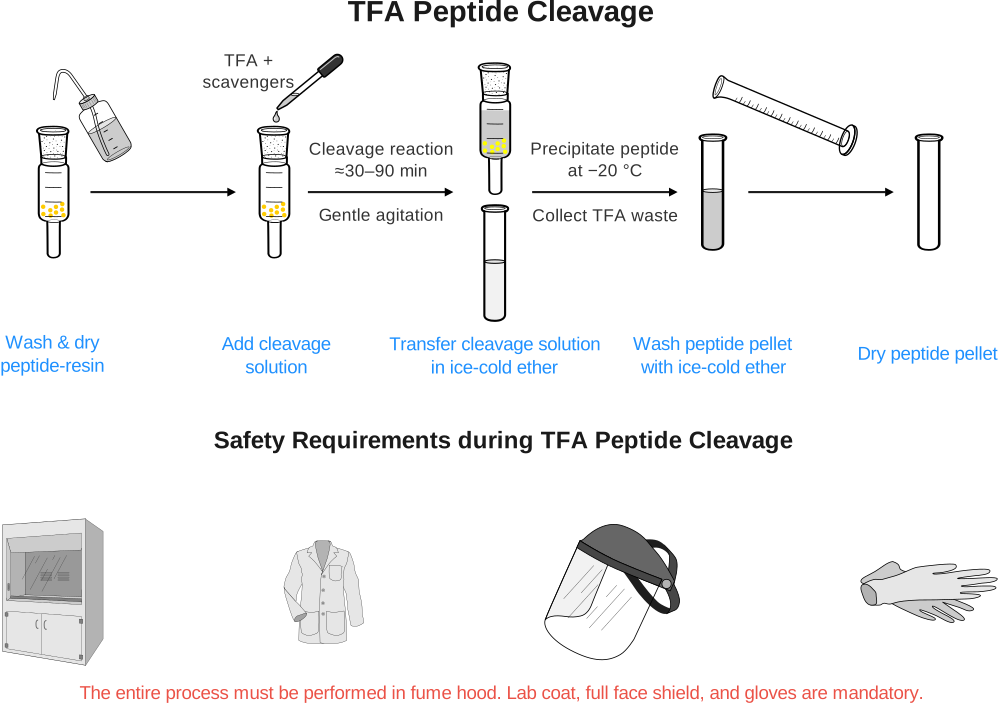
The cleavage cocktail must fully protonate acid-labile linkers and side-chain protections without over-exposing sensitive residues to carbocations or oxidizing conditions. Temperature, hydration, and diffusion within the resin matrix govern the kinetics of these reactions. A practical overview is shown below.
| Parameter | Typical Range | Effect and Consideration |
|---|---|---|
| TFA concentration | 80–95 % (v/v) | Lower percentages reduce acid strength for sensitive peptides; >95 % ensures complete Pbf/Trt removal. |
| Cocktail volume | ≈10 mL per g resin (8–12 mL/g acceptable) | A 10 mL/g default is used by most automated calculators and is robust across linker families. 8 mL/g is acceptable for well-swelling PEG–PS supports (e.g., TentaGel®, HypoGel®) where TFA diffuses efficiently; up to 12 mL/g may be needed for purely polystyrene resins or high-loading batches where acid penetration is the limiting factor. Insufficient volume causes slower or uneven deprotection, localized acidolysis (“hot spots”), and mechanical channeling or clumping of the resin. |
| Temperature | 0–25 °C | Low temperature (0–5 °C) minimizes oxidation of Trp, Met, and Cys; room temperature accelerates deprotection. |
| Time | 20–120 min | Perform test cleavages (30–45–90 min) and monitor completeness by LC–MS. |
| Agitation | Gentle stirring or nitrogen bubbling | Maintains homogeneous suspension and consistent kinetics during cleavage. Avoid vortexing or vigorous bubbling that generates aerosols. |
| Pellet washing after precipitation | 2–4× with cold ether or MTBE | Removes residual TFA and scavengers from the crude peptide pellet. Avoid excessive washing, which can reduce recovery, especially for short or highly polar peptides. |
| Work-up | Evaporate TFA; precipitate in cold MTBE or ether | Cold precipitation isolates the peptide and removes side-products, yielding a clean pellet ready for drying or re-dissolution. |
Tip: Always run a test cleavage first on a small resin portion. Analyze by LC–MS for +56 Da t-Bu adducts, +16 Da oxidized Met, or +252 Da Arg(Pbf/Pmc) residues. Adjust cocktail composition or time accordingly.
Mixing and Temperature Control
N2 Bubbling and Mixing Control During TFA Peptide Cleavage
An N2 blanket is recommended for oxidation-sensitive sequences, especially those containing Trp, Met, or free Cys, and for cold sulfur- or DMS-containing cocktails. Actual bubbling through a frit may help maintain resin suspension in viscous slurries but should be kept gentle (~20–50 mL/min) and performed in closed vessels vented to an acid trap. High flow rates can strip volatile scavengers or cause foaming. If magnetic or mechanical stirring provides good mixing, bubbling is unnecessary.
Heated TFA Peptide Cleavage (Accelerated Deprotection)
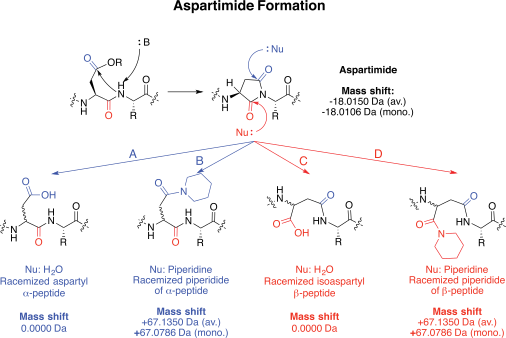
Moderate conductive heating can shorten cleavage time substantially by accelerating linker protonation and Pbf/Pmc removal. Begin with 30–35 °C for 10–15 min test cleavages and evaluate by LC-MS before scaling to full resin loads. Sequences rich in Trp, Met, Cys, or containing Asp–Pro motifs require additional caution due to oxidation, aspartimide/isoAsp formation, and acid-catalyzed Asp–Pro backbone cleavage. At elevated temperatures (>40 °C) the risk of backbone cleavage or dehydration increases, particularly on amide-type resins.
While not as rapid as microwave bursts, this controlled conventional heating route retains full process reliability, uniform acid contact, and consistent peptide quality.
When Microwave TFA Peptide Cleavage May Be Employed
Microwave irradiation has gained traction in SPPS for coupling and deprotection due to rapid dielectric heating and reaction acceleration. However, global TFA cleavage occurs in a highly heterogeneous, volatile, and exothermic environment. Under standard manufacturing conditions this raises concerns of pressure buildup, localized overheating, uncontrolled side reactions, and equipment corrosion.
That said, reports show microwave-assisted TFA cleavage is feasible at small scale on supportive resin formats (e.g., polystyrene/Merrifield) under carefully controlled conditions (temperature, venting, acid volume) with reaction times of ~5–10 min.
| Factor | Microwave Heating (Controlled Small-Scale Use) | Conventional (Block or Bath) Heating |
|---|---|---|
| System composition | Heterogeneous (resin + acid + scavengers); field uniformity depends on resin loading and vessel geometry | Uniform bulk temperature; stable acid–resin contact throughout slurry |
| Acid volatility | TFA boils at ≈ 72 °C; pressure must be vented or monitored—feasible below 40 °C in open or pressure-controlled setups | Operates safely at atmospheric pressure with reflux or vented configuration |
| Heat distribution | Rapid dielectric heating; can give localized hotspots if mixing is poor—mitigated by gentle agitation and low resin load | Conductive heating provides even temperature across slurry; minimal thermal gradients |
| Reaction exothermicity | Microwave energy adds to protonation exotherm; manageable under low-power, temperature-limited control (≤ 35–40 °C) | Gradual, easily controlled temperature increase via block or bath thermostat |
| Material compatibility | Requires microwave-rated, acid-resistant vessels (PTFE, PFA, quartz); cavity corrosion possible if vapors not contained | Standard glass or PTFE vessels suitable under fume-hood conditions |
| Safety and control | Safe only with dedicated vented hardware and temperature/pressure feedback; not recommended for large-scale use | Open or lightly sealed systems; easier off-gas capture and acid scrubbing |
| Peptide quality | Comparable purity when parameters are controlled; risk of oxidation or alkylation if overheating occurs | High reproducibility and minimal side reactions; standard for preparative workflows |
| Typical application | Rapid analytical or bench-scale cleavage (5–10 min) to monitor synthesis progress | Routine global deprotection and production-scale peptide release |
Thus, microwave cleavage may be reserved for analytical or bench-scale monitoring but remains non-standard for process scale. When opting for microwave cleavage you must validate on reduced resin load, verify product integrity by LC-MS, and ensure equipment is rated for strong acid, vapor and pressure handling.
Sequence-Dependent Challenges: Arginine-Rich Peptides
Arg(Pbf/Pmc) is the most acid-resistant protecting group in standard Fmoc-SPPS and often dictates the overall cleavage duration. Use increased hydration (5 % H2O) and sufficient cocktail volume for diffusion. For multiple Arg residues, treat cleavage time as a tiered variable rather than a simple linear rule.
| Total Arg (Pbf/Pmc) | Suggested Conditions | In-Process Check & Fallback |
|---|---|---|
| 0–2 | 95:2.5:2.5 TFA/H₂O/TIS, 60–75 min at ≤25 °C; volume ≈8–10 mL per g resin. For Trp-, Tyr-, or Cys-containing sequences: 92.5:2.5:2.5:2.5 TFA/H₂O/thioanisole/TIS. | LC–MS at 45–60 min. If residual +252 Da peaks remain, extend 15 min or switch to 92.5:5:2.5 (increased hydration). For sensitive residues, repeat with thioanisole-containing cocktail. |
| 3–5 | 92.5:2.5:2.5:2.5 TFA/H₂O/thioanisole/TIS, 75–90 min at ≤25 °C with full suspension.‡ If oxidation or sulfonation risk exists: 91.0:2.5:2.5:2.5:1.5 TFA/H₂O/thioanisole/TIS/EDT (1–2 % EDT). | LC–MS at 60 min. If partial deprotection or sulfonation (+80 / +160 Da) is detected, perform a second 15–30 min cleavage with fresh sulfur-rich cocktail (thioanisole ± EDT). |
| ≥6 | 90:5:2.5:2.5:0–2.5 TFA/H₂O/thioanisole/EDT/(±TIS), 90–120 min total, preferably as two passes (e.g., 60 min + 30 min). Optional mild heating to 30–35 °C only after confirming residue tolerance.‡ | LC–MS at 60 and 90 min. If still incomplete, re-cleave for 15–30 min using fresh thioanisole ± EDT cocktail rather than extending a single exposure. Avoid overdrying resin between passes. |
| ‡ Asp-X reconciliation: When Asp-X motifs (especially Asp-Pro, Asp-Gly, Asp-Asn, Asp-Ser, Asp-Thr) are present, the extended-time recommendations above are capped at 60–90 min to limit aspartimide/isoAsp formation, regardless of Arg count. For Arg ≥6 with Asp-X present, prefer two passes of 30 + 30 min rather than a single 90+ min exposure, and avoid the optional 30–35 °C warming step entirely. | ||
See the detailed mechanistic overview of Pbf and other side-chain protecting group removals during TFA-mediated peptide cleavage in a dedicated article.
Work-Up, Precipitation, and Washing After TFA Peptide Cleavage
After filtration of the resin, cool the cleavage filtrate and add the precipitation solvent slowly under stirring:
- Diethyl ether (Et2O): default non-solvent; yields sharp, dense precipitates for most peptides. Highly volatile and flammable—pre-cool to −20 °C.
- MTBE: preferred for larger scale or hydrophobic peptides; less volatile, less hygroscopic, and easier to handle.
- Ether / Cyclohexane (1:1 to 2:1): effective for very hydrophilic or charged peptides that remain colloidal in pure ether.
- Direct lyophilization from aqueous TFA: preferred for short (≤6 residue) net-positive peptides that remain colloidal even in ether/cyclohexane. Dilute the cleavage filtrate with cold water, snap-freeze, and lyophilize — recovers material that ether precipitation would leave suspended.
Cool the mixture to −20 °C for 20–30 min to complete flocculation, centrifuge, and decant the supernatant. Wash the pellet twice with cold ether (or MTBE) and dry under vacuum or nitrogen flow. Fine or oily residues indicate partial solubility—extend cooling or adjust solvent polarity.
Why TFA Is Used for Peptide Cleavage Instead of Other Acids
| Acid | Approx. pKa (H2O) | Key Properties | Advantages | Limitations in Peptide Cleavage |
|---|---|---|---|---|
| Trifluoroacetic acid (TFA) | ≈0.52 | Strong, volatile, organic-miscible | Efficient protonation of acid-labile linkers; miscible with organic solvents; easy to remove by evaporation; reproducible cleavage behavior | Overheating promotes carbocation alkylation and oxidation of sensitive residues; emits corrosive vapors |
| Trichloroacetic acid (TCA, CCl3COOH) | ≈0.66 | Strong, chlorinated analog of TFA; higher oxidizing potential and lower volatility | Occasionally used in Boc-SPPS or analytical hydrolysis; mechanistic analog to TFA for discussion | Forms chlorinated by-products; less predictable reactivity; residue oxidation possible |
| Hydrochloric acid (HCl) | ≈−6.3 | Very strong mineral acid; aqueous, non-volatile in organic media | Useful in Boc chemistry or aqueous ester hydrolysis | Poor solubility in organic systems; hydrolyzes peptide bonds; destroys acid-labile protections |
| Sulfuric acid (H2SO4) | pKa1 ≈ −3.0; pKa2 ≈ 1.99 | Very strong, dehydrating, oxidizing acid | Occasional use in analytical degradation only | Causes sulfonation and oxidation; irreversible amino-acid degradation |
| Nitric acid (HNO3) | ≈−1.37 | Strong oxidizing acid | None in peptide synthesis | Rapid oxidation of Met, Trp, Cys, and aromatics; unsafe with organic solvents |
| Triflic acid (CF3SO3H) | ≈−14 (approx.; solvent-dependent) | Superacid; non-oxidizing yet extremely reactive | Used in specialized carbohydrate or PTM chemistry | Overly aggressive for peptides; racemization and decomposition risks; difficult neutralization |
| Phosphoric acid (H3PO4) | pKa1 = 2.15 | Moderate, non-volatile, non-oxidizing | Benign and environmentally safe; useful as buffer component | Too weak for benzyl/trityl cleavage; most protections remain intact |
| Formic acid (HCOOH) | ≈3.75 | Weak, volatile organic acid; miscible with water and polar organics | Occasionally used for mild side-chain removal or partial cleavage; demonstrates the lower threshold of effective acid strength | Too weak for full linker cleavage; mainly illustrative in comparative studies |
| Acetic acid (CH3COOH) | 4.756 | Weak organic acid; abundant and safe | Useful reference to highlight insufficiency of mild acids in SPPS; compatible with most solvents | Unable to protonate linkers or remove t-Bu protections; only used as comparative control |
Acid Strength and Comparative Performance
Trifluoroacetic acid (TFA) has become the near-universal reagent for peptide cleavage and side-chain deprotection because it combines high acidity, volatility, and organic solubility. With a pKₐ ≈ 0.5, it is strong enough to protonate and cleave benzylic or trityl-type linkers yet volatile enough to be removed completely without aqueous neutralization. Other acids—such as hydrochloric, sulfuric, nitric, or triflic—are stronger proton donors but unsuitable for standard SPPS because of oxidizing strength, corrosiveness, or poor organic compatibility. The table below summarizes these contrasts and illustrates how TFA offers the optimal balance between cleavage efficiency, resin compatibility, and operational safety.
Mechanistic Basis for TFA Efficiency
Among all available acids, TFA stands alone at the intersection of strength and selectivity. It efficiently removes acid-labile protections while preserving sensitive residues such as Trp, Met, and Cys when properly scavenged. Mineral acids like HCl, H₂SO₄, and HNO₃ are too aqueous or oxidizing, whereas superacids like triflic acid generate unstable carbocations and broad side reactions. Weaker acids such as phosphoric, formic, or acetic acid are too mild for full linker cleavage.
Mechanistically, TFA’s three fluorine atoms strongly withdraw electron density, stabilizing the conjugate base (CF₃COO⁻) and lowering its pKₐ into the ideal range for controlled linker protonation. This balance of strong acidity, organic miscibility, and volatility ensures efficient, predictable cleavage and easy post-reaction removal—making TFA the most practical acid for standard Fmoc-SPPS cleavage workflows.
Analytical Verification (LC or LC-MS check)
After drying, confirm deprotection completeness by RP-HPLC or LC–MS. A short analytical gradient (e.g., 10–90 % acetonitrile / 0.1 % TFA over 10 min, 214 nm detection) rapidly reveals residual protecting-group species or oxidized forms. Absence of +56 Da (t-Bu) or +252 Da (Pbf) adducts confirms full cleavage before purification.
Key Takeaways
- Control hydration (2–5%) and volume (8–10 mL/g) for reproducible kinetics.
- Monitor Arg(Pbf/Pmc) removal by LC–MS; prefer two shorter cleavages over one long one.
- Maintain 0–5 °C for oxidation-sensitive sequences; only use heat for stubborn Arg or hydrophobic peptides.
- Stop washing after 2–5 ether rinses—prolonged washing reduces yield. Residual odor is from adsorbed thiols, not peptide contamination.
- For persistent scavenger odor, re-precipitate from ACN/ether or perform aqueous/hexane partition cleanup rather than overwashing.
Common Side Reactions and Their Mechanistic Triggers
The acidolytic environment of TFA promotes both desired and parasitic reactions. Many artifacts originate from carbocation mismanagement, sulfonyl-derived electrophiles (when Arg(Pbf/Pmc/Mtr) is present), or oxidative micro-events.
| Issue | Mechanistic Origin | Mitigation |
|---|---|---|
| t-Bu⁺ alkylation (Trp, Met, Cys, Tyr, His) | Excess tertiary carbocations attack nucleophilic side chains. | Use sulfur scavengers (EDT, thioanisole); add 5 % H2O; maintain 0–5 °C. |
| Trp oxidation (+16 Da) | Air + acid + carbocation generate indolyl radicals. | Exclude air and light; add thioanisole + TIS; shorten cleavage time. |
| Met → Met-O | Reaction with trace oxidants or sulfonium intermediates. | Use fresh TFA; include EDT; keep cold; perform rapid work-up. |
| Cys S-alkylation / disulfide scrambling | Thiol + carbocation → S–C bond formation or random S–S exchange. | Include EDT; work under inert atmosphere; isolate peptide quickly. |
| Residual Pbf or Trt | Incomplete acidolysis or poor resin wetting. | Increase H2O to 5 %–10 %; extend by 15–30 min; ensure proper agitation. |
| Backbone cleavage (tertiary centers, Asp–Pro) | Excess acid weakens adjacent amide bonds. | Reduce exposure time; lower temperature; consider staged cleavage. |
| Asn/Asp rearrangement (isoAsp) | Reprotonation of aspartimide intermediates during drying. | Keep cold; avoid warm evaporation; analyze promptly after cleavage. |
| Tyr O-alkylation | Phenolate traps t-Bu⁺ or Trt⁺ cations. | Add 2 % phenol or anisole; use TIS + H2O; maintain cool bath (0–5 °C). |
| DBF–amine adduct (+222 Da) | Dibenzofulvene generated during Fmoc deprotection cycles (a synthesis-stage artifact, not the TFA cleavage step) is trapped by the free N-terminal amine of the growing chain. | Diagnose at the synthesis stage by monitoring Fmoc-deprotection completeness (UV absorbance at 301 nm, or piperidine–DBF adduct check); ensure sufficient piperidine scavenging and adequate wash volumes between cycles. Cleavage-stage cocktail changes will not remove this adduct. |
Linkers and Expected Outcomes of TFA Peptide Cleavage
Different linkers dictate both the C-terminal functionality and the peptide’s susceptibility to acid.
| Linker Type | Cleavage Outcome | Acid Sensitivity | Notes / Mitigation |
|---|---|---|---|
| Wang (p-alkoxybenzyl alcohol) | → COOH | Moderate (complete in ~95 % TFA) | Benzylic cation generated; ensure adequate scavengers (H2O + TIS or sulfur mix if Trp, Met, or Cys present). |
| Rink Amide | → CONH2 | Moderate (global TFA) | If Pbf persists, increase H2O to ~5 % and extend 15–30 min; avoid >25 °C for sensitive sequences. |
| Sieber Amide | → CONH2 | High (very acid-labile) | Perform short, cold cleavages (0–5 °C); ideal for acid-sensitive peptides. |
| Trityl / Trt-Cl | → COOH or protected fragment (dilute TFA) | High (cleaves at low % TFA) | Use low-% TFA/DCM for protected fragments; for global cleavage, keep cold and include carbocation scavengers. |
| 2-Chlorotrityl (2-CTC) | → COOH or protected fragment (very mild conditions) | Very high (extremely acid-sensitive) | Partial cleavage in 0.5–2 % TFA/DCM; for global release, use short, cold TFA exposure to limit side reactions. |
Safety and Process Considerations in TFA-Mediated Cleavage
Cleavage scale-up introduces physical and chemical hazards absent at milligram scale. Beyond reaction control, laboratory air handling, waste management, and odor mitigation become critical.
Laboratory-Scale Safety
Ventilation & Containment
TFA vapors are highly corrosive and attack most metals and elastomers. Use PTFE or PFA components, closed flasks with cold traps, and acid scrubbers connected to local extraction. Avoid stainless steel fittings in direct contact with acid vapors.
Odor Control
Sulfur cocktails containing EDT or thioanisole must be handled in sealed vessels; never use open funnels or unvented centrifuge tubes. Residual thiols can adsorb on gloves and plasticware, causing persistent odor. To neutralize these residues, soak disposable tips or tubes for 10–15 min in 3–6 % hydrogen peroxide or 0.1 M potassium permanganate. These oxidants convert thiols and thioethers into odorless sulfonic acids or sulfones. Rinse glassware with dilute peroxide or hypochlorite, then neutralize with sodium thiosulfate and wash thoroughly.
Never mix oxidizers directly with residual organic solvents (TFA, DCM, ACN, thioanisole). Never add oxidants such as hydrogen peroxide or potassium permanganate directly to organic residues or sulfur-containing waste. Always neutralize or dilute TFA residues first, then treat aqueous fractions separately under fume hood conditions.
Beyond immediate handling risks, managing acid waste safely is essential to prevent corrosion and environmental impact.
Waste Treatment and Neutralization
Waste Treatment
Handle spent cleavage mixtures according to institutional EHS procedures and SDS guidance. Segregate acidic organic and sulfur-containing waste; neutralize only in approved, cooled, well-ventilated setups with controlled CO2 release. Allow CO₂ evolution to subside before separating aqueous and organic layers. Segregate sulfur-containing waste and keep containers closed. Thiols and thioethers can oxidize to strongly odorous sulfur by-products; do not mix these wastes with oxidizers or incompatible organic solvent residues.
When reactions are scaled up beyond the bench, additional engineering controls and monitoring become critical.
Large-Scale (GMP) Considerations
Process Scale
Large-scale TFA cleavage can release significant heat and CO₂. Perform pilot runs in closed, jacketed vessels with temperature control and remote venting. Plan solvent recovery under inert atmosphere; recycled TFA should be checked for purity by conductivity (<10 µS/cm) before reuse.
EHS Reminder
Always log the composition and volume of each cleavage cocktail, use secondary containment trays, and ensure acid-resistant PPE (nitrile gloves, face shield, PTFE apron). Regularly inspect exhaust scrubbers and cold traps for acid accumulation.
Environmental Considerations
Trifluoroacetic acid is highly volatile but recoverable. Modern peptide facilities increasingly condense and recycle TFA from cleavage exhaust streams or rotary-evaporator condensates. Vacuum distillation and neutralization to trifluoroacetate salts can reduce TFA consumption by ≥ 70 %. When laboratory recovery is not feasible, segregate acidic residues for authorized solvent recycling or incineration.
Troubleshooting and Best Practices for Peptide Cleavage with TFA
| Observation | Likely Cause | Corrective Action |
|---|---|---|
| Residual protecting groups | Under-acidic conditions or insufficient reaction time. | Increase H2O to 5 % and extend cleavage by 15 min. |
| Darkened solution or strong odor | Oxidation or localized overheating during cleavage. | Cool immediately; add fresh TIS or thioanisole to quench radicals. |
| Low precipitation yield | High solvent carry-over or incomplete TFA removal. | Re-precipitate from acetonitrile/ether; centrifuge to recover solids. |
| Persistent sulfur smell in product | Incomplete washing or residual sulfur scavengers (EDT, thioanisole). | Wash pellet 3× with cold MTBE; optionally perform a second precipitation. |
| LC–MS shows +56 Da series | t-Bu adduct formation from tertiary carbocations. | Switch to a sulfur-containing cocktail and perform cold cleavage in the next batch. |
Summary and Outlook
TFA remains the universal reagent for global cleavage and deprotection in Fmoc-SPPS because it couples strong acidity with tunable scavenger chemistry. Success depends on:
- Understanding the mechanism – protonation → carbocation → quench.
- Choosing the right cocktail – TIS/H₂O for standard cases, sulfur mixes for sensitive residues.
- Controlling parameters – temperature ≤ 25 °C, sufficient scavenger stoichiometry.
- Implementing safe EHS practice at both bench and process scale.
Future companion pages will expand on specific pathways such as Trp oxidation, Met sulfoxidation, Aspartimide recurrence, Pyroglutamate formation, t-Bu adduct diagnostics and other side reactions.
TFA Peptide Cleavage – FAQ
95 % TFA / 2.5 % H₂O / 2.5 % TIS is a universal starting point balancing acid strength and carbocation control.
Likely Trp or Met oxidation under warm acid. Cool to 0–5 °C and include thioanisole + EDT if reoccurs.
Yes for acid-labile linkers (Sieber, 2-Cl-Trityl); verify completeness by test cleavage and LC-MS.
TIS + H₂O (low odor) or TIS + anisole; avoid EDT unless absolutely necessary due to odor and waste treatment.
Slowly add cold saturated NaHCO₃ solution under stirring in a hood; allow CO₂ evolution to cease before disposal.
Likely due to incomplete precipitation or over-washing. Ensure the cleavage filtrate is poured into at least 10 volumes of pre-chilled ether (−20 °C), mix gently, and stop washing after 2–3 rinses to avoid peptide loss.
Rinse glassware and disposable tips in 3–6 % hydrogen peroxide or 0.1 M potassium permanganate. These oxidize thiols to sulfonic acids. Never mix oxidizers with organic solvents or unneutralized TFA residues.
0–5 °C is ideal for oxidation-sensitive peptides (Trp, Met, Cys). Room temperature (20–25 °C) accelerates deprotection but may cause oxidation. Avoid heating above 35 °C unless optimizing Arg(Pbf/Pmc) removal under controlled conditions.
Yes — displacing oxygen with N₂ minimizes oxidation of sulfur- and indole-containing residues. Gentle bubbling (20–50 mL/min) is sufficient; excessive flow may strip volatile scavengers.
References
Foundational SPPS and Linkers
Merrifield, R. B. (1963). Solid phase peptide synthesis. Journal of the American Chemical Society, 85(14), 2149–2154.
- Landmark paper introducing the concept of SPPS by anchoring a peptide chain to a solid support.
- DOI: https://doi.org/10.1021/ja00897a025
Wang, S. S. (1973). p-alkoxybenzyl alcohol resin and p-alkoxybenzyloxycarbonylhydrazide resin for solid phase synthesis of protected peptide fragments. Journal of the American Chemical Society, 95(4), 1328–1333.
- Introduced the Wang linker, allowing peptide–COOH release under TFA conditions through a benzylic ether cleavage mechanism.
- DOI: 10.1021/ja00785a602
Rink, H. (1987). Solid-phase synthesis of protected peptide amides on a novel amide resin. Tetrahedron Letters, 28(33), 3787–3790.
- Established the Rink amide linker for direct peptide–CONH₂ formation under acidic cleavage.
- DOI: 10.1016/S0040-4039(00)96384-6
Sieber, P. (1987). A new acid-labile anchor group for the solid-phase synthesis of C-terminal peptide amides by the Fmoc method. Tetrahedron Letters, 28(19), 2107–2110.
- Introduced the Sieber amide resin, compatible with partial cleavages under very mild TFA.
- DOI: 10.1016/S0040-4039(00)96055-6
General Overview of Acidolytic Side Reactions
Yang, Y. (2016). Peptide Global Deprotection/Scavenger-Induced Side Reactions in Side Reactions in Peptide Synthesis, pp 43-75, , Academic Press.
- Comprehensive monograph detailing acidolytic mechanisms underlying TFA-mediated deprotection, including t-Bu⁺ alkylation, oxidation, and aspartimide formation, with mitigation strategies through optimized scavenger systems.
- DOI: 10.1016/B978-0-12-801009-9.00003-3
Mechanistic Basis of TFA Cleavage
Albericio, F., & El-Faham, A. (2011). Peptide Coupling Reagents, More than a Letter Soup. Chemical Reviews, 111(11), 6557–6602.
- Comprehensive review of coupling reagent chemistry and acid-labile protecting-group mechanisms.
- DOI: 10.1021/cr100048w
Isidro-Llobet, A., Álvarez, M., & Albericio, F. (2009). Amino acid-protecting groups. Chemical Reviews, 109(6), 2455–2504.
- Defines stability and acidolysis behavior of side-chain protecting groups relevant to TFA cleavage.
- DOI: 10.1021/cr800323s
Lundt, B. F., Johansen, N. L., Vølund, A., & Markussen, J. (1978). Removal of t-butyl and t-butoxycarbonyl protecting groups with trifluoroacetic acid: Mechanisms, by-product formation, and evaluation of scavengers. International Journal of Peptide and Protein Research, 12(5), 258–268.
- Seminal mechanistic study describing how TFA generates carbocations during global deprotection and how early scavenger systems mitigate side reactions.
- DOI: 10.1111/j.1399-3011.1978.tb02896.x
Pearson, D. A., Blanchette, M., Baker, M. L., Guindon, C. A. (1989). Trialkylsilanes as scavengers for the trifluoroacetic acid deblocking of protecting groups in peptide synthesis. Tetrahedron Letters, 30(21), 2739–2742.
- Demonstrated the role of trialkylsilanes as hydride scavengers preventing t-Bu⁺ alkylation during global TFA cleavage.
- DOI: 10.1016/S0040-4039(00)99113-5
Kluczyk, A., Rudowska, M., Stefanowicz, P., & Szewczuk, Z. (2010). Microwave-assisted TFA cleavage of peptides from Merrifield resin. Journal of Peptide Science, 16(1), 31–39.
- Demonstrated that microwave-assisted TFA cleavage can efficiently release peptides from Merrifield resin within ~5 minutes under low-temperature, controlled conditions — establishing analytical-scale feasibility of microwave cleavage in SPPS.
- DOI: 10.1002/psc.1191
Mitigation of Side Reactions and Scavenger Optimization
King, D. S., Fields, C. G., & Fields, G. B. (1990). A cleavage method which minimizes side reactions following trifluoroacetic acid deprotection. International Journal of Peptide and Protein Research, 36(3), 255–266.
- Established optimized scavenger systems to suppress carbocation-induced side reactions during TFA cleavage.
- DOI: 10.1111/j.1399-3011.1990.tb00976.x
Mthembu, S. N., Chakraborty, A., Schönleber, R., Albericio, F., & de la Torre, B. G. (2025). TFA cleavage strategy for mitigation of S-t-butylated cysteine-peptide formation in solid-phase peptide synthesis. Organic Process Research & Development, 29(3), 691–703.
- Modern optimization work describing how to prevent S-t-Bu alkylation of cysteine during TFA cleavage using adjusted cocktails and temperature control.
- DOI: 10.1021/acs.oprd.4c00443
Nandhini, K. P., Alhassan, M., Veale, C. G. L., Albericio, F., & de la Torre, B. G. (2023). Methionine-containing peptides: Avoiding secondary reactions in the final global deprotection. ACS Omega, 8(17), 15631–15637.
- Explores oxidation and sulfonium formation of methionine under TFA conditions; proposes alternative scavenger compositions to suppress side reactions.
- DOI: 10.1021/acsomega.3c01058
Beck-Sickinger, A. G., Schnorrenberg, G., Metzger, J., & Jung, G. (1991). Sulfonation of arginine residues as side reaction in Fmoc-peptide synthesis. International Journal of Peptide and Protein Research, 38(1), 25–31.
- Identified arginine sulfonation during TFA cleavage and established mitigation via water and phenol additives.
- DOI: 10.1111/j.1399-3011.1991.tb01405.x
Process and Safety
Albericio, F., El-Faham, A. (2018). Choosing the Right Coupling Reagent for Peptides: A Twenty-Five-Year Journey. Organic Process Research & Development, 22(6), 760–772.
- Highlights the industrial evolution of peptide synthesis processes, including considerations of solvent handling and safety relevant to TFA-based cleavage workflows.
- DOI: 10.1021/acs.oprd.8b00159
Guy, C. A., & Fields, G. B. (1997). Trifluoroacetic acid cleavage and deprotection of resin-bound peptides following synthesis by Fmoc chemistry. Methods in Enzymology, 289, 67–83.
- Comprehensive protocol article describing TFA cleavage procedures, scavenger composition, and peptide isolation workflow.
- DOI: 10.1016/S0076-6879(97)89044-1
Pedersen, S. L., Jensen, K. J., Shelton, P. T., & Pedersen, S. (2013). Peptide release, side-chain deprotection, work-up, and isolation. In Peptide Synthesis and Applications. Methods in Molecular Biology, Vol. 1047. Humana Press, Totowa, NJ.
- Step-by-step guide covering peptide release, scavenger selection, work-up, and precipitation control under laboratory and semi-prep scales.
- DOI: 10.1007/978-1-62703-544-6_3
Green and Odor-Reduced Cleavage Systems
Pawlas, J., Svensson, T., & Rasmussen, J. H. (2019). 1,4-Benzenedimethanethiol (1,4-BDMT) as a scavenger for greener peptide resin cleavages. RSC Advances, 9, 38928–38934.
- Introduced 1,4-BDMT as a low-odor, sustainable sulfur scavenger for TFA cleavage; reduces toxicity while maintaining efficiency of thioether quenching.
- DOI: 10.1039/C9RA08553J