Pyroglutamate formation in peptides (pGlu) refers to the spontaneous cyclization of N-terminal glutamine (Gln) or glutamic acid (Glu), forming a five-membered lactam ring. This reaction removes the α-amino group, altering the peptide’s charge, stability, and chromatographic behavior. In peptide production (GMP, non-GMP), pGlu formation is a common cause of unexpected early-eluting peaks in HPLC, charge heterogeneity in CEX, or ambiguous mass shifts during MS-based QC.
This guide covers how pyroglutamate forms during synthesis, how to detect it, and how to control or install it deliberately. Note that pyroglutamate can also form enzymatically via glutaminyl cyclase (QC) in peptides like TRH, GnRH, and Aβ. In these cases, pGlu is often essential for receptor binding and stability. This distinction matters when deciding whether pGlu is a functional feature or an artifact in synthetic peptides.
Predict Pyroglutamate and Glutarimide Risks with Peptalyzer™
Use Peptalyzer™ to map sequence-specific hotspots and identify pyroglutamate and glutarimide-prone regions before starting your synthesis.
📘 What will you learn here?
Pyroglutamate Formation Mechanism
Pyroglutamate formation in peptides occurs in steps described below:
Acid-catalyzed Activation of the N-Terminus
A proton (H⁺) from the acidic environment protonates the carbonyl oxygen of the terminal amide (Gln)/acid (Glu) group. This increases the electrophilicity of the carbonyl carbon, making it more susceptible to nucleophilic attack.
Intramolecular Nucleophilic Attack and Cyclization
The α-amino group of the N-terminal residue (glutamate or glutamine) performs an intramolecular nucleophilic attack on the side chain:
- In glutamate (Glu), the target is the γ-carboxylic acid group, which is protonated under acidic conditions. The nucleophilic attack may proceed via a concerted mechanism or through a very short-lived tetrahedral intermediate, due to the excellent leaving ability of water and the low stability of carboxylic tetrahedral intermediates in acid. The ring closure results in loss of H₂O and formation of a five-membered lactam.
- In glutamine (Gln), the side chain is a γ-amide, which is less electrophilic and forms a more stable tetrahedral intermediate upon nucleophilic attack. Collapse of this intermediate results in loss of NH₃, producing the same cyclic lactam product.
In both cases, this step generates a protonated pyroglutamate intermediate, which is then deprotonated in the final step to give the neutral pyroglutamate (5-oxoproline).

The table below provides information about this side reaction.
| Feature | Pyroglutamate | Glutarimide | ||
|---|---|---|---|---|
| Glu | Gln | Glu | Gln | |
| Ring size | 5-membered lactam | 5-membered lactam | 6-membered imide | 6-membered imide |
| Nucleophile | N-terminal α-NH₂ | Backbone amide nitrogen | ||
| Electrophile | γ-COOH | γ-CONH₂ | γ-COOH | γ-CONH₂ |
| Leaving group | H₂O | NH₃ | H₂O | NH₃ |
| Mass Shift | −18 Da | −17 Da | −18 Da | −17 Da |
Glutarimide Formation Mechanism
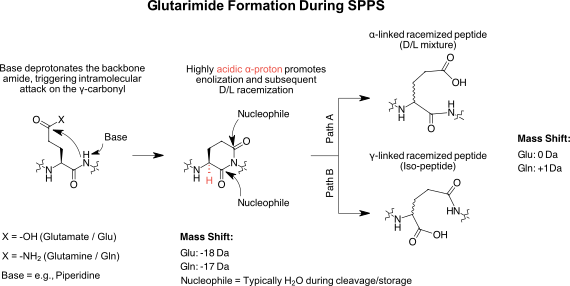
While pyroglutamate formation proceeds via N-terminal α-amino group attack on the γ-side-chain carbonyl of glutamine or glutamate, a base-catalyzed nucleophilic attack by the backbone amide nitrogen on the same γ-carbonyl leads instead to the formation of a six-membered cyclic imide, known as glutarimide.
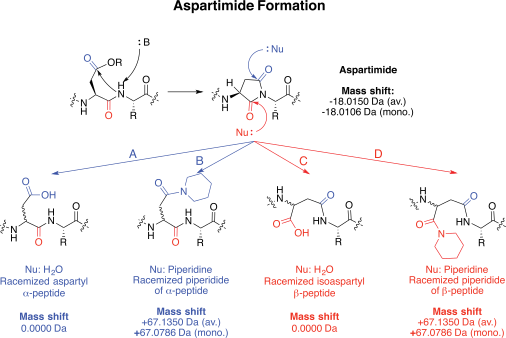
This process is mechanistically analogous to succinimide (aspartimide) formation from asparagine, but it proceeds much more slowly. Like aspartimide, this base-promoted risk is highest during Fmoc deprotection in sterically unhindered sequences—specifically Glu-Gly (EG) or Gln-Gly (QG) motifs.
Ring Stability and Piperidine Reactivity
Unlike aspartimide, which forms a highly strained 5-membered ring, glutarimide forms a 6-membered ring. Although this 6-membered ring has a higher kinetic barrier to form, once closed, it is relatively stable and lacks the severe angle strain of aspartimide. Because of this stability, the glutarimide ring is largely resistant to nucleophilic attack by piperidine during Fmoc removal. As a result, you will not see the +67 Da piperidide adducts that are the hallmark of aspartimide formation.
Mass Shifts and Hidden Impurities
Instead, the metastable glutarimide intermediate often survives synthesis and is easily detectable on crude LC-MS as a distinct mass loss:
- −18 Da truncation (if starting from Glutamate)
- −17 Da truncation (if starting from Glutamine)
Over time, especially in aqueous purification buffers or physiological conditions, this ring hydrolyzes (adds +18 Da) to yield a frustrating mixture of isomers:
- For Glu-derived glutarimide: Hydrolysis yields a net 0 Da shift. The peptide matches the target mass but exists as heavily racemized α- and γ-linked isomers (in both D- and L-forms) that elute as overlapping impurity peaks.
- For Gln-derived glutarimide: Hydrolysis yields a net +1 Da shift, effectively functioning as a deamidation event that converts the original Gln residue into isomeric Glu variants.
How to Detect Pyroglutamate and Glutarimide in Peptides
RP-HPLC Detection of Pyroglutamate and Glutarimide
- Pyroglutamate: Often presents as a slightly shifted, early-eluting peak due to the loss of N-terminal polarity. Compare with synthetic pGlu analogs if available.
- Hydrolyzed Glutarimide (0 Da): Because the mass returns to the target weight, intact MS cannot easily differentiate these impurities. Instead, they appear on RP-HPLC as frustrating isobaric peaks (racemized D/L isomers and γ-linkages) that elute very closely to, or overlap with, the main product peak.
Mass Spectrometry (MS) Detection of Pyroglutamate and Glutarimide
Since pyroglutamate formation removes the N-terminal amino group, it reduces the net positive charge by one unit at acidic pH, heavily impacting charge variant profiles in cation-exchange chromatography (CEX). Glutarimide detection is more dynamic, requiring you to look for both the intact ring and its hydrolyzed remnants.
| Technique | Target | Mass Change | Notes |
|---|---|---|---|
| Intact MS | Pyroglutamate | Gln → −17 Da, Glu → −18 Da | Rapid screening; diagnostic of N-terminal cyclization. |
| Intact MS | Intact Glutarimide | Gln → −17 Da, Glu → −18 Da | Detects the metastable 6-membered ring before hydrolysis. |
| Intact MS | Hydrolyzed Glutarimide | Glu → 0 Da, Gln → +1 Da | 0 Da hides under the target mass; +1 Da mimics a deamidation event. |
| LC‑MS/MS | Both | Diagnostic fragment ions | Confirms the exact modification site and linkage type (e.g., distinguishing α- vs γ-linked isomers). |
| CEX | Pyroglutamate | Loss of positive charge | Excellent for antibodies and large peptides to resolve charge variants. |
Peptalyzer™ Detects Pyroglutamate and Glutarimide Pathways
While pyroglutamate and glutarimide formation produce identical mass shifts (-17 or -18 Da), they occur via different mechanisms and require completely different prevention strategies. Peptalyzer™ automatically distinguishes between these two risks by analyzing their sequence positions. It flags unprotected N-terminal Gln/Glu for critical pyroglutamate risk (recommending optimized cold cleavage), while simultaneously scanning the internal peptide backbone for sterically unhindered motifs like Glu-Gly (EG) and Gln-Gly (QG) that are highly prone to glutarimide cyclization. This allows you to anticipate identical mass shifts but deploy the correct chemical mitigation strategy before synthesis begins.
When and Why Pyroglutamate (pGlu) Forms in Synthesis
Risk Points in SPPS:
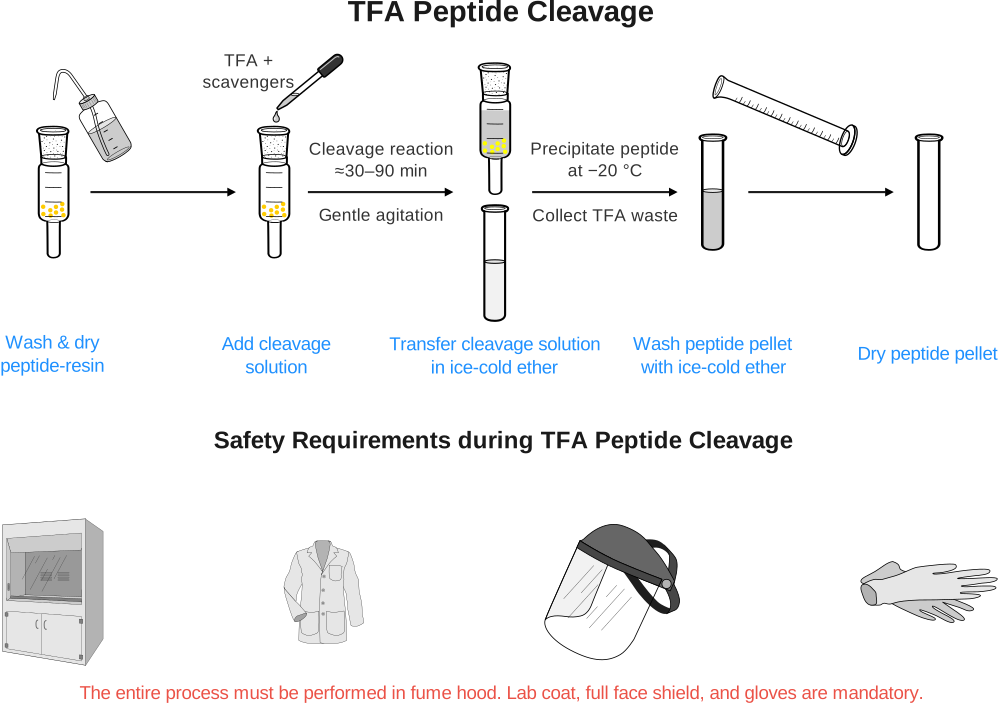
- During final TFA cleavage (acid-catalyzed)
- Extended exposure to acidic buffers
- Post-cleavage purification in TFA/H₂O/ACN
- Storage at pH 5–6, even lyophilized
- Heating
- Using slow coupling reagents
| Condition | Risk Level | Notes |
|---|---|---|
| Final TFA cleavage >2 h | High | Triggers pGlu formation, especially for N-terminal Gln |
| RP-HPLC with 0.1% TFA | Medium | Prolonged autosampler exposure may promote cyclization |
| Heating ≥37 °C | Medium–High | Accelerates ring closure, even in lyophilized or dried samples |
| Slow coupling (e.g., DCC) | Low–Medium | Unprotected N-terminus exposed too long may allow cyclization |
Cleavage Cocktail Recommendations
The cleavage cocktails that were found to function well in preventing the pyroglutamate formation in peptides are:
| Cocktail | Components | Risk of pGlu | Notes |
|---|---|---|---|
| Standard | 95% TFA + 2.5% TIS + 2.5% H₂O | High | Common cocktail but promotes pGlu formation if cleavage exceeds 2 h |
| Rapid | 95% TFA + 5% thioanisole, < 1 h | Low | Short exposure and nucleophilic scavenger reduce pGlu formation |
| Cold‑cleavage | 95% TFA + 5% H₂O at 0 °C | Medium | Reduced reaction rate slows pGlu but lacks nucleophilic scavengers |
| Reagent K | 82.5% TFA + 5% thioanisole + 5% phenol + 2.5% EDT + 5% H₂O | Very Low | Highly effective mix for pGlu prevention; rich in nucleophilic scavengers |
Always test on microcleavage before scaling up.
Protecting Groups and Synthesis Strategies
Protecting Group Strategies in Preventing Pyroglutamate Formation in Peptides
| Strategy | Type / Category | Mode of Action / Comment | Effectiveness |
|---|---|---|---|
| N-terminal acetylation | Permanent N-terminal block | Prevents α-amine from initiating cyclization | Fully effective |
| Pre-installed pyroglutamate (pGlu) via Fmoc‑pGlu‑OH or pGlu‑NHS ester | Structural mimic | Bypasses Gln/Glu cyclization entirely | Fully effective |
| Orthogonal N-terminal protection (e.g., Alloc at α-amine) | Conditional | Protects α-amine during cleavage; must survive TFA | Effective if retained |
| Side‑chain PGs on Gln (e.g., Trt, Tmob, MBH) | Misleading protection | Do not block the N‑terminal α‑amine — cyclization still occurs | Ineffective |
| Side‑chain PGs on Glu (e.g., OtBu, Boc) | Misleading protection | Protect γ‑carboxyl only — irrelevant to pGlu mechanism | Ineffective |
| Fmoc‑SPPS vs. Boc‑SPPS | Common assumption | Fmoc chemistry alone does not block cyclization unless α‑amine is capped | Ineffective |
Sequence Design Tactics for Preventing Pyroglutamate Formation in Peptides
- Avoid N-terminal Gln/Glu if not essential
- Add a short neutral linker (Ala, β-Ala, Gly) before Gln
- Use amide-blocked derivatives or unnatural residues (e.g., homoGln)
Deliberate Pyroglutamate (pGlu) Incorporation – Why Directly Install Pyroglutamate?
When installing pGlu deliberately, peptide chemists typically use Fmoc-pGlu-OH building block, depending on solubility and coupling preferences.
Control and Consistency
Avoids spontaneous side reactions: Installing pGlu deliberately at the N-terminus prevents unpredictable cyclization of Glu or Gln during cleavage, purification, or storage.
Ensures batch-to-batch consistency — critical for analytical reproducibility, regulatory filings, or GMP production.
Functional Requirement
Many bioactive peptides naturally begin with pGlu, and that residue is essential for biological activity, receptor binding, or resistance to degradation. Examples:
- TRH (thyrotropin-releasing hormone): pGlu-His-Pro-NH₂
- GnRH and many neuropeptides
- pGlu is recognized differently than Gln or Glu by receptors
In biologics, pyroglutamate can be a required structural feature. In such instances, its presence must be intentionally controlled and documented in regulatory filings.
Purity and Simplified Analytics
Synthetic peptides with Gln or Glu at the N-terminus may slowly convert to pGlu during:
- RP-HPLC
- Storage
- Lyophilization
- This causes peak splitting and complicates purity assessments.
- Pre-installing pGlu avoids all of that — you know what you’re making.
Storage and Formulation Stability
Pyroglutamate formation is one of the most common peptide degradation artifacts, often appearing after extended acidic storage or during cleavage from resin. Best practices for stability:
| Storage Form | Risk of pGlu | Mitigation |
|---|---|---|
| Lyophilized peptide at pH 5–6 | High | Store under nitrogen, ≤4 °C, avoid warm drying |
| Aqueous solution at pH 6–7 | Low–Medium | Formulate at near‑neutral pH, refrigerate |
| Aqueous solution at pH ≤3 or ≥8 | High | Avoid extreme pH for long‑term formulation |
| Peptide as TFA salt | High | Exchange to acetate or HCl salt form |
| Organic co‑solvent (e.g., 50% MeCN + 0.1% FA) | Low | Stabilizes sample during LC and autosampler storage |
Avoid freeze-thaw cycles, since they may accelerate conversion in solution.
Note that the regulatory authorities such as the EMA and FDA explicitly require that charge variants, including N-terminal pyroglutamate, are identified, quantified, and controlled in synthetic peptide products during development and quality assessment.
Final Tips for Peptide Chemists
- ALWAYS confirm the identity of unknown early-eluting HPLC peaks with MS or enzymatic methods.
- Shorten TFA cleavage and use cold conditions when working with Gln/Glu N-termini.
- Pre-install pGlu if it’s needed functionally (e.g., TRH, GnRH).
- For therapeutic peptides, document charge heterogeneity and pGlu impurity levels to meet regulatory standards.
Pyroglutamate Formation — FAQ
It is the spontaneous cyclization of an N-terminal glutamine (Gln) or glutamic acid (Glu) residue, forming a five-membered lactam ring. This reaction removes the free α-amino group, which changes the peptide’s overall charge, stability, and chromatographic behavior.
The highest risk occurs under acidic conditions, (e.g., TFA cleavage if it exceeds 2 hours). It can also occur during post-cleavage purification in TFA/H2O/ACN mixtures, or if lyophilized peptides are stored at mildly acidic pH (5-6).
Look for a diagnostic mass shift of -17 Da (for Gln) or -18 Da (for Glu) compared to your target mass, or an unexpected early-eluting peak in RP-HPLC chromatogram.
Optimize the cleavage by reducing TFA exposure time to under 1 hour or performing a “cold cleavage” at 0∘C. If your sequence allows, capping the N-terminus with acetylation fully blocks the α-amine from initiating cyclization.
Pyroglutamate forms a 5-membered lactam ring. In contrast, glutarimide forms a 6-membered cyclic imide.
For pyroglutamate, the nucleophile is the N-terminal α-amino group of a Glutamine or Glutamate residue. For glutarimide, the nucleophile is the backbone amide nitrogen. Both reactions target the same electrophile: the γ-carbonyl of the Glu or Gln side chain.
No. Pyroglutamate formation strictly requires Glutamine or Glutamate to be located at the N-terminus so the free α-amino group can attack. Glutarimide can form internally within the peptide chain where the backbone amide nitrogen is involved.
References
Mechanism and Chemistry of Pyroglutamate Formation
Yang, Y. (2016). Intramolecular Cyclization Side Reactions. In Side Reactions in Peptide Synthesis (pp. 119–161). Academic Press.
- Comprehensive coverage of pyroglutamate formation from Gln/Glu
- Mechanistic details including pH, temperature, and SPPS context
- DOI: 10.1016/B978-0-12-801009-9.00006-9
Johnson, T., Liley, M., Cheeseright, T. J., & Begum, F. (2000). Problems in the synthesis of cyclic peptides through use of the Dmab protecting group. Journal of the Chemical Society, Perkin Transactions 1, 2000(24), 2811–2820.
- Reports sequence-independent formation of pyroglutamate at the N-terminus when using Glu(ODmab) during SPPS.
- Links the artifact to HBTU activation chemistry and recommends OtBu as a preventive alternative.
- DOI: 10.1039/B001694M
Nakayoshi, T., Kato, K., Kurimoto, E., & Oda, A. (2020). Computational studies on the mechanisms of nonenzymatic intramolecular cyclization of the glutamine residues located at N-termini catalyzed by inorganic phosphate species. ACS Omega, 5(16), 9162–9170.
- Quantum-level modeling of phosphate-catalyzed pGlu formation, emphasizing the role of buffer composition and conformational flexibility of peptides.
- DOI: 10.1021/acsomega.9b04384
Mazurov, A. A., Andronati, S. A., Korotenko, T. I., Gorbatyuk, V. Ya., & Shapiro, Y. E. (1993). Formation of pyroglutamylglutamine (or asparagine) diketopiperazine in ‘non-classical’ conditions: a side reaction in peptide synthesis. International Journal of Peptide and Protein Research, 42(1), 14–19.
- Describes unexpected diketopiperazine formation involving pGlu-Gln and pGlu-Asn under mild condensation conditions.
- Highlights synthesis strategy to prevent this side reaction by altering coupling sequence.
- DOI: 10.1111/j.1399-3011.1993.tb00343.x
Analytical Detection and Characterization
Bosc-Bierne, G., & Weller, M.G. (2025). Investigation of impurities in peptide pools. Separations, 12(2), 36.
- Comprehensive UHPLC-HRMS study revealing pyroglutamate, aspartimide, and cysteine dimer formation in complex peptide pools.
- Emphasizes detection, storage effects, and mitigation strategies.
- DOI: 10.3390/separations12020036
Biological and Pharmaceutical Relevance
Liu, Y. D., Goetze, A. M., Bass, R. B., & Flynn, G. C. (2011). N-terminal glutamate to pyroglutamate conversion in vivo for human IgG2 antibodies. Journal of Biological Chemistry, 286(13), 11211–11217.
- Confirms pGlu formation in biopharmaceutical antibodies
- Highlights its impact on charge heterogeneity and stability
- DOI: 10.1074/jbc.M110.185041
Schilling, S., Lauber, T., Schaupp, M., Manhart, S., Scheel, E., Böhm, G., & Demuth, H.-U. (2006). On the Seeding and Oligomerization of pGlu-Amyloid Peptides (in vitro). Biochemistry, 45(41), 12393–12399.
- Shows that pGlu-Aβ (especially pE3-Aβ) accelerates oligomerization and seeding behavior compared to unmodified Aβ
- Demonstrates higher neurotoxicity of pGlu-modified peptides in vitro
- Supports pyroglutamylation as a critical step in Alzheimer’s disease pathology
- DOI: 10.1021/bi0612667
Sewald, N., Jakubke, H.D. (2002). Biologically Active Peptides in Peptides: Chemistry and Biology (pp. 61-134).
- Gives the simplified mechanism and provides the information about naturally occurring peptides containing pyroglutamate.
- DOI: 10.1002/352760068X.ch3
European Medicines Agency. (2023). Development and manufacture of synthetic peptides. Scientific Guideline, EMA/CHMP/CVMP/QWP/387541/2023.
- Provides regulatory expectations for the design, control, and impurity profiling of synthetic peptides, including charge variants like N-terminal pyroglutamate.
- Link