Peptide Chemistry: Synthesis, Mechanisms & Predictive Tools
Peptide chemistry requires precise control of synthesis, mechanisms, and sequence behavior. PeptideChemistry.org serves as a mechanism-focused resource for bench chemists, researchers, and peptide drug developers. We are dedicated to uncovering the intricate world of peptides—hemically complex molecules whose behavior is governed by subtle reaction mechanisms, secondary structure, and formulation thermodynamics.
Unlike vendor application notes or high-level academic reviews, we focus directly on real bench failure modes, mechanistic root causes, and predictive design strategies. We structure the content to support research-scale synthesis as well as process development thinking relevant to pharmaceutical and biotech environments.
Designed for peptide chemists, SPPS practitioners, and biotech researchers, you’ll find practical insights, detailed troubleshooting guides, and advanced biophysical tools to predict sequence behavior before you synthesize—empowering you to strengthen your work in peptide chemistry. If you work at the peptide bench, this content is built around your reality.
Peptalyzer™ – Predict Bench Behavior Before You Synthesize
Understanding reaction mechanisms is only the first step; you must also predict how your specific sequence behaves in the lab. However, sequence behavior often determines success or failure at the bench.
Don’t synthesize blindly. Peptalyzer™ is a mechanism-driven sequence analysis engine that integrates hydrophobic moment analysis, partitioning thermodynamics, and charge topology to predict real laboratory behavior. Map 3D amphipathic hotspots, flag formulation gels, and calculate precise metrics for mass, pI, hydropathy, and membrane partitioning—all grounded in peer-reviewed models.
Interactive Mass Shift Database: Fast Troubleshooting
Unexpected MS or HPLC peaks typically originate from defined side reactions, protecting group adducts, or cleavage artifacts.
Eliminate diagnostic guesswork. Use our interactive, searchable Mass Shift Table to instantly identify the cause of your target delta mass—from common solvent adducts to rare synthesis byproducts. Linked to detailed chemical mechanisms, it is the ultimate quick-reference tool for the peptide bench.
Core Topics in Peptide Chemistry and Synthesis
Coupling Reactions ⚗️
Master peptide bond formation. Learn how modern coupling reagents, activation strategies, and solvent choices influence yield. Discover practical strategies to minimize racemization and maximize reliability in SPPS.
Deprotection and Cleavage ✂️
Navigate the risks of every SPPS cycle. From standard Fmoc removal to global acidic cleavage, understand the mechanisms, optimize your conditions, and achieve clean deprotections with minimal chain modifications.
Side Reactions & Pitfalls 🧪
Predict and prevent synthesis failures. Convert common SPPS liabilities i—like aspartimide cyclization, diketopiperazine (DKP) formation, and oxidation—into controlled, mechanism-understood outcomes.
Latest Insights in Peptide Chemistry
Stay updated with our newest guides on synthesis, mechanisms, and analytical strategies. We ground all technical guides in peer-reviewed primary literature and established mechanistic models. Where relevant, we cite foundational and modern references to support mechanistic interpretation.
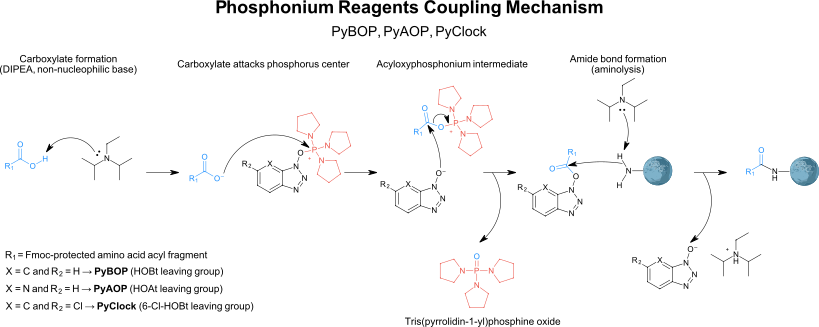

PyBOP Peptide Coupling: Mechanism, Selection, and Protocol
PyBOP peptide coupling — using (benzotriazol-1-yloxy)tripyrrolidinophosphonium hexafluorophosphate — generates amide bonds through a phosphorus-mediated two-step activation pathway. The reagent produces an OBt active ester intermediate that couples standard amino acids within 30 to 60 minutes and resists premature hydrolysis under normal SPPS conditions. PyBOP belongs to the phosphonium class of… Read more
Terminal Modifications in Peptalyzer™
Terminal modifications peptide handling in Peptalyzer™ is feature-specific. Some calculations include terminal chemistry directly, some include it only partly, and some remain residue-only. This reflects chemical reality: a terminal group affects mass, formula, and charge directly, but it does not always behave like a standard amino acid in residue-based models.… Read more
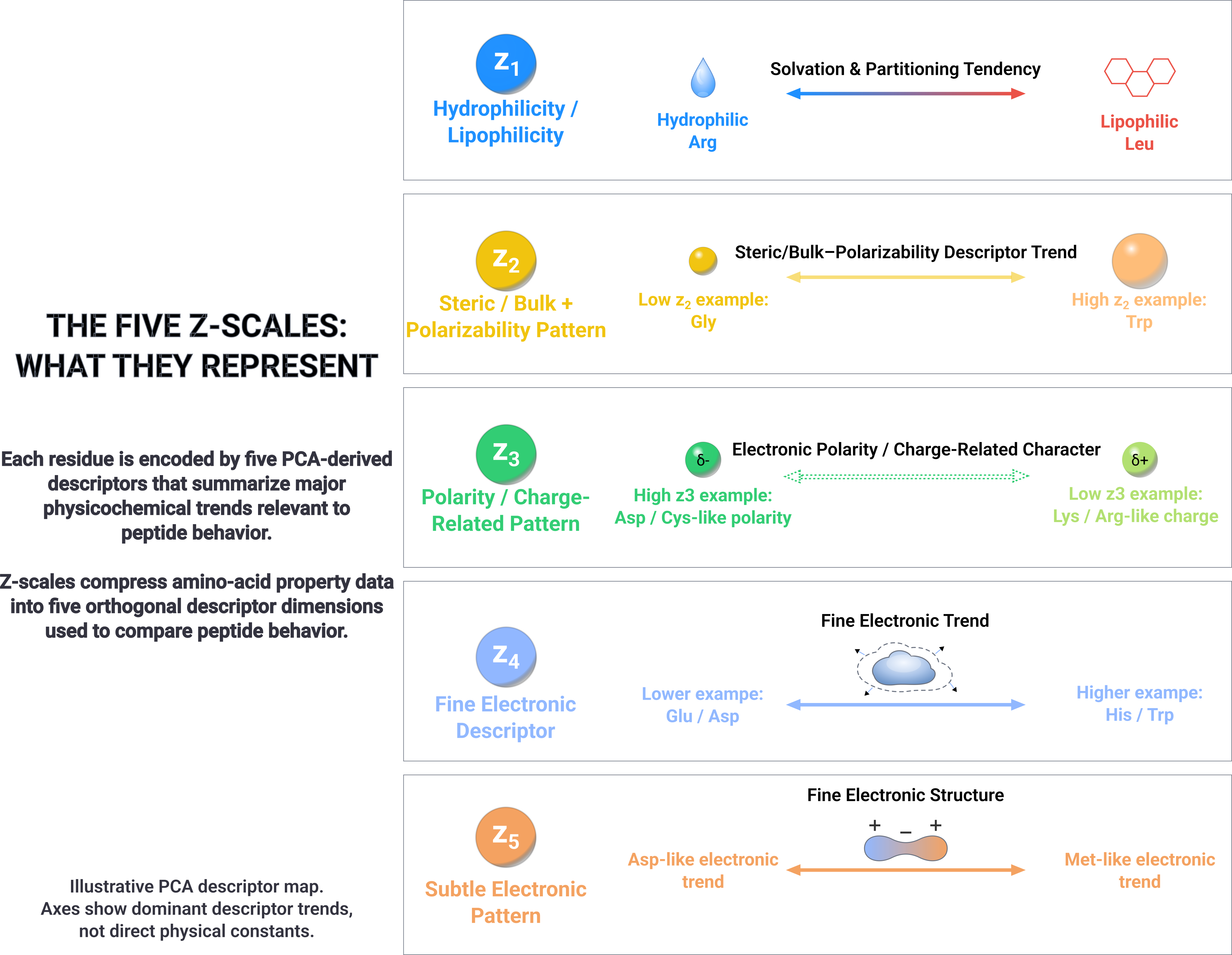

Z-Scale Peptide Descriptors: The Sandberg Framework
Z-scales peptide descriptors were developed because a peptide residue is not just “hydrophobic” or “hydrophilic.” It also has size, shape, charge distribution, polarizability, and solvent-dependent behavior. A one-number descriptor can be useful for a first look, but it is often too incomplete on its own to explain coupling difficulty, crude… Read more
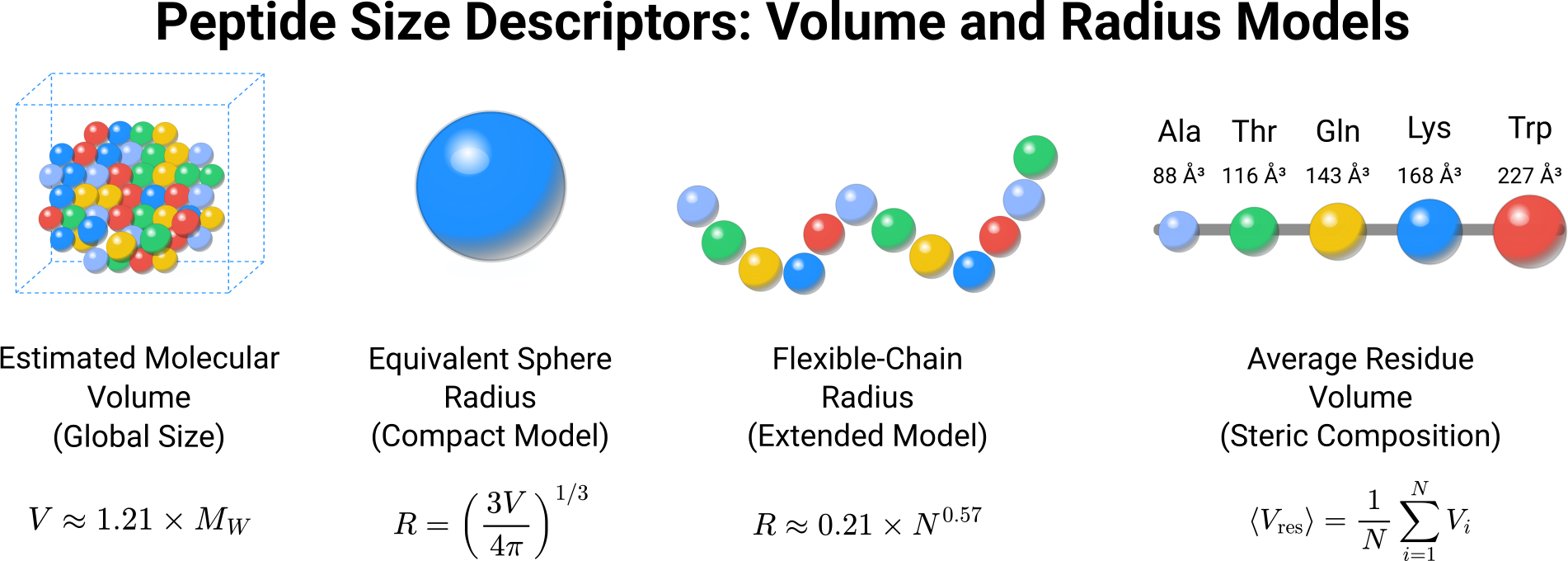

Peptide Size Metrics: Volume and Radius Explained
The concept of “peptide size” is intrinsically ambiguous. Unlike rigid small molecules, peptides exist in solution as dynamic conformational ensembles, continuously sampling compact, partially folded, and extended states. As a result, any attempt to assign a single size to a peptide is necessarily model-dependent. Biophysical chemistry recognizes this ambiguity. Experimental observables… Read more